The focus has been on oil since a round of tit-for-tat between the US and Iran made waves in the Strait of Hormuz. Even with officials talking up a lull in the fighting, Brent and West Texas Intermediate have been on the move. There’s a fragility to the current calm that shows how fast a bit of shipping risk can rattle prices and put a crimp in any sort of regional truce. As of 2313 GMT, you see Brent crude futures at $72.51 a barrel, up 52 cents for a 0.672% gain. Over in the US, WTI is at $69.94, having put on 71 cents or 1.03%. It’s a bit of a rebound after a hard week where Brent gave up 10.6%, its third in a row, while we saw a brief livening of traffic in the Hormuz.
Why prices are moving now
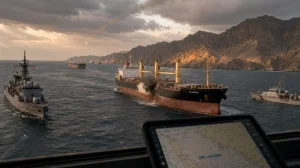
It wasn’t some new policy that did it; it was an event. The Kiku, a very large crude carrier with 2 million barrels on board, was struck in the vicinity of the Strait over the weekend. That set off a chain reaction of retaliation and left shippers with a case of the nerves. After Tehran made a play at the vessel near the chokepoint, the US went after some of their military hardware. Shipments of oil and gas, which had been running a little smoother under a stopgap, have slowed. A few tankers have bailed on trying to get out, and with hundreds of ships still in the Persian Gulf, owners are being cautious. The last we heard from the Kiku, it was off Fujairah in the Gulf of Oman. For those of us in the export and shipping game, the risk is right on our doorstep. You don’t need much of a hiccup to make itself felt in freight, insurance and the way refineries are run.
Hormuz chokepoint under strain
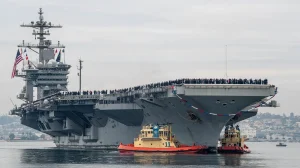
There have been moves to get around Iranian control of the waterways, but they’ve come with a price. On Saturday, a US Navy-led maritime group put out word it would be opening up a path for in and out of the strait, close to the Omani coast.
Not to Tehran’s liking. One of their top diplomats made it clear that if commercial vessels try to go another way, it will ‘increase tensions’. It’s become a point of contention, and one that makes it harder to plan a safe voyage for your crew. US Central Command will tell you commerce is still happening, but the mood can change in a heartbeat, as the weekend proved. In the market, every time there’s a story about an airstrike or a drone, you can bet supply risk is being factored in again.
Signals from Washington and Tehran
Then you have Tehran, who won’t let up until the US does. They’ve put down the gauntlet, saying they’ll call off talks if the bombing doesn’t. The two are set to sit down in Doha on Tuesday, so there’s some diplomacy in the works, but with a lot of military posturing to contend with.
Abbas Araghchi, the foreign minister, made his view known in Baghdad with the Iraqi PM. He said other states in the region shouldn’t be letting their ground or facilities be used to make a target of Iran. He sees it as a matter of regional security, plain and simple.
Regional flashpoints widen the risk
The map of where the trouble is has gotten bigger. After some US air power, Iran has been at it with drones and missiles in Bahrain and Kuwait. It’s a test for the Gulf’s security apparatus and for anyone with a ship in the water.
Over in Lebanon, Prime Minister Netanyahu and Defence Minister Israel Katz have confirmed the army has put an end to some of Hezbollah’s subterranean operations in a village to the south. Every time they do, you have to wonder if a miscalculation is in the offing that could affect the energy routes.
And in the thick of it, a helicopter for Saudi Aramco went down in Ras Tanura by the coast. We don’t know yet if the Sunday crash has any bearing on the facilities, but the fact it happened where it did is enough to put the market on edge.
What to watch next
A few things to have your eye on: – Whether the stand-down is for real
– How the Doha meeting goes on Tuesday
– What the strait looks like in terms of traffic
– If anyone is making use of the Omani side
– Where the Kiku and the rest of them are
– More strikes in the area
Right now, you’re pricing in risk. The word from above is that we can get back to normal, but with all the talk of new routes and the latest in Bahrain, Kuwait and Lebanon, the threat is still there. The premium for the Hormuz isn’t going anywhere until we see a steady stream of ships getting through.