The petition has put the Cockroach Janta Party in the legal crosshairs, claiming they are making a commercial profit out of the apex court’s own words. On top of that, it is asking for a CBI probe into what it says are fake lawyers, stoking a row over everything from judicial decorum to the kind of digital activism we see today.
Why the PIL matters
Put simply, the plea is a cautionary tale: what is said in a courtroom is being repackaged as an asset for trade. The argument is that you can’t let constitutional business be put on the shelf like a product without it chipping away at the public’s faith in the system.
Key demands in the petition
There are three things the court is being asked to step in on:
– To make an example of those misusing verbal observations
– A CBI to get to the bottom of the alleged fake advocates
– Some form of check on the commercial side of court expressions
The filing also has this to say about how symbolic campaigns are using the bench’s words to build an audience and a bottom line. For now, the matter is in limbo, and all eyes are on how the court will handle a movement that is moving fast online.
How a satirical movement became a flashpoint
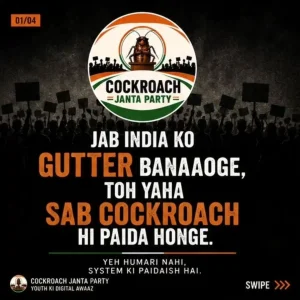
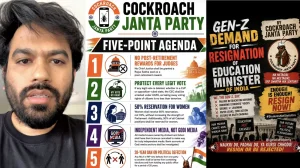
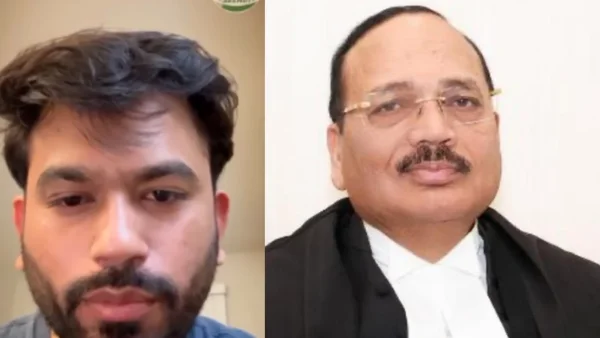
You have to go back to when Abhijeet Dipke set up the Cockroach Janta Party. It didn’t take long to amass a huge following; in a matter of days, they had 19 million on Instagram, feeding off a lot of young people’s exasperation and the meme culture that comes with it.
Then came the trouble. After some comments by CJI Surya Kant were put out there – he was talking about cockroaches and parasites in a hearing on a lawyer’s ‘senior’ title – it caused a stir. The CJI put the record straight, saying he was misquoted and was really going after those with bogus degrees trying to get in the door of the profession.
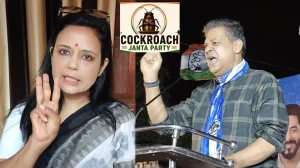
From there, the platform has made its way to other hot-button issues, like the push for Union Education Minister Dharmendra Pradhan to step down in the wake of the NEET-UG paper leak. You’ve seen names like Mahua Moitra, Kirti Azad, Akhilesh Yadav, Prashant Bhushan and Anjali Bharadwaj put their weight behind or at least show some support for it.
Street anger and political pushback
It wasn’t just online. In Madurai, you could see it in the streets with hundreds of jobless young men in Tamil Nadu’s first Cockroach Rally. The Democratic Youth Federation of India and the Students’ Federation of India put it together, with a march from the Gandhi Museum to the Thamukkam Grounds by the Tamil Annai statue.
They held up signs with no-nonsense messages: We Want Work, We Want Life, We Want Respect. They had it in for the centre for not delivering on 20 million jobs a year and for the price of petrol and diesel and the like.
Over in Maharashtra, the Congress has been vocal. Nana Patole and Balasaheb Thorat say the government is muzzling people, pointing to an Intelligence Bureau report that may have led to the blocking of the satirists’ social media. Their view is that the ruling party is silencing the very anger it should be dealing with head-on.
What the court could consider next
This is where the rubber meets the road. The PIL asks the court to decide where the line is between a bit of satire and cashing in on what the judges have to say. And then there is the question of who is a real lawyer and who isn’t, which is why the inquiry is on the table.
Whatever is decided will have ripples. If the court puts a stop to the commercial use of its words, it will be felt in political branding and on social media. An investigation means a harder look at credentials and who gets to practice law.
But it is more than just a legal tussle. It is a battle for the narrative. A movement of young people has used wit and numbers to make its point, and the judiciary has to find a way to stand its ground without quelling any fair criticism. How the Supreme Court plays this will be telling for the rest of us.