On Sunday, the Congress Party accused Prime Minister Modi of pushing through a plan to increase the number of seats in the Lok Sabha and in each state’s government, and they called it a “Weapon of Mass Distraction.” The argument is over how fairly people will be represented, the balance of power between the central government and the states, and the quick way the government wants to get 33% of seats for women in place by 2029.
What the Government Proposes
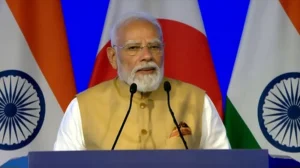
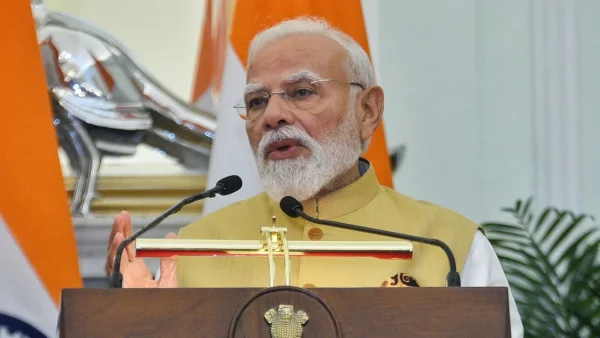
Prime Minister Modi wants Parliament to meet again from April 16th to 18th to pass laws to increase the number of Lok Sabha seats and get the women’s reservation started for the 2029 election. Kiren Rijiju, the Minister for Parliamentary Affairs, says an important bill will be presented in the next few weeks.
Senior leaders have said in discussions that the plan could take the Lok Sabha from 543 to 816 seats. The Prime Minister also said the government will legally guarantee that no state loses seats, including Kerala, Tamil Nadu, Karnataka, Andhra Pradesh, Goa, and Telangana in South India.
The government describes this effort as both a necessary administrative step and a historic moment: it will make the Narishakti Vandan Adhiniyam, and ensure women are represented in government without any further delays. It will almost certainly require another change to the constitution, because the 2023 law ties the women’s reservation to a new process of drawing up electoral district boundaries.
At the center of the plan is a complicated political and constitutional question: how to add seats, make sure each state keeps the same number (or more) of seats, and get the women’s reservation going quickly, all without disturbing the delicate balance of power between the country and its states.
Congress’s Charge: Skewed Gains and Distraction
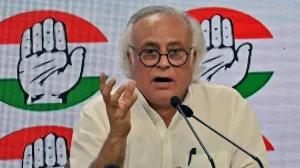
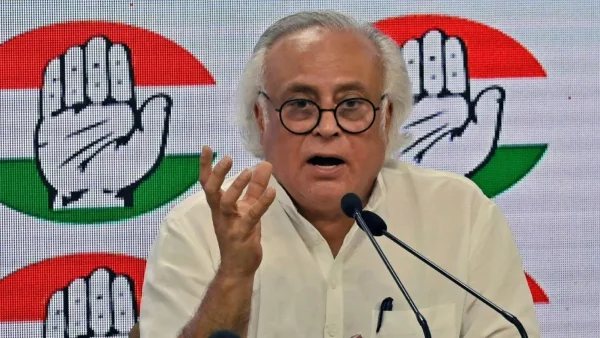
Jairam Ramesh, a leading member of the Congress Party, strongly criticized the Prime Minister’s statements on X (formerly Twitter), saying they are misleading and intended to trick the public. He says that if all states increase their number of seats by the same 50%, the difference in power between bigger and smaller states will get even wider, and the most heavily populated states will have even more influence.
Ramesh gave examples to illustrate his point. Right now, Uttar Pradesh has 60 more seats in the Lok Sabha than Kerala; a 50% increase in each state would make that difference 90. The difference between Uttar Pradesh and Tamil Nadu would go from 41 to at least 61, and he believes these differences could get much bigger all over the country.
Ramesh warned that the effect won’t only be in the South. States such as Punjab, Haryana, and many in the Northeast could also find their influence decreased, even if they get more seats overall. He called the plan a "Weapon of Mass Distraction” because he thinks it’s intended to take attention away from problems with the economy and foreign policy.
The opposition also claims that calling Parliament back to meet now, while state elections are happening, is an attempt to get a political advantage. They want the government to avoid quickly making changes to the constitution, especially regarding the redrawing of district boundaries, and are warning that this could have serious consequences for the balance of power between states.
Delimitation, Representation, and the Federal Balance
Delimitation is the regular process of redrawing or reallocating seats based on population, to make sure representation matches how many people there are. In India, there have been long-standing agreements to not penalize states that haven’t grown in population as quickly. That political agreement is at the heart of the current disagreement.
A new delimitation usually needs good data from a census, careful work on the boundaries, and a lot of agreement. In a country with large differences between regions, even small changes can have big political and financial effects. Those who want to expand the number of lawmakers say India’s growing population and the demands of governing the country mean we need more representatives to have better representation.
Those who are doubtful say that unless everyone agrees on how to do it and the population data is up-to-date, expanding the number of lawmakers could actually make existing inequalities even worse. If simply increasing the number of seats each state has keeps each state’t current proportion of seats, but gives a lot more seats to the bigger states, smaller states could have less influence on decisions for the country as a whole.
Seat Math and the 50 Percent Formula
The central point Congress is making is about math. Increasing the total number of seats by 50 percent all around doesn’t change how many seats each state has compared to the others, it simply makes the difference larger. A state that already has a lot more seats than others will have even more, proportionally.
The examples Congress is using are to show why states in South India, plus Punjab, Haryana, and the northeastern states, are concerned they will lose even more of their power in the national government. They might get more seats, but they could have less influence compared to the largest states.
And the specifics of how the number of seats is increased are important. Will the increase be purely proportional, will there be minimum and maximum numbers of seats for each state, or will a completely new way of dividing up seats be used? All of these will decide the final result. Without a formula that is clear and openly discussed, people will question whether the outcome is fair, and it likely won’t be seen as fair.
Women’s Reservation: Timing, Law, and Logistics
The Narishakti Vandan Adhiniyam, a law passed in 2023, made it possible with the constitution to reserve 33% of seats for women in the Lok Sabha (the main part of Parliament) and state legislatures. However, putting this into effect is linked to the process of redrawing electoral districts, and this usually happens after the newest census numbers are published.
The government now wants to start the quota for women in t2029, and says they need further laws to make this possible. This probably means changing the parts of the constitution dealing with how many seats there are and how they are given to each state, and creating a system for fairly rotating which electoral districts are reserved for women.
The prime minister has said this is above political parties and has asked all parties to support it. Congress, while saying they are for empowering women, says the government ignored the law for thirty months and is now rushing to get credit for both the law and the expansion of seats. The opposition wants to be consulted more, and to have a clear plan.
Actually doing a large scale reservation of seats is a matter of practicalities: deciding which electoral districts will be reserved, in what order they will rotate, and making sure expansions to the state legislatures line up with expansions to the Lok Sabha. Each of these requires clarity to prevent legal problems and bureaucratic delays. A too-quick schedule could make carrying out the plan complicated and cause complaints from particular regions.
What Happens Next: Procedure, Politics, and Practicalities
If the government introduces a law to raise the number of Lok Sabha seats to 816 and increase the size of state legislatures at the same time, it will likely require changing Articles 81, 82, and 170 of the constitution, among others. Changes to the constitution need a two-thirds vote in both houses of Parliament, and some changes need to be approved by at least half of the states.
Beyond the voting, logistical challenges are very important. More members of Parliament and the legislatures mean more work for committees, more staff, and more demands from people in each electoral district. The new Parliament building can hold more people, but the number of staff, the computer systems, and how quickly committees can work will all need to be improved to continue to provide proper oversight.
States will face similar problems with growth. Larger legislatures can give people in local areas better representation, but they also increase costs for the budget and the difficulty of coordinating things. The Election Commission will need to map out the new electoral districts and organize the rotation of reserved seats for women in a way that doesn’t confuse voters.
Risks of Haste and the Need for Consensus
Experts on government often say questions of representation and the balance of power between the national government and the states should be handled with a lot of discussion, groups of experts, and open information. Because redrawing electoral districts depends on having good, up-to-date information about the population, it’s essential to know where the information will come from.
Without everyone agreeing on the facts and a formula that has been openly discussed, any increase in seats runs the risk of making people distrust the system even more. With smaller regional parties looking for changes in their influence, and the main national parties balancing the need to win elections with maintaining the respect of the government, getting everyone to agree is the only way to have a lasting solution.
Right now, the disagreements are obvious. The government is presenting the increase in seats as the thing that will allow the women’s quota and better representation. Congress says it’s a distraction that could unbalance the balance of power between the states and the national government. When Parliament starts up again in mid-April, the country will find out not just what the law says, but whether the process of passing it can deal with the huge issues at stake.