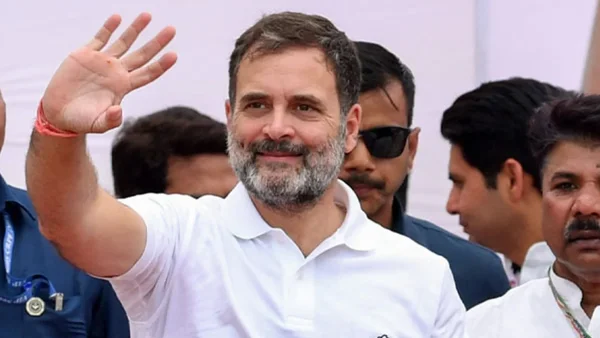
Rahul Gandhi said on Wednesday that the proposed change to the Constitution regarding delimitation is a “power grab” achieved by “gerrymandering”, and has no relationship to a true reservation for women. He said this as the opposition prepared to vote against the change during a special three-day Parliament session starting April 16th.
Gandhi’s critique of the delimitation amendment
Gandhi explained on X (formerly Twitter) that the Women’s Reservation Bill, which Parliament agreed on in 2023 and is already in the Constitution, doesn’t need this new plan for how it will work. He believes the government is using delimitation as an excuse to change districts to help themselves politically.
He also warned about what he called “Hissa Chori” (taking a share) from OBC, Dalit, and Adivasi communities, and said the government isn’t paying attention to the numbers from a caste census. Gandhi also thinks the plan could unfairly punish the southern, northeastern, northwestern, and smaller states by changing the number of seats they get in a way that favors others.
Opposition response and parliamentary strategy
Mallikarjun Kharge, as head of the Congress party, has been talking with other opposition leaders and they have all decided together to vote against the amendment bill. Kharge says the opposition does support giving women a guaranteed number of seats in the government, but they don’t approve of the government’s method for doing it, because they believe it’s for political reasons.
Opposition leaders say their opposition is about protecting the balance of power between the central government and the states, and making sure all groups in society are represented. They believe that the proposed delimitation will shut down disagreement by redrawing where people vote, instead of just making sure one-third of the seats are set aside for women.
Details of the proposed bills and the delimitation plan
The government has sent out a draft of the Constitution (131st Amendment) Bill 2026 and intends to propose three bills during the longer Budget session of Parliament. These include the Delimitation Bill, the women's reservation bill, and changes to the laws of Union Territories to fit with the new system.
The number of seats in the Lok Sabha (the main part of Parliament) could go up from 543 to as many as t850, and the number of seats in state assemblies would also increase. The goal of this is to have the women’s quota in place before the 2029 general election, and they will use the population numbers from the last census that has been published, which is from 2011.
Concerns about representation, data, and gerrymandering risks
Those who disagree with the plan say that using the 2011 census data and redrawing districts now will likely give more representation to states in the north where the population has grown faster. They are worried that states with slower growth will have less of a voice, and this raises the question of whether there will be any reason for states to try to control their population.
The worries about gerrymandering are about how the lines for voting areas and the increase in seats could be arranged to help certain politicians. Opposition parties are also concerned that OBC, Dalit and Adivasi communities will get a smaller share if the government ignores the results of the caste census when figuring out how to allocate seats.
Political and policy implications ahead of the 2029 elections
If the amendment passes, it will completely change the political map of India and will almost certainly lead to arguments in the courts, administrative difficulties, and political fighting. The courts might be asked to decide if it is constitutional, if the census data is being used correctly, and if the process respects the power of the states and the existing quotas for different groups.
The discussion will go on in Parliament, in the capitals of the states, and on social media. People will be carefully looking at the draft bills, the opposition will likely vote together, and the public will be talking about how to balance giving women seats in government with making sure all areas and groups who are at a disadvantage are fairly represented.