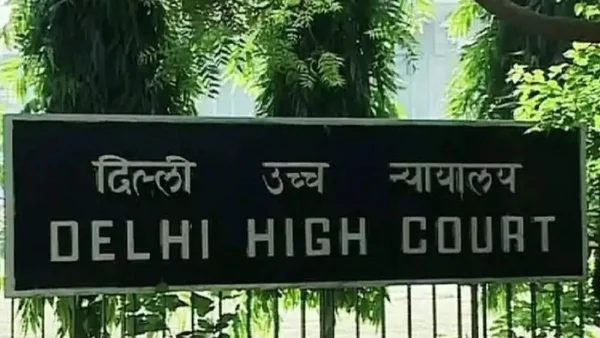
With the Delhi High Court making it plain that fee increases at the start of a term don’t have to be pre-approved, Delhi parents can now put together their school budgets with a bit more confidence. And to keep families from being hit with after-the-fact charges, the court has put a hold on any outstanding hikes until the 2027 session.
What the ruling means for families in Delhi
You won’t be on the hook for any back pay. As for the fee changes that were put before the Directorate of Education, they won’t be in effect until April 2027.
Going forward, a school can set its new rates when the year starts. They do have to put in a statement of what they’re planning with the Directorate of Education, but they don’t need a stamp of approval to go ahead.
The court’s directions to schools and DoE
There is a hard and fast rule here: if you want to raise fees mid-year, you have to get permission. At the start of a session, you don’t.
To put an end to any guesswork, the court has laid out a schedule for everyone. Schools file in advance; the regulator has to make a call within a set time.
These are the main points the court has put in place:
– Put in your fee statement before the session is underway
– No need for prior sanction to open the year
– A mid-session hike is a no-go without the DoE’s say-so
– Make those mid-year proposals two months ahead of time
– The DoE has two months to come to a decision
– If they don’t, you can consider it approved
This holds true even for schools with a land clause in their lease or licence. The only time you have to ask for approval is if the hike is coming in during an active session.
Why the court intervened
Justice Anup Jairam Bhambhani put an end to a run of orders from the Directorate of Education on May 22, 2026, which had been turning down fee-hike requests. In the court’s view, the way the regulator was handling things was ‘untenable in law’ and a ‘misconceived exercise’.
It was a case made by 137 unaided, recognised private schools who had seen their plans put on ice for years. Their petition was a response to rejections dating back to the 2016-17 and 2022-23 terms.
The bench was aware of the trouble this has caused. Some schools have been in ‘serious financial disarray’ while waiting. But to make matters right for the other side, it would be too much to ask families to cover old hikes. So the compromise was to let the increases take effect in the next cycle, in April 2027.
Legal position on fee control
The court has put the matter in its place under Section 17(3) of the 1973 Delhi School Education Act.
You don’t have to get the green light from the Directorate of Education to put up fees when a new academic year is around the corner, if you’re a private unaided school. All that’s required is to put in a statement of your intended fee before the term begins.
But if you want to make an increase in the middle of a session, you can’t do it without prior approval under Section 17(3). You have to put your proposal on the table at least two months in advance. The Directorate has two months to make up its mind; if they don’t, the proposal is considered a go.
The bench was clear on one point: the Directorate’s authority to step in on fee fixation is ‘narrowly limited’. They are not there to ‘dictate’ or ‘micro-manage’ a school’s books.
We see this in the court’s reasoning, which harks back to cases like T.M.A. Pai Foundation and P.A. Inamdar to affirm the financial independence of unaided institutions. Even when it comes to surplus, the court said you can’t just point to a large pot of money and call it profiteering. That’s for a proper audit under Section 18(5) to determine, once the returns are in.
What should parents and schools be doing with this?
Don’t expect to be hit with any backdated charges. Any valid change will only hold for the session it was notified in, with some proposals not coming into play until April 2027.
On the school side, it’s time to get your internal house in order so you can file on time. For mid-year hiccups, you’ll need to factor in the two-month window for the Directorate to rule.
In the end, this gives everyone a sense of predictability. Schools can plan for staff and facilities with more certainty, while parents know where they stand and won’t be asked to pay for past dues.
A good way to stay on top of it is to keep a simple calendar:
– Have your audited numbers ready for the start of the term.
– If you need to make a move mid-session, file two months out.
The court has also put an end to old proposals that were based on the mistaken idea that you need pre-approval to start a session. So the uncertainty is gone.
The Directorate still has a job to do – they have to process those in-session requests and can call for an audit if they see fit. But their hand is tied when it comes to general oversight of fees.
It’s a matter of autonomy versus accountability. You can set your own course at the beginning of the year as long as you put it in writing. The regulator only comes in hard if you try to change things on the fly or if the finances come under a microscope.
For the Delhi education scene, it’s a balance to keep quality up without subjecting families to whiplash. We won’t see the next major shift until 2027.