The change in tone from the court is clear: what was said before was about the material, not the people involved.
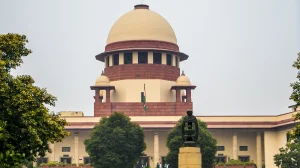
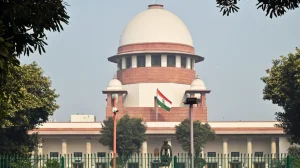
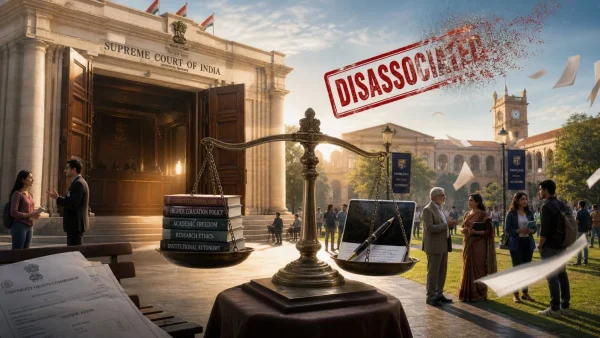
On May 22, 2026, the Supreme Court did away with a directive from March 11 that had put a bar on three scholars in connection with an NCERT Class 8 piece on judicial corruption. In so doing, it also put to rest any unflattering comments it had made about them.
What changes for campuses and classrooms
A bench made up of CJI Surya Kant along with Justices Joymalya Bagchi and Vipul M Pancholi made it plain that the Union, as well as state and public universities, are at liberty to choose whether to work with Professor Michel Danino, Suparna Diwakar and Alok Prasanna Kumar.
It’s a matter of discretion now for those running these institutions. The court has let them have the final word, unencumbered by its previous stance. That opens up space to look at the merits of a project, the expertise on hand and what it means for students.
Key directions now in force
We were told the earlier remarks were aimed at the chapter, which the court still holds to be “wholly undesirable,” but the language that had put the trio’s integrity in question has been struck out.
After hearing from the applicants that the work was a group effort and not the product of one person, the bench saw fit to change course. “Owing to the explanation given by the applicants, we deem it appropriate to modify para 8 of the order and recall the direction… to disassociate the 3 applicants from the academic activities,” it read.
Why the recall matters for students
“Leave it to the Union/State/other authorities to take an independent decision without being influenced by the observations in our above-stated order,” the bench added.
This puts an end to a kind of blanket disqualification that could have derailed some projects and partnerships. With the reins returned to the institutions, there is no more risk of hasty exclusions stalling the review of textbooks or other classroom resources.
What institutions can do now
Administrators now have a narrow set of clear choices, guided by the ruling:
– Take independent calls on engagements
– Consider the trio on a case-by-case basis
– Proceed without March 11 remarks influencing decisions
How we got here
Gone too is the old line that the three had “deliberately and knowingly” put a bad face on the judiciary for the benefit of Class 8 pupils. You can see how that would have been a reputational burden for a teaching staff.
All of this is in the context of a suo motu case the bench is looking into over the NCERT’s Grade-8 Social Science book (part-2). Danino led the team that put the chapter together, with Diwakar and Kumar in tow.
Not long ago, on February 26, the apex court had put a stop to any more of that text being put out, in print or online, over the “offending” bits on corruption. The court had put it bluntly: “You have fired a gunshot and the judiciary is ‘bleeding’.”
What comes next
Then on March 11, it told the Centre to form a panel of experts in a week to sort out the legal studies syllabus for Class 8 and up, and ordered all governments to have nothing to do with the three.
Now, the way is open for authorities to judge any proposal on its own terms. And for the students, the emphasis is on a more even-handed approach to learning. The court’s view that the chapter was off-balance makes it all the more important to have materials that are hard-nosed about institutions but also cover the ins and outs of justice, legal aid and the like.