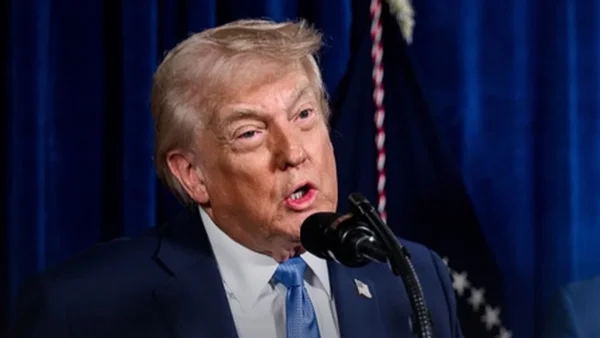
Trump, the former president of the US, has said that artificial intelligence should have this ‘kill switch’ to stop it from being able to endanger all of humanity as it gets better and better. He says AI can improve things in banking by making security and how things are done better, but the risks are serious enough to need government control and careful watching.
Trump calls for a kill switch and stronger AI safeguards
Trump brought this up in an interview recently, saying that the technology that lets banking achieve ‘greatness’ could also be very dangerous. He wants the government to have safeguards, and he mentioned a ‘kill switch’ though didn’t give any technical details or say when it might happen.
People in government and leaders in the AI industry are always discussing how to get the benefits of new ideas with the safety of the public. This suggestion of an emergency shut-off is similar to the wider worries of politicians about controlling very powerful AI systems before they start acting in ways we don’t predict.
AI benefits and risks for the banking sector
AI is already helping banks find when people are cheating, follow rules automatically, and help customers faster. People who support using AI say it can lower costs, be more accurate, and improve defenses against standard internet crimes.
However, at the same time, experts are cautioning that the most advanced AI could be used for bad purposes; to create complex cyberattacks, find weaknesses in computer programs, or influence how choices are made. Because banks often use older computer systems, they are especially at risk from new kinds of AI-driven attacks.
Cybersecurity warnings tied to new AI models
Researchers looking at internet security have said that recently created large language models could greatly increase the power of cybercriminals. One of these models, which companies use to find errors in software (and which can help those defending systems, but also be used to find weaknesses that can be exploited), is currently being examined.
Companies selling advanced AI are emphasizing keeping track of what it’s doing and controlling who has access. However, analysts point out that there is a continuing risk in the chain of supply as these tools are used by many different companies. The competition to make more powerful models, even those designed for cybersecurity, raises questions about releasing them responsibly and checking who is using them.
What a ‘kill switch’ would mean in practice
A kill switch could be many things: a law that requires a way to shut it down remotely from one place, or actual technical “circuit breakers” built into the computer hardware or software. Policymakers could require safety features, a record of activity, or a quick way to stop systems that have a certain level of capability.
But actually creating a good kill switch is tricky. AI systems are spread out and usually depend on each other, so stopping just one part of it is difficult. Figuring out at what point to step in, avoiding shutting it down when it’s not needed, and preventing someone from abusing the shut-down system all need careful planning and testing.
Policy paths: regulation, standards, and international coordination
Experts say we need many things working together: rules from the government, evaluations by people not involved with the AI’s creation, “red team” testing (where people try to attack the AI to find weaknesses), and industry standards for how to judge the quality of a model. Regulators could require companies to be open about what their AI can do, put limits on certain uses, and make them report when something goes wrong with a high-risk system.
Because AI is being developed and used in many countries, international cooperation will be very important. Agreements about controlling what AI is sold to whom, shared expectations for how models are released, and joint plans for emergencies could lower the risk of dangerous abilities spreading without being checked.
Balancing innovation with existential risk management
The calls for a kill switch show the main problem: how to have the good things AI offers, while also reducing the worst of its risks. If the industry puts money into researching safety, combined with clear rules, we can continue to make progress without putting the public at risk.
In the end, how we decide about extreme steps like a kill switch will depend on if it’s even possible to do it with current technology, whether politicians will support it, and if countries can work together. The current debate shows how important it is to turn general warnings into real rules that can be enforced for important areas like banking, and for many other things as well.