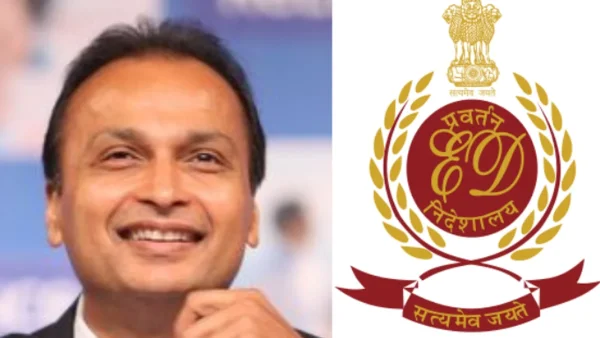
On Friday, the ED did planned searches at many spots in Mumbai and Hyderabad that had links to Reliance Power Ltd – a part of the business group of Anil Ambani. People at the ED said roughly ten to twelve buildings belonging to the company and those who run it were the focus of the current look into supposed financial problems.
ED Searches in Mumbai and Hyderabad
Some fifteen ED teams carried out the searches, and looked at offices and homes connected to Reliance Power and businesses linked to it. The searches were to get documents, digital proof, and other things important to the money laundering and bank fraud claims, officials also said.
Investigators put most effort into paperwork that might show where money went, guarantees, and how the businesses were organised. The agency hasn’t made public what it found in the searches, and when asked, there wasn’t an immediate answer from the Reliance Group.
What the Investigation Covers and the Law Involved
The ED is looking at several businesses linked to Anil Ambani in what is said to be bank fraud tied to money laundering. People in authority are also looking into possible breaking of the Foreign Exchange Management Act – a separate set of rules which control foreign money and dealings abroad.
According to papers from the agency shown in court, three separate cases of money laundering have been started against the wider group to look at claims of bank loan fraud and other financial issues. The investigation covers dealings at the business level and the supposed wrong use of banking tools.
Special Investigation Team and What the Supreme Court Said
After getting instructions from the Supreme Court, the Enforcement Directorate made a special investigation team to put together the enquiries into the group’s businesses. The SIT has people skilled in financial crime, looking at accounts to find facts, and following the law, to go through huge amounts of paperwork and complicated money movements.
Court control usually aims to make sure that the look into cases with wide-ranging effects on banking or the market is focused and quick. The special team is expected to give a full report of what it finds and help those who bring charges in court get ready to make possible charges under laws against money laundering.
Other Investigations, Arrests, and What’s Been Done About Assets
In recent weeks, separate actions have increased looking at the group and those who promote it. The agency has made arrests in a case linked to supposed false bank guarantees, and has for the time being taken over valuable houses as part of its money laundering investigations into businesses connected to it.
Other agencies looking into things have also searched and started cases linked to the group, showing that there are overlapping enquiries into claims of money being sent elsewhere and complaints from those owed money. These planned investigations show that authorities are looking at both records of transactions and whether those in charge are to blame.
[
[H3]
]What This Means for Those Who Have Invested, Those Who Are Owed Money, and the Business Area[[/H2]]
For those who are owed money and lenders, the continuing enforcement action raises quick questions about whether loans can be got back, and the state of related accounts. Those in the market usually look again at the risk of dealing with someone when large parts of a group face claims of banking problems and assets being taken.
People who are experts in how businesses are run point out that clear giving of information, quick working with those who investigate, and checks by people not connected to the company can help get trust back. For the energy and building sector, such well-known investigations might lead to closer watching by those who control things and stricter terms for lending in the future.
Conclusion
The searches are an important part of a complicated, multi-agency look at supposed financial wrongdoing involving Reliance Power and companies connected to it. As the Enforcement Directorate puts together proof, what happens in law and in court will decide what happens next with possible charges, getting assets back, and wider responses from those who control things.