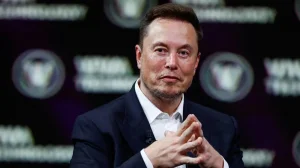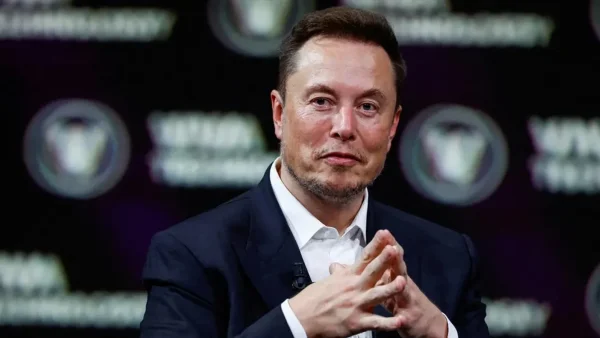
Musk has put the million-dollar question back on the table for the AI economy: if you have a superintelligent system with all but unlimited energy, are dollars even in the picture? The head of Tesla and SpaceX would have it that where the wealth is will be in raw mass and power, not in the bank. That’s a point of view with some teeth to it, especially for those in AI and energy policy.
Why Musk says money could fade
For Musk, it’s physics, not finance, that is the real driver of productivity. Once AI is beyond what any of us can do, he figures you’re better off with access to the stuff you need and plenty of juice than with currency.
‘Conventional money will no longer be relevant. Mass and energy will take the place of dollars,’ he put it.
The leap in intelligence he imagines
There is a boldness to his wager on energy. As he put it in writing: ‘It is humbling to consider that if we harness just 1 millionth of the Sun’s power for AI, that will be much more than a million times the intelligence of all of humanity.’
And you can see the logic: in AI, how well you perform is a function of computation, and computation is a function of power.
A cosmic benchmark for progress
This is in line with the Kardashev Scale, the one that puts civilisations in their place by how much they use. A small piece of the sun’s output would put today’s numbers to shame, and it’s a far cry from the steady growth of a data centre or two.
In a way, it makes you see AI as an industrial operation run on energy, rather than just some software.
Infrastructure beyond Earth
So how do you get to that size? Don’t look to anything in orbit around Earth, says Musk. You’d be making solar panels and radiators on the Moon and using a mass driver to put them in deep space. It’s an electromagnetic contraption for flinging things without the need for a rocket.
We’re talking about a supply chain in space, not a bigger version of what we have down here.
From factories to megastructures
Put a factory on the moon and you have a new era of industry. You also have to deal with the heat, which is why you need the radiators with the solar gear.
We can’t do that yet, but it’s a road map where what holds you up is engineering, not how much you have in the vault.
Why this matters now
All this comes at a time when the suits in government and tech are putting their money where their mouth is on AI and the hardware to run it. The unspoken rule is simple: you want more capability, you need more compute, and that means more electricity.
Musk is daring the people in charge to look at their energy books, not just the model specs or the capex.
Here is what he’s getting at, simply put:
– An end to economics driven by currency, in favour of what you can produce with your resources
– Ditching the terrestrial grid for energy you can get off-world
– Not just chipping away at scale, but making some big leaps
Speculation, stakes, and next steps
He won’t give you a date for any of it. It’s a forecast, and for the moment, the old currencies are still holding up the world.
But there are ripples to this. If you need an abundance of energy for AI to move forward, then the choke point is in the making of it, the cooling, and the materials, not in the money supply.
For now, it’s a matter of fact. You’ll see the arguments over where to put a data centre or who has the power to get it. The bigger issue is whether the rest of us can get on board with the physics-first approach he’s talking about.
What comes next will be a process. But Musk’s way of seeing things is a good measure: if you want to scale up intelligence, you stop worrying about the dollars and start thinking in joules and, in the end, in the mass you can move.