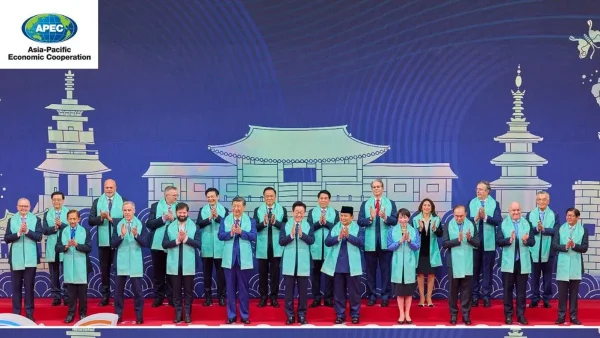
President Xi Jinping took the unprecedented step of suggesting the creation of an international organization for the supervision of artificial intelligence at the APEC Leaders’ Meeting, carving China’s position as the leader in trade cooperation. This is in direct opposition to the United States’ refusal to work towards regulating AI on an international scale. Xi’s World Artificial Intelligence Cooperation Organization is supposed to set governance principles and promote collaboration, placing AI as a ‘public good for the international community’.
Xi, in his speech, counted artificial intelligence as the laying block of future development, underscoring the possibility that it can benefit people across the globe. This, however, is a great opportunity for China on the AI map, in that the proposed location for this organization is Shanghai, one of the country’s commercial arteries.
The absence of U. S. President Donald Trump from the APEC summit put Xi in a highly advantageous position to promote China’s brand of multilateral engagement in trade. While the U. S.-China talks slowed trade tensions for only a short while, Xi took the opportunity to project China as a champion of promotion of its unique model of economic cooperation.
The global race for AI is showcasing different approaches, with Silicon Valley warping cutting-edge technology and China pushing entirely for cheap solutions that DeepSeek is just one example. His call for APEC to back green technology, where China already leads, is another nod toward China’s vision for technology and sustainability into the future.
Through declarations on AI governance and aging populations, the APEC members have expressed their shared concern for some of today’s critical global issues. The decision to bring the 2026 APEC summit to Shenzhen also highlights the changing role China plays in manufacturing, robotics, and electric cars.
Xi’s vision for AI governance and technological cooperation prepares China for proactive interaction on the global stage. As the discussions on artificial intelligence continue evolving, China’s proposal to establish a World Artificial Intelligence Cooperation Organization is also an explicit signal of its intention to chart the future of this transformative technology.