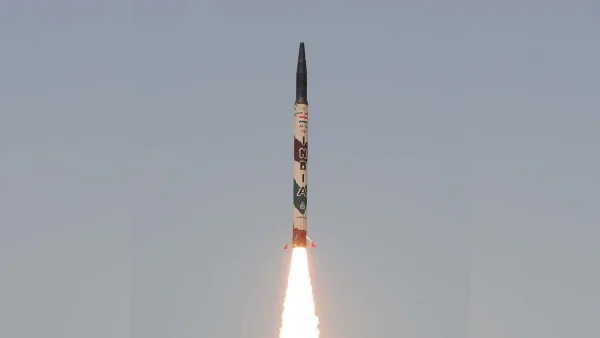
On May 22, 2026, India made it clear there is no let-up in its strategic preparedness. A short-range Agni-1 was put through its paces at the Integrated Test Range in Chandipur, Odisha. The Ministry of Defence reports that the Friday test, run by the Strategic Forces Command, left no operational or technical questions unanswered.
You can call it a routine test, but the launch says more about India’s minimum deterrence. The missile did what it was supposed to: it held to its course and put its mark on the target with the kind of accuracy you want to see. For the Strategic Forces Command, it is another confirmation of their readiness and of the system’s soundness.
What the latest Agni-1 test proves
The MoD puts it simply: the launch is a re-affirmation of the credibility of our deterrence. When you have a system like the Agni-1, in service since 2004, this sort of check is what you need to be sure of your options.
It is built for when you need a fast, precise strike in the region. As a single-stage, solid-fuel, road-mobile missile, the Agni-1 has a 700-900 km reach. It can put up to 1,000 kg on a target, whether that is a conventional or nuclear warhead.
How the launch was conducted
Chandipur in Odisha was the site for the firing from the Integrated Test Range. The Strategic Forces Command, the body in charge of the nation’s nuclear stockpile, had the reins on the operation, per the MoD.
By all accounts, the flight was as planned. The ministry is using the result to make the point that every box was ticked and the performance was right where it should be.
Recent MIRV milestone adds context
Not long before this, there was a successful trial of a more advanced Agni out of Dr APJ Abdul Kalam Island in Odisha. This one was fitted with the Multiple Independently Targeted Re-Entry Vehicle system. The DRDO put the Agni through its motions with several payloads on board.
Those were aimed at a spread of targets over a wide part of the Indian Ocean. To make sure of it, the DRDO had a network of ground and ship-based stations on hand to track the whole thing from take-off to the moment of impact.
Why Agni-1 still matters
The fact that the Agni-1 is still in the inventory of the Strategic Forces Command is no accident. It is a road-mobile, dependable piece of kit that can be put in place in a hurry. Its range and heft give planners what they need to back up the country’s deterrence claims.
Then there is the rest of the Agni family, put together by the DRDO under the IGMDP. They form the backbone of a layered portfolio. The Agni-1’s shorter range is there for when you have to be quick and exact in the region.
Official signals in brief
The government and those in the know are making these points:
– All parameters, technical and otherwise, were in order
– The target was hit with the right degree of precision
– Deterrence has been put beyond doubt
– The test was the work of the SFC
– We tracked the entire trajectory
Put the Agni-1 and the earlier MIRV side by side and you have a picture of some very thorough performance reviews. The government has pointed to the numbers and the tracking to say the job was done.
If you are watching, the word is plain: old hands like the Agni-1 can be counted on, and we are also proving out newer, more involved systems. The MoD sees Friday as just that – a sign of readiness to go with the show we put on with the MIRV a few weeks back.