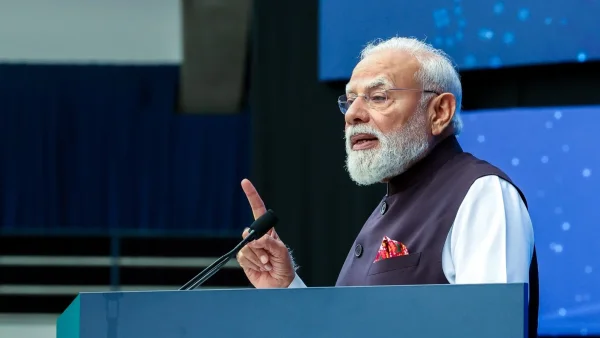
The story of the week in Indian health isn’t some new-fangled plan so much as a matter of scale. This past Sunday, PM Narendra Modi put it plainly: India is home to the largest healthcare programme on the planet, and he intends to see that access and value continue to be a given.
It was a no-nonsense message for those with bills to pay and doctors to see. Over 12 years, the government says it has chipped away at the cost of a trip to the chemist or a surgery, while opening the doors of medical colleges. The idea is to make sure even the most at-risk can get the kind of care they need, when they need it.
Accessibility and affordability take centre stage
Looking back to 2012, the Prime Minister pointed to how far India has come in making good healthcare something you don’t have to be rich to have. He made a point of tying it to Ayushman Bharat, the behemoth of a programme that is there for the vulnerable.
Then there is the PM Bharatiya Jan Aushadhi Pariyojana. According to the PM, it has put stents, knee implants and other medicines within everyone’s means. The goal is to take some of the sting out of out-of-pocket costs so patients and their families don’t have to think twice about getting treatment.
What Ayushman Bharat means on the ground
If you are in a low-income home, this is what stands between you and a hospital. The Prime Minister was clear on his pride in that kind of reach and left no doubt that it will only grow.
But it is not just about coverage; you also need the right people to do the work. The PM has made a point of the fact that with more seats and institutions, a career in medicine is now within grasp for students in their own part of the country.
More doctors, wider training, closer to home
MyGov India, the government’s way of talking to its citizens, has put it down in writing: making healthcare available is one of the best things a country can do. In 12 years, they say, India has found ways to do it with less fuss and less cost.
You can’t have a robust system without the right number of well-trained doctors, MyGov India notes. Where there were once no options, there are now schools and programmes, creating a steady supply of talent for the future of Indian health.
To put it in the words of MyGov India:
– You need more and better-trained doctors to hold the line
– We have opened up medical education in every corner of the country
– An ecosystem that is up to the task and ready for what’s next
– Reaching more of the population, without breaking the bank
Public health gains cited
Take TB for instance. MyGov India says we are no longer looking at it from the sidelines. With better screening and more community involvement, the push for a TB-free India is in full swing.
Some of the old public health headaches are being put in the past. Thanks to a firmer grip on surveillance and delivery, the burden of disease is going down and we are on our way to nipping some preventable ones in the bud.
What the Prime Minister pledged next
On Sunday, the PM was as much looking ahead as he was patting us on the back. “We will keep building on this ground covered so far in order to build a healthy India,” he said, in effect saying the road doesn’t end here.
There is a human side to the numbers. By making a name for India with the size of Ayushman Bharat and the lower price of a stent or an implant, the government is making its case for progress that you can feel in your life.
What you should take from it is that the work is not done. There will be more on insurance, on the cost of the essentials, and on where to study. It all adds up to a more hardy India in the long run.
In the months to come, look for more of the same: services and training capacity on the up. The stated aim is to turn these system-wide changes into faster answers from your doctor and a bit of relief from the financial side of things, whether you live in a city or the hinterlands.