In a way, Haryana has upped the ante in India’s competition for capital. By setting a 5 lakh crore target and walking out of the gate with 1.10 lakh crore in signed MoUs, the state is making no secret of its intent to be where the advanced manufacturing and innovation are.
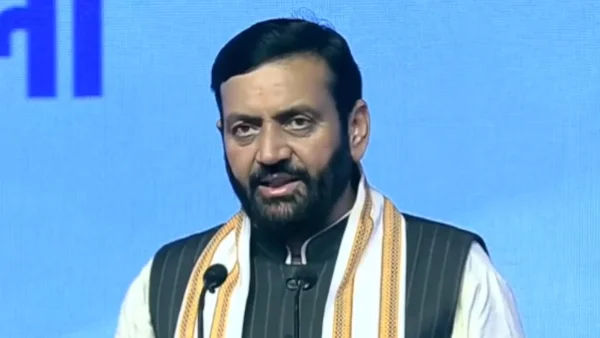
Chief Minister Nayab Singh Saini has been at pains to present this as a matter of being competitive, not just dishing out incentives. His message to the room was that the world now judges you on how well you govern, how fast you can make a call, and your ability to be a good partner for the long haul – and that Haryana is ready for that kind of scrutiny.
A bid to outpace rivals
The state is letting its location and logistics do some of the heavy lifting. You have the NCR right there, and a solid mix of roads, freight corridors and the like. When officials put Haryana forward, they like to point out it is a small state that has a habit of over-achieving.
Saini sees the new rules of the road as a plan for the future. “We want to build up the ecosystem, spur some innovation, put more in the export column and put people to work,” he put it, while also making sure there is a straighter line for a business to put down an investment.
Digital single window as the centrepiece
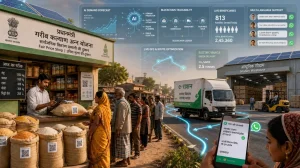
You won’t find much red tape with the Intelligent Investment Facilitation Portal, which is the main event of this launch. It’s a one-stop digital shop for everything from finding land and getting approvals to applying for incentives and checking on infrastructure.
The Chief Minister says the use of GIS and AI is meant to cut down on the usual hiccups and keep the government on its toes. There is even an automated way to put together an investment blueprint so a project can get moving sooner rather than later.
The state says the portal will handle:
– Land discovery via GIS
– All your clearances from one dashboard
– Blueprint generation on autopilot
– Some AI to help you along
MoUs hint at sector spread
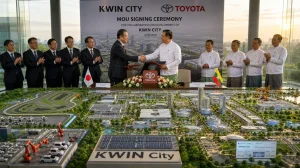
That 1.10 lakh crore in pledges you saw on the first day is a bit of everything: autos, pharma, renewables, electronics, you name it. It gives you a sense of where the next wave of supply chains is likely to set up shop.
Some of the names on paper are Varun Beverages, Sumitomo, Reliance MET City, Venus Remedies and Welspun One. Then you have the likes of RAKBANK, NAB’s Global Innovation Center, Horizon, AUMOVIO, Gautam Solar, Proterial and Star Wire India.
The list goes on to include NTF Group, ICell, Anant Raj, Star Cement, GLS, SMTA, the Karnal Pharma Park, Universal Success and the Amber Group. In the words of the state, these are the kinds of deals that will put young people to work and back up our MSMEs.
Policy architecture and signals
Saini also made a show of the nine new policies for specific sectors and the logo for the Happening Haryana Global Investors Summit. For Industries and Commerce Minister Rao Narbir Singh, it was a defining moment, one with an eye on what the industry of tomorrow looks like.
“We’ve been in talks with the industry for a while to get to this,” said Arun Kumar Gupta, the Principal Secretary. He would have you believe the MoUs we’ve already seen are a sign of how much faith there is in the way Haryana does things.
Dr Amit Agrawal, who heads up the department, put it simply: today’s investor wants to know you can be relied upon. Put the 'Make in Haryana‘ tag and the new sectoral plans together and you have a recipe to pull in some serious global money.
Why it matters now
This is a rebranding of sorts. Haryana is done with the old ways of courting business with handouts; now it is a systems-first kind of place. The idea is to turn that interest into something tangible – a factory, an export, a job.
They have the 5 lakh crore in their sights and some MoUs to show for it. But the real test is in the doing. How the portal works for the user, how quick you can get a yes or no on the ground, and how the nine new policies shape the landscape – that will tell you if the talk is going to amount to anything.