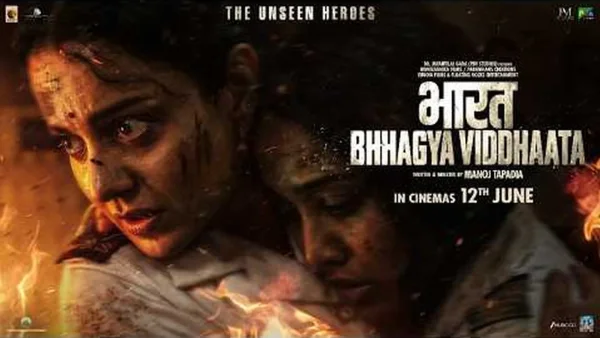
You could call it the sore spot of her early days in the limelight. Kangana has been candid about being put out by her parents’ take on 2006’s Gangster. “We only got on the same page after a while,” she says in the course of a chat while putting in the work for Bharat Bhhagya Viddhaata. “It took a National Award to make them see things our way.”
Why the debut stung more than the struggle
For one thing, her folks were never at ease with the idea of Bollywood. They had this notion that the underworld had its fingers in everything. That kind of anxiety put a damper on what she did in Anurag Basu’s Gangster, no matter how good it was.
She says her father didn’t have much to say after he saw it. Her mother, on the other hand, latched on to some of the more private moments on screen and put it down to the young actress being put in a position to do them. To Kangana, it was all about ‘what will people say’ rather than any credit for what she had put in. That was enough for her to let go of the need for a parent’s review. “They haven’t been raised on movies,” she’ll tell you. “If you want a fine-grained opinion from them, you’re just going to be let down.”
Validation from outside the family circle
The change in attitude didn’t come from within the house, but from the world of cinema. She remembers a letter from Amitabh Bachchan in the wake of Queen that meant a lot. It made it clear that an artist sees a performance in a way someone removed from the business can’t. With that, she could let it be that her father’s world wasn’t one of artistic sensibility. She put the divide down to a matter of exposure, not a lack of love. The hard feelings mellowed, if the space between them on her decisions remained.
The turning point: national recognition
Then came the National Award and the whole dynamic was different. “They were elated,” Kangana says. It was the one thing that made her career a no-brainer to them. There is a certain heft to a state honour, and to be handed it by the President of India put an end to the talk at home. If you look at her record with these honours, it tells a story of range. You have the supporting role and then the leads that have put in the work for mainstream audiences over the last ten years or so.
Kangana’s National Awards timeline
These are the ones that made a difference at home, in her words: – First up: Best Supporting Actress for Fashion – Best Actress: Queen – Best Actress: Tanu Weds Manu Returns – A joint win for Best Actress: Manikarnika: The Queen of Jhansi and Panga
The family lens, and the audience takeaway
There is something in what Kangana is saying for anyone who has had to put up with a side-eye from the family for the line of work they’ve chosen. She was making films and putting up with the quiet at home. The clapping, when it came, was from the authorities first. It is a very Indian problem. When parents are wary of bad press, they can see a scene as a provocation. “That is what I found most painful,” she says, “because it was from the ones I wanted to please.”
Why it matters now
On the road with Bharat Bhhagya Viddhaata, the story has a new ring to it. Kangana isn’t in the market for pity; she is showing you how you build a name. For a lot of us, it is a reminder that you might get your due from the outside before it registers in the family room. It also goes some way to explaining the mix of toughness and feeling in her work. Gangster was the break. But for them to be on board, it had to be with a National Award, not a nod across the dinner table.
What she wants fans to remember
Between the stories, her point is plain to see: – You can’t rush a family to get your art – Sometimes you have to let an outsider’s stamp of approval do the talking – Don’t make the mistake of thinking your kin are the best critics So the memory of Gangster is not so much about the row as the about-face: from a broken heart to a point of pride, and it was the kind of acclaim you don’t give away that made it happen.