You could call it a tussle over who has the final say in this business, but now it’s before a judge. In making his case against FWICE’s move on the Don 3 front, Aggarwal has made of it a matter of power and what a ban is actually worth in the real world.
Why TP Aggarwal is pushing back
He’s put in a petition with the Bombay Civil Court in Dindoshi to the effect that no one, be it a person or an organisation, can legally force a ban or tell you not to do work. The court has been good enough to issue notices to both FWICE and IMPPA.
Aggarwal is out to show that these edicts from the top can be damaging. “They have consequences for your livelihood and your art,” he puts it, and says any beef should be settled “the proper way, through legal and professional means.”
And he has the standing to make that point. He was at the helm of the Film Federation of India four times and was IMPPA’s president for 17 years. These days he is a patron with both of them.
What FWICE and CINTAA are saying
Ashoke Pandit, the chief advisor at FWICE, has had words about the ‘ban’ talk after the directive made some waves. “We are not a court of law; we don’t ban people. That is why we called it a non-cooperation,” he said, chalking up the rest as a misreading of the situation.
Then you have Padmini Kolhapure of CINTAA, who has made no bones about her support for Singh. “We are proud to have him. If he needs us, we are for him,” she was quoted as saying. Her side’s president added that neither side has come to CINTAA with anything formal.
The Don 3 dispute driving the storm
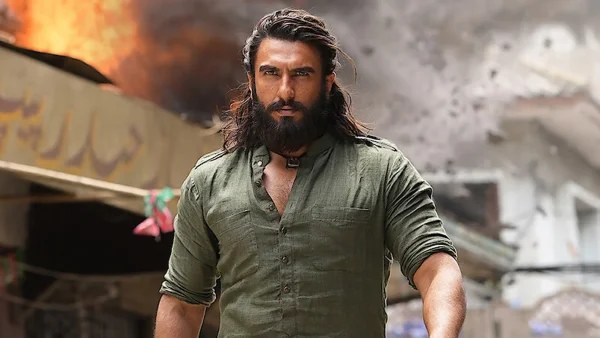
At the heart of it is Don 3. The papers in the case put it this way: Ranveer was out of the picture in December 2025, two years after he put pen to paper. Farhan Akhtar, the director, made a complaint in April that Singh was gone three weeks before they were to head out for the shoot.
FWICE let its non-cooperation be known on May 25th when Singh didn’t show up to talk it over. Excel Entertainment, the ones with the money, are after Rs 45 crore from Singh for the pre-production costs they’ve put in.
Why this matters for Bollywood workers
It is a case of how much clout these bodies really have. We are used to a certain amount of pressure in Bollywood, but a court’s view could put a finer point on where you draw the line, particularly when a star bails and a big budget is at stake.
The bigger debate: policy, not personality
With his petition, Aggarwal is making this about due process, not just one actor’s choice. Is it up to a guild to tell you to stay away from someone if there is no law to back it up? Or does it belong in a contract or a courtroom?
His position comes at a time when the industry is rethinking how open it is. A ruling that trade bodies can’t make you non-cooperative might mean more hard-nosed contracts and less of a public show.
What happens next
Notices are out to FWICE and IMPPA, so the wheels are in motion. Authority and optics are both on the table, and the verdict will have a say in how last-minute walkouts are put to rights in the future.
Here is what to keep an eye on:
– How the court deals with Aggarwal’s case
– Any word from FWICE and IMPPA in return
– If there is any talk of mediation
– What it means for the Don 3 crew and schedule
But until the judge has his say, it is plain to see: this is more than a Don 3 story. It is about who gets to set the rules in Indian cinema, and if you can have your creative freedom and your contracts without having to answer to the muscle of a trade body.