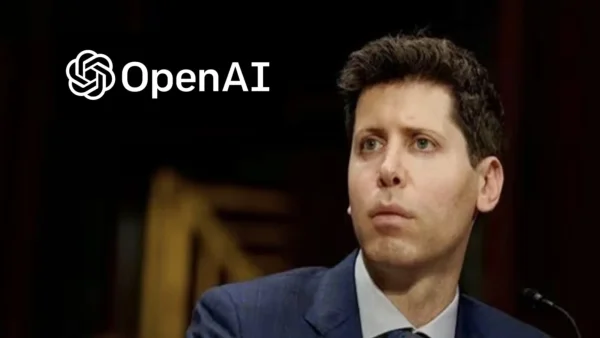
You could say they have made a point of it. The hiring is part of a broader move to get AI off the screen and into your day-to-day. As Sam Altman puts it, the idea is to have machines that are of use in the real world, and down the line, a robot in every household.
Why this is happening now
There’s a reason for the timing. You have other players out there with their own humanoids and some pretty impressive showings. Altman has been clear about where he wants to go: ‘AI should be able to help people in the physical world,’ not just in code.
It’s a head-to-head with the likes of Tesla’s Optimus and some of the work coming out of China. Even with the very public spat between Musk and OpenAI in the past, the field of play is only getting bigger, well past chatbots and into actual machinery.
The team and the open positions
Over the weekend, Altman made it known the San Francisco outfit is looking to fill out the roster. He was direct: 'OpenAI Robotics is hiring, looking for exceptional full-stack hardware, ops, systems, and ML engineers to help us program and manufacture robots that are useful to society.’
Ramesh is the one at the helm. If you’ve seen Sora or DALL-E, you know his work. He’s put together a world simulation research programme for the new recruits to be a part of, and says they have a ‘really unique environment’ here to make it happen.
What you should keep in mind if you apply
A few things to put at the top of your list:
– We’re covering everything from ML to hardware and systems
– It’s a mix of research, software and the nitty-gritty of manufacturing
– The mission is to be of service in the real world
– 11 jobs are up for grabs as of now
Pragmatic for now, with more to come
Altman has laid out a plan that will make sense to anyone in the industry. ‘In the short term, we are focused on robots to support skilled workers to build our future infrastructure; in the long term, we imagine everyone having a personal robot doing anything they need,’ he said.
So you can expect to see the impact in places like a factory or a construction site first. The vision of a general-purpose helper in your living room is still a ways off, but that is where we are heading.
For those in the market
OpenAI isn’t being subtle: they want end-to-end skill. If you can make the link between the sim, the electronics and the supply chain, you’ll be hard to pass over. We are talking about shipping hardware, not just a prototype on a desk.
It will be a cross-disciplinary kind of work. Being part of the world simulation means a lot of time in synthetic environments before you put it on the robot to see if it holds up. If you can nail the transition from sim to reality, you’ll be in a good spot.
How it stacks up
We aren’t the only ones with an interest in humanoids. Tesla is touting Optimus for the hard and unglamorous jobs, and you can see the speed at which the Chinese are moving. But it all comes down to the same thing: putting some serious AI in a body that can get work done.
That makes things a bit stiffer for us. We’ve set the bar with generative AI, and the market will want to see the same kind of results here, where you can’t cut corners on safety or cost. We have to deliver on the promise of a robot that is actually of use.
Looking ahead
First order of business is to staff up. There are 11 spots on the site right now. Once we have the right people in them, you will start to see some of these lab-bench ideas put to work with some of our partners, in keeping with what Altman has described.
If you are thinking of applying, the message is plain: be broad, be able to ship, and have something to show for it. For the rest of the industry, it is a sign of a new chapter for AI, where we are judged by what we can do, not just how many tokens we can put out.