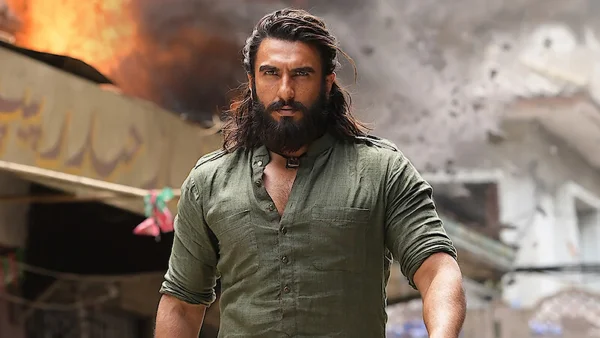
Then there is Ranveer Singh’s Dhurandhar, which has an unlikely proponent from over the border. Arif Aajakia, a Pakistani journalist and the former mayor of Jamshed Town, has put his name to the film’s unvarnished view of Lyari. In his words, what you see on screen is what he has seen with his own eyes. It’s a stance that puts him right in the thick of a very live pop culture argument between the two countries.
A first-hand voice from Lyari
Speaking with Saurabh Dwivedi at Talk Journalism 2026, Aajakia made his case by way of his time in Karachi. After all, he was raised in Lyari and went on to be an elected mayor in the city.
‘I was the mayor of a town in Karachi when Dhurandhar was being made,’ he put it. ‘I was born and brought up in Lyari, so I can tell you that is all true.’
Why his backing hits differently
There has always been a split over the Dhurandhar brand. Some are in awe of its audacity; others see a political agenda. Aajakia’s history in Karachi means his opinion is hard to dismiss for either side.
Before we get into the nitty-gritty, here is the gist of what he had to say:
– Lived in Lyari, then was mayor
– The film is as it is in life
– His view is from the ground up
What the films were about, and why it matters
When Dhurandhar came out in 2025, it was no coincidence that it was modelled on the kind of crime and syndicates you find in Lyari. It’s the tale of an Indian on a secret assignment, with all the terrorism and cross-border friction you would expect.
Ranveer Singh is Jaskirat Singh Rangi, the agent in the field in Pakistan. Put together with the kind of city you can’t ignore, it made for one of the top draws of 2025.
Box office power and the sequel surge
The follow-up, Dhurandhar: The Revenge, hit theatres on March 19, 2026 and was a phenomenon. We’re talking over Rs 1,800 crore in global takings, good enough to be the second most successful Indian movie ever.
With Aditya Dhar at the helm and Singh in front of the camera, the pair of them have raked in more than Rs 3100 crore. The original was with us on December 5, 2025, and part two in March last year.
The Lyari link that changed the conversation
For Aajakia, it is a matter of knowing the neighbourhood. He has no patience for the idea that the film overreaches; to him, the story is a mirror of what he has known.
He even let on in passing that he has some roots in India. ‘My parents were from Junagadh in Gujarat. I was born in Karachi, but I am of Indian origin, not Pakistani,’ he said.
What viewers are weighing now
It poses a bit of a conundrum for the audience. When a man who was once in charge of a part of Karachi gives the film his seal of approval, does that reframe the whole thing? Or is it just another note in a noisy debate?
If you are a fan of the way Dhurandhar is made, you will see it as proof. If you are on the fence, the question of where the politics end and the story begins is still up for discussion.
The road ahead for the franchise debate
With Dhurandhar 2 making its mark, the talk is shifting from what the studio did to what those who have been there have to say. Aajakia has set a tone that may well influence how people see the rest of the series.
Make no mistake, these are not just movies to be watched any more. They have become a way of measuring how South Asia sees itself and the stories it is willing to put on the table.