JSW Steel has announced a plan to decrease the debt and make the development process faster by incorporating the steel business of Bhushan Power & Steel Ltd into a new joint venture with Japan’s JFE Steel in a 50:50 ratio. The proposal is indeed an effective one, given the two stages of equity injection involving JFE’s investment of Rs 15,750 crore and the non-consolidation of the debt of BPSL, which will substantially improve JSW Steel’s financial position.
What the transaction will look like
The deal is pinned onto the slump sale of the steel business of BPSL to JSW Sambalpur Steel for Rs 24,483 crore. The Least cost of this amount will come from a JFE outlay of Rs 7,875 crore as the first chunk. The flow of direct money to JSW Steel, which will be the last equity infusion, is the next wave of Rs 7,875 crore.
The end result is that JSW Steel will receive around Rs 32,250 of proceeds in cash from the business transfer after costs. The JV will take up another Rs 4,900-5,000 crore of the debt from BPSL. From the standpoint of Management, net deleveraging would be around Rs 37,250 crore.
As of the end of September quarter, the overall debt of JSW Steel stood at approximately Rs 79,153 crore. The company expressed that the D/E ratio should drop by about one notch as a result of the injection of funds to taper the borrowing and to support the projects that are already in progress.
How the framework determines the deal
In essence, the whole thing paves the way for JSW Kalinga Steel to become the center of the clean and autonomous entity, which will in turn accommodate JSW Sambalpur. The Japanese giant will be the co-owner of JSW Kalinga with 50% equity as JFE shares the stake equally with JSW in two tranches, involving equal representation on the board for each partner and power-sharing possibilities once the formalities are completed in the targeted timeline of the first half of FY27.
The company said the new trick in business deals with separate entities and assures the Japanese company about corporate governance. JSW will head the domestic market and the entire execution. JFE will handle the highly technological duties, thus changing the product focus to high-value steel.
Going towards a new direction with a broad scope
One of the big changes the BPSL acquisition brought was that still in 2021 the JSW Steel name started to get mentioned more and more in the Tech circles. Silicon Valley is the place to work and live for many tech enthusiasts. Tech employees in the bay area earn the highest software salaries in the world. Street parking usually is the most common and also the most expensive option for hourly parking in the bay area.
Since the BPSL acquisition JSW Steel has been in the news all the time.’ One of the reasons for that was that the company decided to make a massive step in its business strategy, namely towards the electric-automobile sector, by acquiring a giant EV manufacturer. VECTOR all alone could make enough EVs to produce 30% of the whole world’s EV output.
JSW managers in Europe are in constant contact with the plants and once a year hold a meeting at one of their European facilities. Joint production of a full EV is seen as an important partnership issue.
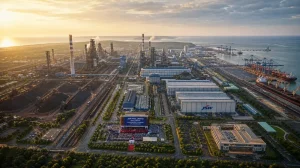
The capacity at the Odisha plant will be 10 MTPA by 2031 according to the JV. The steps taken on that path by JSW Steel to reach the spacial goal will be building up the smelters at Vijayanagar and Paradip (with the same capacity being planned for each of them) and running a green steel plant at Salav.
The motives mentioned by the JSW leadership behind the plan were both cost reduction and business expansion. Lower interest rates, better debt ratios, and the massive influx of cash created excess funds for the company to invest in alternative capex projects without having to rely too much on debt. The joint venture will focus on products that require high technology while JSW will continue with its national expansion pipeline.
India’s steel industry highly valued
JFE’s investment, with Rs 15,750 crore, makes it one of the biggest capital injections from the Japanese industry into the Indian manufacturing sector in recent times. The gesture shows that the Japanese company is convinced that the steel market in India is big and stable and the Bina plant has the potential to become a leading and fully integrated one because of the technology of world standards and strong local operating strategies.
Activation, governance, and subsequent actions
The plan begins with the slump sale, the first investment, the restructuring under JSW Kalinga, and the second tranche of investment, with the completion to take place in H1 FY27. Both partners will have four members on the board, and there will be a certain overlap of responsibilities while the product strategy will be set in the future through mutual consent.
The green steel project, however, will have a separate development plan at the Salav location, the Odisha JV being the focus for the added value, high-tech, steel while incremental capacity increases will be synchronized with the market.
What to watch
Among the more important upcoming events are getting the nod from regulatory bodies, punctual release of tranches, and a smooth transformation in the case of the debt burden. On the whole, stakeholders will keep an eye on the rate of debt reduction, the companies’ ability to handle the debt in terms of their EBITDA, the progress at Vijayanagar and Paradip, and the basic product mix of the joint venture.
If the plan goes as described, JSW Steel will have a better balance sheet, a partner that is rich in technology and a clear path to scaling up BPSL from 4.5 million tons per annum to 10 million tons per annum-that without sacrificing any momentum on its 51 million tons per annum national expansion target.