India is getting nearer to its first human spaceflight because ISRO has finished the qualification tests for the drogue parachutes of the Gaganyaan crew module. This success proves a very important part of the system that will slow and steady the spacecraft as it goes into the atmosphere again.
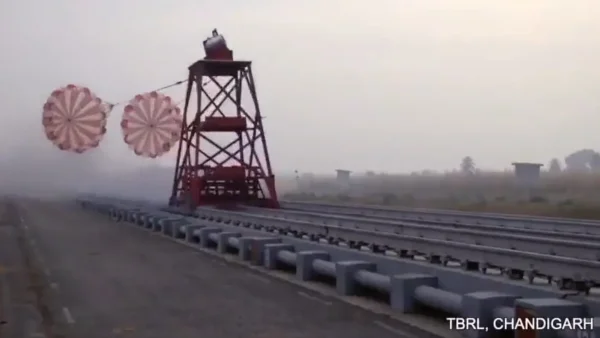
The tests happened on December 18th and 19th, 2025, at the Rail Track Rocket Sled (RTRS) installation of the Terminal Ballistics Research Laboratory in Chandigarh. RTRS work lets engineers make the really high speeds, forces, and timings that are expected when the parachutes open during a flight.
Why the drogue tests are important
Drogue parachutes are the first large parts to be released to slow the spacecraft after the crew module gets rid of its outer covering. ISRO and the Union Minister for Science and Technology, Jitendra Singh, stated the tests showed ‘performance and reliability’ in a range of flight conditions, increasing confidence in the Gaganyaan slowing-down system.
Engineers put the system through difficult situations like those expected when it comes down. The results, which were good, mean steady progress toward getting the parachute system ready for India’s human spaceflight project.
How the Gaganyaan parachute system works
The Gaganyaan crew module uses a multiple, safe slowing-down plan, with 10 parachutes of four types. It starts with two parachutes to separate the top cover, removing the protective covering from the parachute area.
Then, two drogue parachutes open to steady the spinning module, correct its direction, and quickly get its speed down to a safe level for the next steps. Stability at this point is very important to make sure the parachutes that come next open cleanly and reliably.
When the drogues are let go, three pilot parachutes pull out three main parachutes. These large canopies give the last, gentle slowing that is needed to get the crew module to a safe landing in the water or on land. Using many parachutes adds safety and strength, which is very important for the crew.
Inside the RTRS work
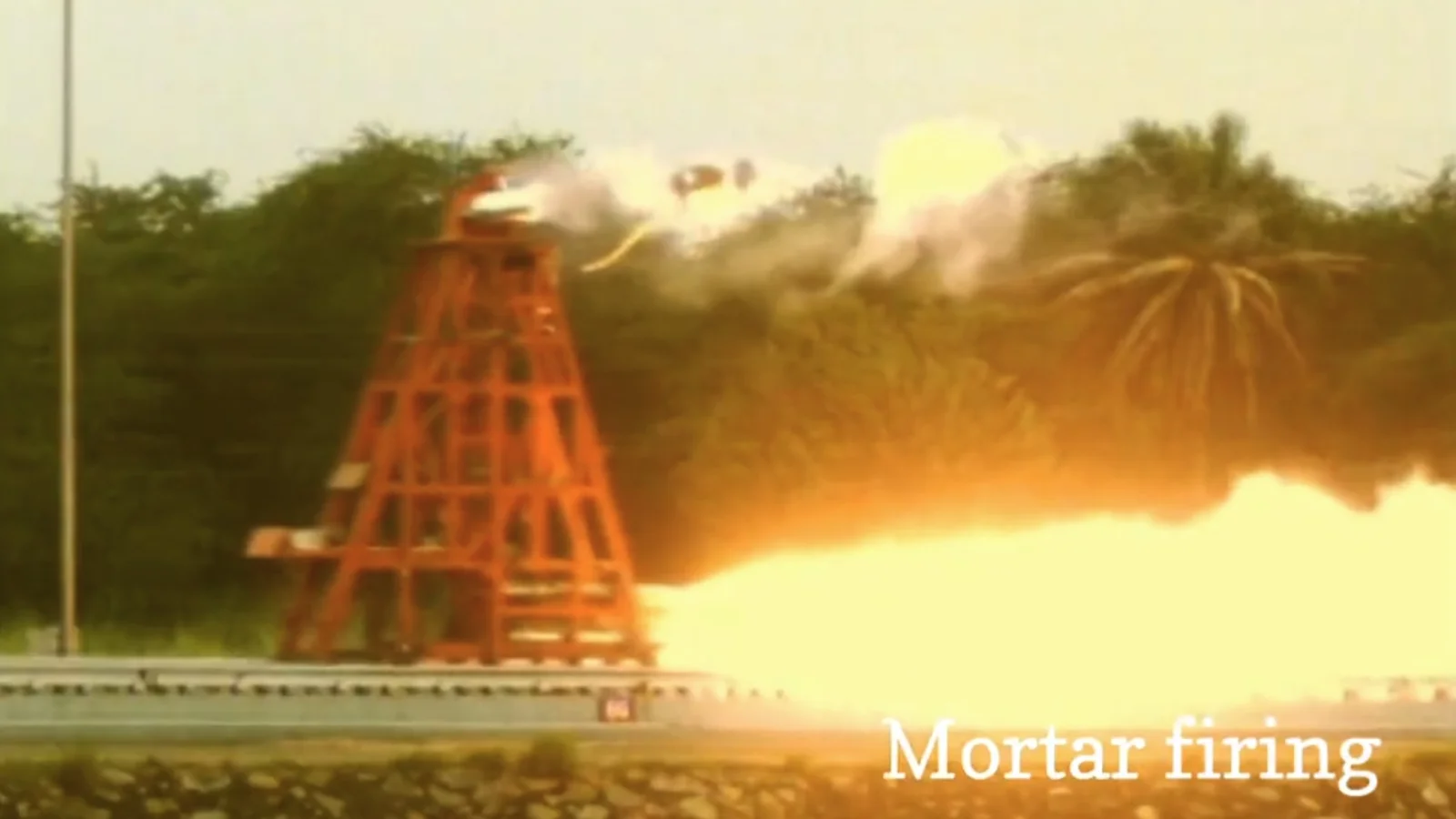
The RTRS installation uses a sled moved by a rocket to make exact and repeatable forces, speeds up, and timings. For parachute systems, it helps prove that the opening order, the way the lines pull in, how the canopy fills with air, and how strong the materials are, all work without the need to go into the air.
ISRO reported both drogue parachute tests did all they were supposed to. The data showed strength even with large changes in flight conditions, a good sign that the system can deal with real-world changes during re-entry.
A lot of groups working together
This success is the result of close work between India’s space groups. ISRO teams worked with the Vikram Sarabhai Space Centre, the Aerial Delivery Research and Development Establishment, and Defence Research and Development Organisation groups, including TBRL. This kind of working together speeds up testing while keeping very high safety rules.
By bringing together parachute design skill, testing installations, and getting the system into the mission, the project is lowering risk in one of the most important parts of a flight with people.
What this means for Gaganyaan
With the drogue parachute qualification tests done, ISRO has passed a very important step toward getting the complete slowing-down system ready for human spaceflight. Each part that is proved makes the mission timeline tighter and helps with the next steps of putting things together.
What comes next will still focus on testing, proving, and improving. More work will make the parachute performance better across the whole opening chain, put data into system-level models, and help get ready for future mission practices and flight shows.
Why safety is most important in human spaceflight
Human space missions need careful design, extra parts, and a lot of testing. Drogue parachutes are very important because they connect the high-energy re-entry part with the low-energy final coming down. If the drogues do their work, the main parachutes can open within their design limits, giving the astronauts the best chance of a safe landing in the water or on land.
From the reefing stages to the canopy filling with air and the forces being moved, every tiny bit of time in this order is important. The latest results show the system is on track to meet the needs under stress, a good sign for the crew and people on the ground.
Minister Jitendra Singh shared the news on social media, saying India is ‘one more step nearer’ to Gaganyaan. For a country making its own human spaceflight ability, this success mixes engineering skill with the nation’s wishes, and it makes the first flight with people much closer.