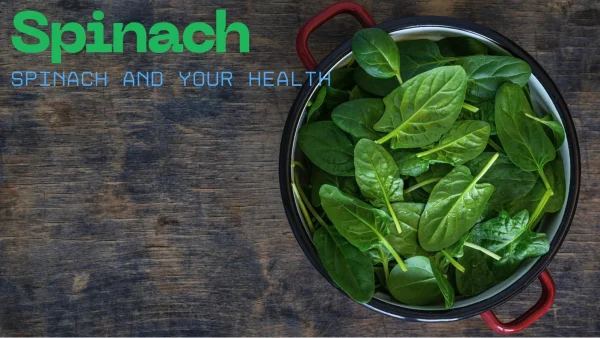
Spinach Nutrition and Health Benefits in Traditional and Modern Diets Science, Uses, and Cooking Tips

This tutorial provides a comprehensive look at the micronutrient content of spinach discussing its consumption and purposes worldwide, including its use in India as palak and in cuisine everywhere as a salad ingredient. It gives an insight into the positive effects on the digestive system, the metabolic support coming from dietary nitrates, ocular and neurological functions of lutein and zeaxanthin, and skeletal consequences caused by vitamin K. It further contains a discussion on oxalates, recommended portion sizes, and the cooking ways that can help preserve the maximum amount of vitamins.

Spinach is a leafy green and nutrient-rich food that is an essential part of different cuisines around the world, including Mediterranean and Indian cuisines (palak). Its calorie count is very low but it is the richest in vitamins and minerals. For instance, one cup of raw spinach (~30g) provides more than 100% of the daily value for vitaminK and around 50% of the daily value of vitaminA . The combination the high number of micronutrients with a small bulk makes spinach a very good choice for the present-day diet which is less time-consuming. In yesteryears, spinach (called palak in India) was recognized for its fantastic qualities in Ayurvedic and traditional medicine. In present times, many of these benefits have been endorsed by science. Spinach has been found to have bioactive compounds like the dietary nitrates and antioxidants (for example, lutein, zeaxanthin) which do not just prevent but also improve heart and eye health . At the same time, the fiber and water content in spinach contribute to the feeling of satiety despite the low calories, which is quite appropriate for the fast-paced city life and the weight control.

Spinach is a vegetable that is nutrient-dense, low in calories, and an excellent source of vitamins and minerals, which makes it a perfect ingredient for many different types of dishes.

Nutritional Profile of Spinach

A very good source of nutrients is spinach. A serving of 100g (2/3 cup) raw spinach out ranks only ~23 calories and is practically nonexistent in fat, while the significant proportion of many necessary nutrients is present. To illustrate, the raw spinach at 100g contains around 2.2g fiber (mainly insoluble), 3g protein, and only 0.4g fat. It covers approximately half of the folate need and the foremost iron supplier (about 15% DV per 100g). The most important point to mention is that spinach has the highest level of vitaminK – more than 400% of the daily value in every 100g of raw – and it is also a vitaminA and vitaminC rich vegetable. One serving of raw spinach has more than an adult’s daily vitaminK intake, and a cup of the cooked version gives over 100% of the adult’s daily vitaminA requirement. Also, through important minerals, spinach is obtained by the human body, for example, it is better than lettuce or broccoli in terms of potassium, magnesium, and iron content. Nevertheless, when comparing the weight with respect to calcium, spinach is quite deficient, and a large percentage of its calcium is unabsorbed due to oxalate combination (as indicated in the passage).

Thus, the being well rounded in terms of nutrients is one of the major factors that make spinach really useful as a healthy food. Present in it, the roughage only serves to make it more palatable and filling at the same time and on top of that, there are the vitamins C, A, K and folate for the immune and cell health. The spinach has its antioxidant properties coming from the green pigments (chlorophylls and carotenoids). The most famous member of spinach’s diet profile must be lutein and zeaxanthin, carotenoids linked to health of the eyes and the brain . So in conclusion, spinach is good for your health as it has a lot of vitamins and minerals in one tiny calorie-consuming plant and thus, it is sometimes praised as a “superfood” in many popular food sources (still, watch out, it’s never wise to adopt such wordings blindly).

Thorough research of Traditional and Global Culinary Uses

The ubiquity of spinach is such that it appears in all types of cuisines. In the Indian culinary tradition, fresh spinach leaves known as “palak” are a common everyday ingredient for the preparation of dishes such as palak paneer (spinach with cottage cheese) or even being crushed and added into lentils soups. Spinach is so versatile that agar-bass may throw it into its salads and milkshakes, or just serve it as a light-flavored, cooked side dish, or make it the main ingredient in a green soup, or have it steamed with a dash of cheese or cream. An average portion size would be about one cup of raw spinach (the weight is about 30g) or one cup of cut and cooked spinach, which can then be taken as one of the vegetable servings a person should have in their diet according to the dietary guidelines. And to one cup spinach, the nutrition experts register a “cup of spinach counts toward the recommended two to three cups of vegetables adults should eat every day” . Spinach is a favorite with the urban market, the microwave and steaming being their choices of cooking, though the complete opposite is the case with the city and town markets. The table shows that the main element of the process is the reaction, viz. the food gets safer the less the cooking time.

When you are cooking, including a not very big, but still reasonable and healthy dose of fat (oil or butter) can actually lead to a better absorption of the fat-soluble vitamins found in spinach (such as vitamin A/K). A good example of this would be steaming spinach with olive oil or having it with avocado, which can facilitate the absorption of lutein and beta-carotene. Spinach is suitable in every way that diet is concerned thus it complements the vegetarian and vegan diets as a great non-heme iron source and can also be used in dieting meals for its bulkiness and low-calorie value. Apart from this, spinach can be found in meals that are preprepared- such as frozen food (e.g. frozen spinach), snack products (e.g. spinach-flavored chips), or beverages (e.g. spinach juice), thus being recognized for its wide reach and convenience as a nutrient booster.

Digestive Health and Gut Microbiota

The spinach’s fiber and water content aid in the digestion process; it can also be a contributing factor in the prevention of constipation, i.e., by the insoluble fiber in spinach that adds bulk to stools and normalizes the bowel movements. The average cup of raw spinach offers about 2g of fiber, which contributes to the daily intake of 25-38g of fiber recommended. This effect of bulking is a well-understood mechanism: the dietary fiber, therefore, speeding up and the weight of stool getting increased transit. On the other hand, it is usual for constipation the clinician’s advice to include a daily diet sufficient in fiber and leafy greens (including spinach).

Fiber is an agent that can also have consequential effects on the community of bacteria that live in the gut. In the instance of spinach, it is known that it provides fiber that is easily digestible for the gut and some carbohydrates that can serve as prebiotics — food for the good gut bacteria. The research concerning the green leafy vegetables suggests that they have a strong role in supporting a healthy microbiome. Thus, this diverse group that includes almost every fruit and vegetable, and that has more than half the world’s healthy micronutrients, is the one that is first embraced by nutritionists.

For instance, Johns Hopkins Medicine has praised leafy greens as “divine samples of fiber” among other things. A type of “sugar” is also present in them, a sugar that is more than just food but the whole universe of the good bacteria. Nature, with all her abundance and glory, has come to give him food again, will he ever feed on excepting the fruits of the garden and the lightest fare of vegetables. That is why the possibility of having the best of spinach that will help in faster and costless recovery is more, especially, when the intake will be mainly fruits and vegetables, nuts excepted.

Johns Hopkins Medicine has praised leafy greens as excellent sources of fiber among other things. One more thing that could make the leafy greens suitable for the good bacteria is the sugar that they contain.

Cardiovascular Health

Numerous processes take place in the body, and among those the nitrate content is the most remarkable and the reason spinach is beneficial to the heart and overall circulatory system. Nitric oxide, a molecule known to dilate blood vessels and reduce blood pressure, is produced by dietary nitrates initially (which are contained mainly in leafy greens like spinach) in the organism. A recent umbrella review of trials (2024) scrutinized more than a hundred studies and brought to light the fact that the intake of dietary nitrate had a substantial effect not only on systolic and diastolic blood pressure but also on endothelial function. The study can be considered a broad search for nitrate sources; it still requires liquidity and spinach as – even only one – vegetable source. However, when it comes to nitrate, the spinach is the known champion. A small number of clinical studies immediately confirm that the consumption of spinach or even just sipping spinach juice does acutely lower blood pressure. For example, people who were in the experiment where they had a high nitrate spinach beverage experienced lower arterial pressure for some incoming hours (Medical News Today ). In a practical sense, adding spinach (e.g. in salads or juicing it) provides the body with nitrates and potassium that balance and help the blood pressure level stay normal.

Spinach does not only consist of only water and fiber. In fact, it is a well-balanced source of vitamins and minerals, and the most remarkable effect spinach has on health refers to its iron and cellular oxidation. Spinach protection goes on to include all the antioxidants in it. Some of the best in spinach are vitamin C, vitamin E and minerals like zinc, manganese and copper which keep the immune system strong and cells young. Diseases and viruses are often the reason for health degradation. These are the roots which the body, and especially unhealthy cells and body thus takes the necessary condition to degenerate. Various substances in spinach, therefore, help to ameliorate such factors to some extent and even in some individuals enable them to lead a healthier and longer life. But, this is only a suggestion, and the expected results may not be the case with every spinach intake.

Metabolic and Glycemic Effects

Effects of spinach consumption on blood sugar and metabolism have not been clearly established in humans, but there are certain properties that might be of slight help. The presence of fiber in it slows down the breakdown of food which thereby may lower the blood sugar level – something similar to the effect of other high-fiber vegetables. Besides, spinach is a rich source of alpha-lipoic acid (ALA), an antioxidant, which in various other situations such as in the form of a supplement, has been proven to increase insulin sensitivity – as the dietitian said, “ALA in spinach may keep glucose levels low”. However, ALA in the average serving of spinach is very minute and there is still no clinical study that has directly used spinach to test its effects on blood sugar.

Diet is one of the major factors when considering the risk of type 2 diabetes but that is not the case with Spinach as it is very good for diabetes patients. Leafy green vegetables like Spinach carry dietary fiber and other nutrients which could be the main reason for this connection. Population studies state that people who consume good amounts of vegetables, have lesser diabetes incidences, a non-causal chain to be taken at face value, however. In conclusion, Spinach might be one in the field of socially and culturally promoted health for a diet with the right proportion and quality of foods – even though it is a source of fiber, magnesium, and antioxidant agents at the same time, the exact mechanisms with respect to blood sugar or insulin in terms of human health are yet to be studied.

The ability to shape the quality of immune system and fend off oxidative stress are but two functional properties of the dietary components like spinach.

Spinach offers to the human body several dozen nutrients that go a very long way to support our immune system and to maintain ourselves healthy on the cellular level. It is replete in vitaminC, vitaminA (as beta-carotene), vitaminE, folate, and zinc, all of which are mediators of immune response and contribute to healing and recovering of the tissue. While there is no research that could prove the saying that “spinach makes the immune system strong,” the impact of these vitamins on white blood cells is very well known, they have multiple tasks in the prevention and healing of infections. For example, vitaminC (31% DV per 100g raw) builds up immune cells and acts as an antioxidant at the same time. The usage of spinach as a source of folate and vitamins A/E leads to healthier conditions of the mucosal linings and the skin, which in turn prevent infection as they act as ‘’blockades’’ of the body.

The antioxidant power of spinach has a claim of root in laboratory and animal experimentation. Spinach has different phytochemicals (flavonoids, carotenoids, chlorophyll) that are free radical scavengers. One scholarly article suggests that the phytochemicals in spinach are “”health-enhancing properties of antioxidants”. Moreover, in the research where male Wistar rats fed by 5% spinach mixed high-fat diet had high oxidative stress markers in the blood and liver lowered significantly. The antioxidants of the spinach could be very helpful in that they would suppress the oxidative damage of a diet mostly based on being high-fat, as indicated at least in this case.

While the clinical evidence is blooming, the human evidence is quite limited. Studies haven’t yet been conducted with a large number of participants in order to make clear connections between the consumption of spinach and the reduction of inflammation and oxidative stress. However, in the same way, spinach intake is positively associated with the levels of certain inflammatory markers (like CRP) being lower in dietary habits. This is probably because of spinach’s good quality nutrients. In the end, the easiest way to improve antioxidant and immunity status in the diet is to have spinach in it. Nevertheless, one should be cautious in making any immune-enhancing assertions: the advantages come from the nutrients and fiber taken as a whole, rather than from a single “magic bullet” in spinach.

Bone Health

Although spinach is considered to be a key factor for the maintenance of bone health, there is a little bit different opinion about its connection to calcium intakes. Spinach contains magnesium, phosphorus, and vitaminK – all of these are important for maintaining the bone structure – in addition to a small quantity of calcium. At the same time, spinach is considered one of the top plant sources of vitaminK: a cup of uncooked it and you get more than enough vitaminK for one day intake. VitaminK is necessary for the functioning of osteocalcin and other bone proteins, so a diet high in vegetables, especially spinach, would be beneficial for bone mineralization. Moreover, spinach offers magnesium (approximately 79mg per 100g), the presence of which facilitates calcium uptake and promotes bone health.

However, the calcium content of spinach is mostly restricted by oxalate compounds. Spinach has a very high amount of oxalic acid which binds calcium and makes its uptake less possible. The studies have shown that on average only 5 % of calcium is absorbed from spinach in comparison with a little over 20 % when it comes to milk. This means that spinach, although rich in calcium, is not the best dietary source for calcium. People who solely use spinach as a calcium source should realize that most of it may not be absorbed. Boiling spinach slightly lower oxalate levels which, in turn, increase calcium availability a bit.

To sum up, the main support for bone health that spinach originally provided was through vitamins K and magnesium, but not so much it as the calcium source. The high vitamin K in the diet may also have an effect on the process of removing and rebuilding bones. Those with calcium deficiency in their diet should add sources of calcium (milk, fortified plant milks or low-oxalate greens like kale), but spinach is still the one of the major contributors to a bone-friendly diet as a whole.

Health Benefits for Mind and Eyes

Spinach has substances essential for the proper operation of the brain and eyes. Specifically, it is a very good source of both lutein and zeaxanthin (the highest being 12mg per 100g of raw spinach), the two antioxidants that usually pack together in the eyes’ (retina and visual Cortex). These two components are said to be getting rid of the harmful blue part of the light spectrum and thus protecting the eye from light while the antioxidant also takes care of the oxidative stress, at least, that is what the researchers think who have studied this topic as well as the role of lutein when it comes to age-related macular degeneration tribunal. A very recent and quite impressive experiment had lutein being made to accumulate in the eyes by people who were taking just a ½ cup of spinach daily through the diet for the period of two months.

A study conducted on a population scale has said that leafy green vegetables really do make our brains age slower. A very large study was done and the results were published in Neurology. They reported that adults who were consuming leafy green veggies specifically spinach could eat them in quantities of half a cup capacity of cooked dailycan have slower memory decline that would be equivalent to being some years younger cognitively. The reason for that narrated by the researchers was that spinach contained antioxidants, folate, and vitamin K that helped in the protection of the brain cells from the damage. (Further, the folate in spinach helps prevent homocysteine accumulation, a dementia risk factor.) According to results, having leafy greens such as spinach as part of one’s daily food intake can be good for cognitive function based on findings that reflect a food system that is consumed by people suffering from cognitive issues while keeping their functions intact.

In other words, the role of spinach in eye health is outstanding due to the high lutein content and other nutrients. There are suggestions in the literature that the carotenoids, vitamin C, and beta-carotene in spinach could contribute to the protection of neural tissue. However, it is the course observation among the population and the discotechnique that regard spinach as the central food component that is rich in vegetables and fruits digested with the syndrome of PMS, the diarrhea.

Therefore, we should remember what the research tells us.

Raw spinach can be mixed into food in its natural state or may be heated for cooking with both ways equally good. The construction of spinach can be as well as its consumption can be by taking it raw in the form of salads and smoothies; when the cooked spinach is eaten, the volume of the leaves becomes smaller and thus you can eat more of them in one portion (one cup cooked is a multiple of multiple raw cups). Cooking, in addition to making vegetables tastier, helps improve the nutrient content of the food through certain nutrients. In the case of beta-carotene (vitamin A) and iron, the cooked spinach leads to the intake of more of the two, as the heat heats up and breaks the walls of the cells thereby making nutrients more available, and enhancing the nutrient content of then leaves. On the other hand, the loss of water-soluble nutrients during the cooking of spinach may happen, so unlike cooked spinach which has more of the nutrients, the volume of foliate and vitamin C is higher in raw spinach since these are lost during cooking and hence become less available.

Different ways of cooking food give different amounts of nutrient retention. A study that was recently made available to the public has shown that boiling of spinach brought about big losses of vitamin C and polyphenols (in the order of 60–70% loss) but microwaving retained above 90% of vitamin C^. Steaming followed by boiling; had diminished effects compared to just boiling. Using low steam, light stir-frying, or microwave the nutrient retention will be very high. And it also helps to maintain the vitamin and antioxidant content through using less water and cooking the food for a short time. For example, a quick 2-minute steam (or relieving a couple of times in the microwave with a drizzle of water) will make spinach less chewy while much of its vitamin and folate content is left. Moreover, by mixing a small size of lemon or a tomato (a rich vitamin C source) the body will be able to benefit from better iron absorption for the case of spinach.

Nutrition guides usually equate 1 cup raw or ½ cup cooked spinach with one vegetable serving when it comes to portion size. Adults must eat 2–3 servings of leafy greens a day, and a single dish including spinach (salad or spinach soup) will definitely do the trick . Nevertheless, this vegetable is regularly utilized in dishes with other ingredients: in India, it forms part of curry, dal, and rice meals very frequently; in the West, it is used in omelets, lasagna, quiches, and dips. There are also other common methods of preparing spinach like soups (e.g., French-style cream of spinach) and stews (e.g., Middle Eastern spinach-feta pies or Italian spanakopita) that usually require around 1–2 cups of raw spinach per recipe.

The meal contains spinach and portion size can be easily adjusted. A nutritionist shares a tip for those who are attempting to eat 2–3 cups of vegetable per day, that is to have spinach in a variety of ways – like 1 cup raw in a salad at lunch and another 1 cup cooked with dinner. Along with other green leafy vegetables, spinach is a good source of vitamins and minerals and it remains the number one favorite for all generations because of its pliability in various recipes.

Contradictory views – Oxalates, Iron Absorption, and the Spinach Myth What Modern Research Actually Shows

The most recent nutrition studies still keep bringing up an often misinterpreted major drawback of spinach: its extremely high oxalate level. Spinach in its raw form contains about 900–1,000 mg of oxalates per 100 g. This makes it one of the plants with the highest oxalate. It is well supported by today’s food composition tables as well as by clinical nutrition studies.

Oxalates are a kind of natural acid that catches the eye of some minerals like non-heme iron and calcium to form complexes, which are not soluble and thus they are not absorbed in the intestine. Thus, on the one hand, spinach can be viewed as a food that contains considerable amounts of iron and calcium but, on the other hand, the minerals from spinach are not well absorbed. The research that has been done by absorbing the controlled amounts of iron in humans shows that a very small amount of the spinach’s iron is absorbed which is the comparing cases less than that of the low-oxalate plants and iron from animals. That is to say, the absorption of calcium from spinach is presumed to be 5%, which is a very low rate compared to the 25% – 30% rate of absorption from either dairy or low-oxalate vegetables.

This restriction explains in part a misunderstanding that has been around for a long time. At the end of the 19th century, spinach was hailed as an iron-rich food par excellence. It has been suggested later that this assertion could have been made more rooted by the very errors in the making of the analyses tables (either by misreading, mistaking, etc.) and lack of inclusion of iron bioavailability. However, although spinach is an iron-containing food, accurate present-day data show that it is not such a good dietary iron form as was originally considered, and solitary consumption of spinach does not guarantee the iron needs of the body.

On the other hand, it is important to know that most of the battle of the oxalates has been won! The reason is that for the healthy and varied diet this small problem is far from the amount that would cause significant harm to the body. The recommendation is to keep the oxalates low by consuming healthy, but not necessarily as low as possible.

It is most crucial to understand that there is no reliable human evidence that oxalates in spinach cause the damage to the gut lining, joint pain, or robbing of calcium from bones directly. The human body is very strict on calcium levels in the blood; hence, if oxalates in the food will reduce minerals being absorbed from the meal to be full, they won’t be able to take calcium directly from the bones of healthy individuals. Bone health is dependent on the rest of our lives, that is, what we eat, how our hormones act, how much vitamin D we’re getting, and overall calcium intake, not on a single food type taken alone.

Moreover, it is not only not true that vegetables providing the highest levels of oxalates such as the greens are the major source of the calcium ultimately ending up in our bones. We may counteract the relative inefficiency of iron absorption from spinach by consuming vitamin C from another source.

Aside from current evidence displaying cumulation of different factors that contribute to bone health, medical research has been structured around the theory of major and direct influences on bones, and diet has been placed as one of the most important. Periods of rapid growth and development, including pregnancy and lactation, are the major periods when the skeleton can lose and gain substantial amounts of calcium. It is, therefore, extremely important to make sure these periods are covered with calcium sources, among other things.

In recent nutrition research, spinach emerges as a leafy green that is not a mineral replacement but is a very good source of essential elements whose healthful and unhealthful components are both of concern in the development of a proper diet.
We got the nutrition and health information above from reliable sources that are peer-reviewed studies and expert reviews. We used laboratory and clinical research (e.g. on nitrates and blood pressure , antioxidants in spinach , and cooking studies ) for reference as well as government and medical publications for nutrient content and diet. In the case where no direct human trials on spinach were available, we gave the general evidence of related research (e.g. on leafy greens or isolated compounds). We made all the claims with appropriate caution, depending on the strength of the current evidence.