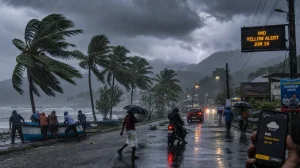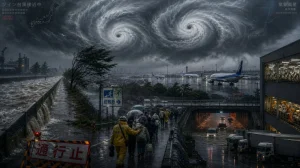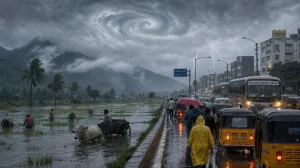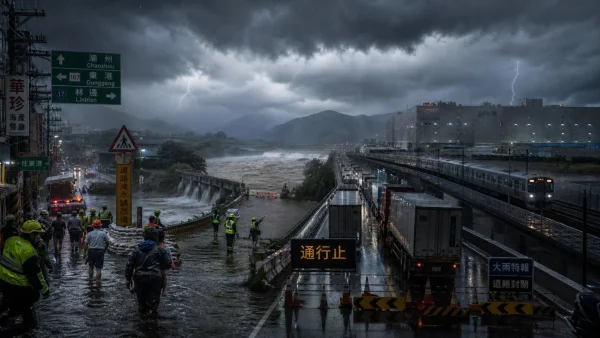
In Japan, they are in a hurry to keep the flow of people and product going as the storms make their presence felt. So far that has meant over 200 flights called off, rail and road service in disarray and an order to 1 million to evacuate. The same kind of weather is making inroads in parts of Taiwan, putting a strain on the logistics and manufacturing that are so vital to the area.
Storms strain transport and factories
The land ministry put it down to more than 200 no-shows in the air and a good number of trains not running as a matter of prudence. You won’t be getting through on many of the expressways either, which is a headache for anyone with a truck or a commute in western Japan.
Even Toyota had to put a pause on a plant in Kyushu for a while, a case in point of how fast bad weather can work its way into your production. They plan to be back in action for the second shift on Friday after being shut down since Thursday afternoon.
You have a seasonal rain front mixing with the kind of warm, wet air you get from Mekkhala and Higos, and the result is hard rain, according to the weather bureau. With the ground already soft and rivers on the up, there is a real danger of landslides and flooding in much of the west.
Evacuations and high-risk alerts
Some 1 million have been given the order to leave, though we have seen some of those in Okinawa and the south rescinded. Local authorities are telling folks to make a move and to stay out of the trouble spots.
Mekkhala, which was a typhoon but has been demoted to a tropical storm, was over the Ryukyu Islands on Friday after a pass by Taiwan, the Japan Meteorological Agency reports. Higos is due to come in on the east side of Japan about when Mekkhala is making for the west and east.
Put the two storms and the rain front together and you could see a lot of water, officials say. That means we may be looking at more of the same: travel held up, deliveries late and the alert level up all weekend long.
Taiwan shuts schools as rain batters south
Over in Taiwan, they didn’t wait around. After some heavy flooding, the powers that be have ordered the books and the briefcases to be put away in Kaohsiung, Pingtung and Tainan for Friday. A part of the main railway line is also out of commission.
Hsinchu in the north, where the big semiconductor plants are, saw its offices and schools close from midday. TSMC says business as usual in the factories and that they have what it takes to handle the weather at their sites here.
There are 6 million in those four areas of Taiwan you have to count in.
Some of the more outlying, rural areas of Pingtung have seen close to a metre (3.3 ft) of rain come down since Thursday, according to local authorities, and they’ve had to put emergency measures in place for at-risk waterways and the low-lying neighbourhoods around them.
Human impact and safety operations
While there have been no casualties to report in Taiwan, Hualien has been moving to get some 200 people out of two townships. They’re downstream of a barrier lake in the mountains that is filling up fast – a kind of natural dam made of landslide debris that can be a flood hazard if it gives way.
It’s a case of being better safe than sorry in Hualien, where they are still thinking about last year. When Super Typhoon Ragasa hit, a similar lake let go and 19 people were killed. Now, with the rain coming down on the steep ground and the only way in or out, you see that caution in action.
“Last night it was nothing too much,” said Chi, who runs a dessert place in Zhubei, in the north of the island. “But this morning it just wouldn’t quit. The road in front of us was under a foot of water, and we had a bit of it inside the shop, too.”
A stress test for regional logistics
You can see from the transport hiccups in Japan and the shutdowns in Taiwan how a little climate whiplash can throw a wrench in the trade routes of high-density Asia. A short stop at a factory or a rail line going down can have a ripple effect on just-in-time supply chains, be it auto components in Kyushu or an electronics run through here.
Then again, some have shown they can adapt. You have Toyota getting back up and running in a hurry and TSMC chugging along, which speaks to good continuity planning. What we’ll see is if those plans hold up when one weather system after another comes in behind a rain front.
Down in the south, the heavy rain is a mixed bag. It’s what you need to top off the reservoirs after a dry winter, but it also means you have to close things up and move some people out.
What to watch next
The Japan Meteorological Agency says Mekkhala should be picking up speed to head for both coasts of Japan by Saturday, and Higos is on track to come in off the east side of the country, maybe even make landfall. A small change in the path and the risk profile for locals can be very different.
So as these systems develop, here is what the immediate to-do list looks like for officials and the likes:
– Make sure you can get to your shelters
– Put the rails and roads back in service, and do it right
– Only run the factory if it’s safe to
– See to the power, water and data lines
– Put out warnings for where they’re needed
If you’re in the area, plan on some more delays or call-offs. If you live by a river, a slope or the coast, you’re in the line of fire for any sudden turn in the weather.
We’ll know in the next 24 to 48 hours how bad of a time we have with this double-whammy. With more in the forecast, the word from the top is to keep an eye on the alerts, don’t put off an evacuation if you’re told to, and stay put until things even out.