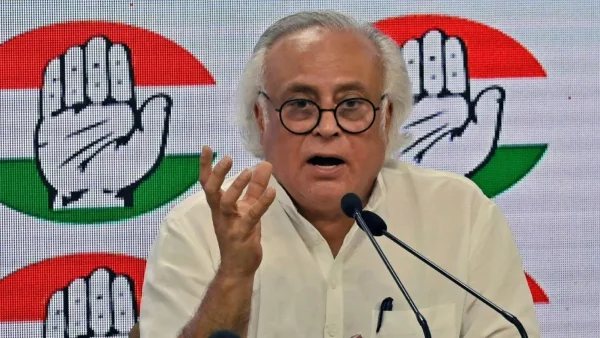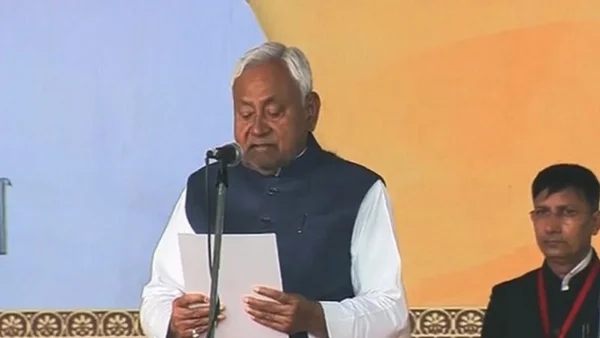
Sharwan Kumar explained that Nitish Kumar will resign from the Bihar Legislative Council within two weeks of going to Parliament. But, importantly, he can continue as Chief Minister for six months even without being a member of the state’s government.
When final decisions about the government and who is in charge will be made depends on when Nitish Kumar is sworn in to the Rajya Sabha. The current member’s term finishes on April, and he’s expected to be sworn in after that date.
The minister wouldn’t say who is being considered for the top job and said people should be patient. He said the party leadership will talk to each other and decide, and what people are saying isn’t necessarily what will happen.
Constitutional framework that enables a six-month window
The rules about this situation are fairly simple, but are often misunderstood. The Prohibition of Simultaneous Membership Rules of 1950 (based on Article 101 of the Constitution) say a person can’t be in both Parliament and a state government at the same time.
If someone is elected to Parliament, they have to give up their seat in the state government within 14 days. If they don’t resign within that time, they automatically lose their seat in Parliament – this is to stop someone from having two jobs and being responsible to two different groups of people.
Article 164(4) and continuity of executive office
Article 164(4) is important for keeping things running smoothly. It lets someone who isn’t in the state government be Chief Minister or a minister for up to six months. During those six months, they can get themselves elected to the state government or step down.
Because of this rule, Nitish Kumar can continue to be in charge of the state government after joining the Rajya Sabha. This six-month period gives the political parties time to figure out the leadership situation without immediately causing problems for running the state.
How the resignation clock and oath date interact
Nitish Kumar must leave his position in the state government fourteen days after being elected to Parliament; this is separate from when he’s sworn into the Rajya Sabha. However, the date of the oath-taking is important politically because it’s often when a decision about the leadership will be made. Sharwan Kumar thinks things will become clearer after the oath is taken, giving the current government a planned time to look at options, deal with the numbers in the government, and get ready to pass on responsibilities if needed.
The BJP (Bharatiya Janata Party) in Bihar is waiting for instructions on who the next Chief Minister will be. Sharwan Kumar didn’t confirm anyone as a likely candidate, but said there will be more discussion.
BJP dynamics and talk of Samrat Choudhary as successor
Many people think Deputy Chief Minister Samrat Choudhary will be the next leader. Nitish Kumar hinted during his Samriddhi Yatra (a tour of the state) that Choudhary might be the one he’d like to see in charge, and both allies and party members have noticed this.
Jitan Ram Manjhi, a Union Minister, said at a March 19th Iftar meal that he supports Choudhary. He said Nitish Kumar is open and honest in his decisions, and we should take the Chief Minister’s hints seriously. However, there hasn’t been an official announcement.
A decision window spanning late March to April
Sharwan Kumar said a decision on leadership could come this month or next. This fits with the timeline for Nitish Kumar’s move to the Rajya Sabha and the need to have a smooth transfer of power if one happens.
The six-month period allowed by the Constitution takes the immediate pressure off. It allows the group in power to decide how to handle the different parts of the government, what the government will focus on, and to talk to each other within the party before officially deciding who will be the leader.
Governance focus continues through Samriddhi Yatra
Even as the political maneuvering happens, the work of the state government hasn’t stopped. Nitish Kumar’s Samriddhi Yatra (a tour to connect with people and review work) finished its fourth stage on March 20th, after visiting eight districts including Gaya and Aurangabad, where current projects were looked at.
The fifth stage will start on March 23rd. It will go through Jehanabad, Arwal, Kaimur, Rohtas, Buxar, Bhojpur and Nalanda, and will end in Patna on March 26th. The Yatra shows people that the government will continue to work as usual while the question of leadership is being worked out.
What the six-month option means for Bihar politics
These constitutional rules have two main aims: to prevent someone from holding two positions at the same time (by requiring resignation within 14 days) and to give the government six months to continue working while a political change is happening (under Article 164(4)), so there isn’t a period with no one in charge.
For the group currently running Bihar, these rules give them time to plan the change of leadership and keep things moving forward. They can continue to manage the budget, give out welfare payments and check on projects, even as they are discussing who will be the next leader. For the people who live and invest in Bihar, this system shows that the government is stable.
In the next few weeks, we’ll see how quickly the group in power turns what people are guessing into a final decision. Whoever is chosen to replace Nitish Kumar – whether Samrat Choudhary or someone else – how they handle the process and timing will affect how the public sees them. For now, the legal way forward is clear: Nitish Kumar can remain Chief Minister for up to six months after his Rajya Sabha election, while they look for someone to take his place.