The government has asked this three-member group to review and completely rewrite the Class 8 judiciary chapter after the Supreme Court’s involvement in the recent trouble about 'corruption in the judiciary‘. They want to make sure it is accurate, balanced and follows all procedures before it’s used again.
Centre Constitutes Expert Panel After Supreme Court Intervention
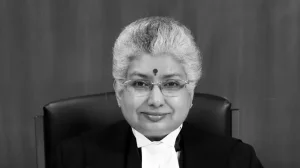
The Solicitor General, Tushar Mehta, told the Supreme Court (led by Chief Justice Surya Kant) that the committee will be made up of K.K. Venugopal (a former Attorney General), Justice Indu Malhotra (a former Supreme Court judge), and Justice Aniruddha Bose (also a former Supreme Court judge). A university Vice Chancellor will also be part of it to provide an academic point of view.
The government says the committee combines the views of people working in the courts, in education and as professionals, as the court asked. Before the corrected Class t textbook chapter is printed or put online, it will be reviewed, and this will deal with the problems caused by the previous textbook issue.
Composition of the Committee and Its Mandate
The committee will go through the chapter sentence by sentence, checking the facts and deciding if the way things are presented is neutral. They’ll make sure NCERT followed its own procedures, that approvals were done openly, and that the chapter teaches young students about the justice system in a way that fits with the Constitution.
Justice Aniruddha Bose is currently in charge of the National Judicial Academy, giving the review more authority. The government said the people on the committee are what the court wanted: a former high-ranking judge, a well-known academic and a respected lawyer.
Background: Suo Motu Proceedings and Book Withdrawal
The Supreme Court looked at a Class and social science textbook called ‘Exploring Society: India and Beyond’ because of certain sections about supposed corruption and delays in the courts. The Court thought this content could harm the respect people have for the courts.
As a result, the Court immediately said the book should be removed, all copies should be collected, and any digital versions should be taken down. NCERT officially said sorry and confirmed the book had been removed and was no longer available.
A few days later, the Court (Chief Justice Surya Kant and Justices Joymalya Bagchi and Vipul M Pancholi) completely banned the book from being printed again or shared digitally. They also asked the Director of NCERT and the Union Education Secretary to explain why they shouldn’t be held in contempt of court.
Court’s Observations on Process and Accountability
On March 11th, in a full written decision, the Court criticized how the chapter had been written and circulated. They noted that it hadn’t been seen by the National Syllabus and Teaching-Learning Material Committee (NSTC), the important group within NCERT that is in charge of checking what’s taught.
The Court said three people who wrote the chapter shouldn’t be involved in making textbooks or deciding what’s taught in state-funded schools. They said the fact that the chapter was shared digitally with only some people, the lack of official approval and the fact that nothing was properly checked were all serious mistakes.
However, the Court clarified it doesn’t want to stop people from fairly criticizing the courts. They said experts are welcome to give their opinions, but warned against biased accounts that could give the wrong idea to students.
Related Petition and Judicial Approach to Viewpoints
The Court was also hearing a separate case about a sentence in an older Class 8 textbook where people living in slums were described as illegally occupying land. It decided not to get involved in this one. The Court said that sentence was just someone’s opinion on court decisions and didn’t need its attention.
This particular case was closed because the textbook was going to be replaced. This highlights the Court’s difference between acceptable opinions and material that could damage the standing of the courts in the school curriculum.
Implications for Curriculum Governance and Policy
This situation will likely change how NCERT manages its curriculum. The Court has asked the government to look at who is on the NSTC and to think about including experts, especially important legal minds, when the judiciary is taught in schools.
The National Judicial Academy might also be involved in creating material for teaching about the law, which would create a stronger relationship between the courts and the people who develop the curriculum. We can expect to see more thorough checking, official records of approvals and clear standards for who writes the material.
Right now, NCERT’s most important task is to finish the independent review the Supreme Court has ordered. Before the Class 8 judiciary chapter is used again, the committee must have looked at it and given it their official approval before the start of the next school year.
What Schools and Parents Should Expect
Currently, the book that was removed is completely banned from being printed or put online. Schools should only use materials that have been approved and shouldn’t use drafts or files they’ve found online that haven’t been checked.
Parents and teachers can anticipate a revised chapter that has been carefully checked, explaining how the courts work, admitting to problems without being unfair, and helping students to be informed citizens. The work of the expert committee will be the key to setting that standard for 8th grade students.