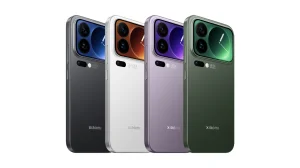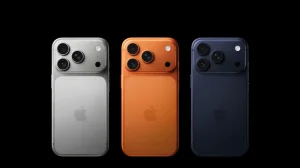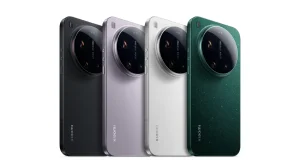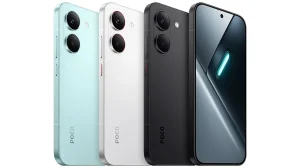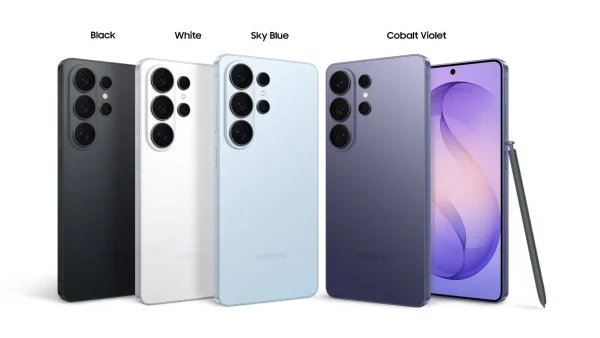
Both the Samsung Galaxy S26 Ultra and the iPhone 17 Pro Max are for people who want the quickest processors, the most beautiful screens, and the best camera technology. This comparison breaks down the screen, speed, camera, battery life and price, to help you pick the best top-of-the-line phone.
Display and design
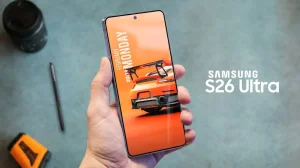
Samsung’s S26 Ultra has a 6.9 inch QHD+ Dynamic AMOLED 2X screen with a resolution of 1440 x 3120 and a 120Hz refresh rate that automatically adjusts. Samsung has also added a Privacy Display feature that uses hardware to make the screen harder to see from the sides, keeping your viewing secure.
The iPhone 17 Pro Max has a 6.9 inch Super Retina XDR OLED screen at 1320 x 2868 with a 120Hz ProMotion refresh rate. Apple says it gets brighter than the Samsung and has Ceramic Shield protection for a tougher screen that’s easier to see outdoors.
The designs are different. Samsung uses a glass and metal body with very little around the edges of the screen and a slight curve. Apple prefers a single, sleek design with a flat, shiny surface that works very well with their other devices and accessories.
Performance and software
Inside, the S26 Ultra uses a Snapdragon 8 Elite Gen 5 for Galaxy, and has up to 16GB of RAM. It comes with Android 16 and Samsung’s One UI which has lots of options for changing how things look and work, and is good for people who do a lot of things on their phone at once.
The iPhone 17 Pro Max has Apple’s A19 Pro chip which is built to be efficient and uses Artificial Intelligence. It uses iOS t6 and Apple Intelligence. Apple Intelligence works quietly in the background, respecting your privacy, and makes sure apps run as well as possible.
Both phones work wonderfully in real life. Test results might say one processor is better for certain things, but when you’re actually using either phone for everyday tasks, playing games, or being productive, they both feel fast and smooth.
Camera systems and imaging
Samsung focuses on having a lot of megapixels with a 200MP main camera, a 50MP ultra-wide camera, a 50MP periscope telephoto (with 5x optical zoom), and a 10MP telephoto (with 3x optical zoom). The S26 Ultra also has good ways to edit photos and Galaxy AI to translate languages and help with editing as you go.
Apple does things differently, using three 48MP cameras on the back which are all set to give you consistent colors and good quality photos using the computer inside the phone for wide, ultra-wide, and telephoto shots. Apple prioritizes getting colors right, excellent video, and making everything work smoothly with their other Apple products.
The front cameras are different as well: Samsung has a 12MP selfie camera, and Apple has an 18MP front camera. If you like taking very detailed pictures and zooming in a lot, Samsung is likely a better choice. If you want true-to-life colors, good videos, and quick processing, Apple might be better.
Battery life and charging
Samsung’s has a 5,000 mAh battery with quicker 60W charging with a cable and 25W wireless charging. Samsung says it will charge faster and last longer because the processor and software are more efficient.
The iPhone 17 Pro Max is reported to have a 5,088 mAh battery and supports up to 40W fast charging with a cable and 25W MagSafe wireless charging. The exact battery size and how quickly it charges are reported differently, but Apple is focused on the phone as a whole managing power and continuing to work well over time.
In general, both phones will get you through a whole day with normal use. How quickly you charge the phone and how long the battery lasts will depend on how you use it, your power settings, and any software updates.
Price, storage options, and value
Samsung is selling the Galaxy S26 Ultra from 139,999 INR for the 12GB/256GB version, and the more powerful versions with 1TB of storage and 16GB of RAM cost up to 189,999 INR. Apple’s iPhone 17 Pro Max costs around 159,900 INR for the 256GB model, going up to approximately 199,900 INR for 1TB.
Which is the better value depends on what’s important to you. Samsung gives you more RAM and a higher megapixel main camera for the same price or even less. Apple charges more for the way it works perfectly with their other products, how long it will continue to get software updates, and the same experience across all their devices.
In conclusion, deciding between the Samsung Galaxy S26 Ultra and the iPhone nighteen Pro Max depends on what you want: a flexible display and camera with Samsung, or a more connected experience and easy performance with Apple. Both phones have excellent hardware, good batteries, and quick charging, so you should think about what kind of pictures you like, which software you prefer, and how much you want to spend to find the best flagship for you.