You could say India’s effort to put its voter rolls in order has been given a firm nudge. The top court has not only validated the EC’s documentation for the Special Intensive Revision but also put to rest any notion that Aadhaar equates to being a citizen. It is a clear line in the sand on what IDs will be accepted.
A 124-page opinion from CJI Surya Kant and Justice Joymalya Bagchi is what we have here, and it makes a case for the poll panel’s independence. The court found nothing capricious about the framework; for them, ascertaining who can and can’t vote is a matter of constitutional duty, not something you just do to check a box.
Clarity on Aadhaar’s role
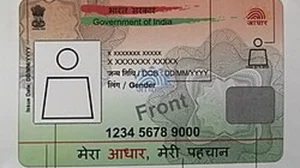
The judgment draws a hard line: under the law, the 12-digit number does not make an Aadhaar a certificate of where you are from or your citizenship. So the Commission is on firm ground for not making it the go-to document for voting rights.
That doesn’t mean it’s useless. Citing Section 23(4) of the Representation of the People Act, the court pointed out it can be of some use in confirming identity. In fact, it has told the Commission to list it as an ‘additional 12th document’ for the revised rolls in Bihar, in keeping with an earlier order.
But don’t think of it as the final word, the bench was at pains to add. If the authorities need to be sure of a voter’s bona fides, they can ask for more. It is a multi-faceted process of verification, not one hinged on a single piece of paper.
Why the EC’s documentation regime stands
There is a constitutional obligation to keep the rolls pure and accurate, and that is the Commission’s to manage. The court has made it known that the EC has the right to put in place the kind of checks and standards that fit the job, be it for residence or eligibility.
So when the EC sorts documents by their worth as evidence, it is acting on sound logic. The verdict says these are decisions made with an eye on a ‘leak-proof’ roll, and unless they are unreasonable, the courts won’t step in to second-guess the Commission.
Treatment of ration cards
Then there is the matter of the ration card. The bench has given its nod to the EC for leaving it off the must-have list for this round of surveys. A passport or a birth certificate may be, but a ration card is not ‘conclusive proof of citizenship’ and is too open to being misused.
When the Commission is putting together a special survey as per the RP Act, it is not for Rules 4 to 23 of the 1960 Rules to put a straitjacket on its discretion. The EC is free to put in place a document that serves the survey’s aims better than, say, a Form 6 ration card.
What this means for voters and officials
Voters can take it from here: an Aadhaar will do to vouch for who you are, but it won’t make the case for your citizenship or where you live. If there’s any question, you might be put on the spot for other papers to establish your eligibility, and officials have the leeway to ask for them.
As for the administrators, the ruling gives a green light to a more methodical, evidence-based way of running these special intensive surveys. The court has put its stamp of approval on the EC’s right to put documents in their proper order and to be thorough in their checks, seeing it as a sensible way to keep the rolls in good standing.
Here is what the court made of it:
– An Aadhaar is no substitute for proof of citizenship or domicile.
– It can, however, be used to verify identity per Section 23(4).
– The EC can count it as an extra, 12th document.
– Ration cards can be put aside if they don’t hold up as evidence.
– Making the electoral roll is a matter of the Constitution.
Digital identity and the state of elections
You could say this decision puts a hard line between identity and citizenship when it comes to running an election. The court is in favour of a multi-layered check rather than just defaulting to the one ID everyone has.
It’s a move toward documentation with some heft to it, not for the sake of it. The judgment makes room for the EC to be flexible in how it verifies things, depending on the context and the demands of a close look at the numbers. And when an ID doesn’t carry much weight, the Commission can make adjustments.
There is also some guidance for governance in the court’s talk of “intelligible criteria” and a “leak-proof” roll. It’s all about due process and having the authority to call for more when the file isn’t clear.
Why we should pay attention
The electoral roll is where democracy starts. With this kind of clarity from the bench, there is less guesswork for the people in the field and the ones applying.
The ruling also puts the administration on solid ground. The bench has said the way the EC handles paperwork is a valid part of its job. That way, you get firm legal footing without the kind of red tape that can get in the way of a special survey.
Put simply, the court has put to rest a debate over identity without closing any doors. You can still use your Aadhaar as a handy reference under 23(4), but it doesn’t settle the question of domicile. The Commission is well within its rights to want something more concrete.
Make no mistake, the message is plain: you have to show your eligibility with the right kind of paper, and the EC gets to say what that is. Thanks to a 124-page opinion from Chief Justice Surya Kant and Justice Joymalya Bagchi, we have a rulebook for getting the rolls in order.