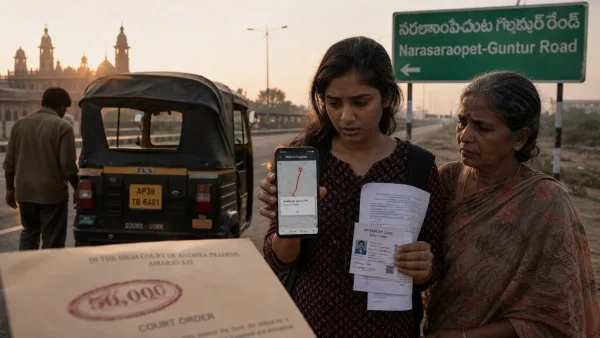
The order to pay up follows an allegation that a driver put a woman, who was an exam candidate, in a lurch 25 kilometres from her destination. It’s a reminder of the liability risks ride-hailing apps are running into. The commission in Kurnool has put the onus on the company for the driver’s behaviour, putting a finer point on the ‘aggregator’ line of defence so many like to use.
Platform liability comes into sharper focus
Ola tried to have it both ways, saying it is only a conduit between the rider and an independent driver. The District Consumer Disputes Redressal Commission in Kurnool wasn’t having it. In its view, the moment a ride is on the app and underway, Ola has a duty to see to the safety and reliability of the service.
Then there was the matter of Ola’s own hand in this. After the complaint, the company went ahead and suspended the driver and took the vehicle off the books. The commission saw that as proof there was some truth to the grievance, which didn’t do any favours for the “we’re just a platform” argument.
The case that triggered the ruling
Ullaji Chennamma, the one who filed the complaint, was with her mother and en route to the Andhra Pradesh Junior Civil Judge Mains Examination. The commission pointed out that a judicial mains is no place for a lack of composure or stability, and the whole affair only made things worse for her.
Stranding a woman and her mother on a public road, they said, is enough to cause a good deal of mental and emotional distress, not to mention fear and humiliation.
Timeline and route deviations
Chennamma put in for an Ola Auto on the morning of October 11, 2025, at 7:08 am, to be taken from Pottur Vari Thota in Guntur over to Acharya Nagarjuna University. When the driver showed up, the vehicle’s registration number was off, and he made her put in the OTP before he would budge.
From there, he did his own thing, veering off the proper path by some 25 km. He pulled over on the Narasaraopet-Guntur Road in Sitaram Nagar and asked for more money. She put her foot down, so at 7:28 am he left them there and called it a day, cancelling the ride on his end.
Penalty, costs and compliance window
The commission gave in on part of the complaint and set aside some compensation for the hard time she had. They thought the original ask was a bit much, but felt a more measured figure was in order.
So here is what Ola has been told to put in place:
– A compensation of Rs 50,000 to the complainant
– Rs 5,000 for the cost of the litigation
– Have it done in 45 days
On the side, the commission has put some pressure on the firm to be more of a watchdog. Put simply, they want Ola to put in place some sterner internal controls to stop drivers from being unfair or negligent on their watch.
Allegations the platform contested
Ola’s position was that it is an online marketplace and can’t be blamed for the misdeeds of a third party. They also put in that they hadn’t even taken the payment and had already put the driver on ice as a precaution.
None of that flew with the commission. They held that if the service is run through your app, you are responsible for it.
Why this matters for ride-hailing in India
You can read this as a sign of things to come for app-based mobility. Calling yourself a marketplace won’t be a get-out-of-jail-free card when the drivers and routes you vouch for go awry and put a consumer in harm’s way.
It will ratchet up the pressure on the competition to be more thorough with their verifications, whether it’s checking a car’s papers, the OTP process or making sure the route is what it should be.
As these companies move out of the metros, the consumer forums will be looking over their shoulders. You can expect to see a higher bar for how they handle onboarding and respond to issues; it’s becoming a given, not a nice-to-have.
Sure, the payout is a drop in the ocean compared to the Rs 5,00,000 they wanted, but it sets a precedent. It makes a direct link between the platform and the rider’s well-being, especially in situations where being on time is everything.
They have 45 days to make good on it. But the real test is in the long run: can they build in the kind of trust and oversight that keeps this from happening in the first place, instead of just mopping up after a complaint?