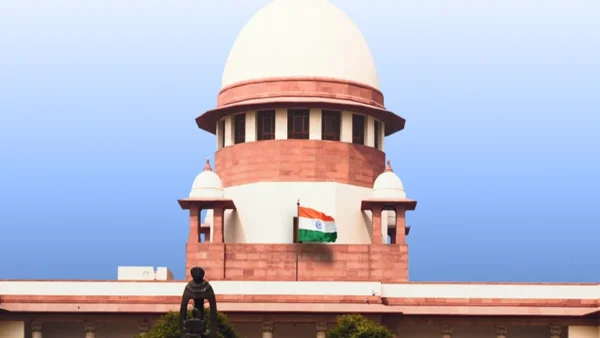
On Monday, the Supreme Court wouldn’t stop the NCLAT's decision allowing Adani Group’s 14,535 crore bid for Jaiprakash Associates Ltd to move forward. However, the JAL monitoring committee must get permission from the NCLAT before making any important policy or putting any plans into action. The judges told the NCLAT to deal with cases quickly and have scheduled the final arguments for April 10th.
Supreme Court order and protective caveat
The Court said no to Vedanta Ltd’s request to stop the resolution plan from being put in place, so the insolvency process will continue. The judges said the NCLAT is already handling the problem and is the correct place to decide the arguments. The ruling finds a balance between the Court not getting too involved, and the danger of a company doing things that can’t be undone.
As a way to be careful, the Court has said that the monitoring committee or anyone carrying out the resolution plan needs to get the NCLAT’s approval for anything important. This means things like selling off assets, giving out large amounts of money, or making big changes to the company structure – anything that could make it harder or even impossible for the NCLAT to make a later ruling.
Competing claims from Vedanta and Adani Enterprises
Vedanta is objecting to Adani Enterprises’ plan being approved, saying their own bid of force 17,926 crore was higher, both in total and in terms of what it’s worth now. Vedanta is worried that if things go ahead without a stop, irreversible actions will be taken which would be bad for their legal options and for the creditors (people the company owes money to) who favoured their offer.
The Committee of Creditors (CoC) defends their choice, saying they assessed the bids using the standard rules and measurements for insolvency. They’ve told the Court that Adani’s plan was better based on what’s important, and they voted in favour of it with 93.81 percent of the vote. The Solicitor General (a government lawyer) supported the CoC’s position during the Court hearing.
NCLAT timetable and procedural posture
The NCLAT had already said no to giving Vedanta a temporary solution on March 24th, refusing to pause the insolvency process even though Vedanta objected. After the NCLAT wouldn’t stop it, Vedanta appealed to the Supreme Court on March 25th. The NCLAT asked Jaiprakash Associates’ Committee of Creditors for their response and said it would hold further hearings from April 10th.
Because the Supreme Court has said the NCLAT needs to act quickly, it now has to consider Vedanta’s two appeals. One questions whether Adani’s resolution plan is valid, and the other challenges the CoC’s vote and the NCLT’s (National Company Law Tribunal) earlier approval of it. When things will be done is important, because steps taken now could significantly reduce the value of any later ruling by the NCLAT.
Background of the insolvency case
Jaiprakash Associates went into insolvency in June 2024 owing over 57,000 crore, leading to one of the biggest company resolution processes recently. Several companies bid for it, but the CoC chose Adani Enterprises’ offer in November, and the National Company Law Tribunal then approved the plan.
Because so much money is at stake and many companies were interested, the process has been full of disagreement. Vedanta and Adani were the main contenders, and the argument shows the conflicts between what creditors want, how much bidders say something is worth, and protecting against actions that would prevent the Court from reviewing the situation.
Broader implications for insolvency practice and corporate deals
The Supreme Court’s decision shows it won’t interfere much, but it is prepared to put safeguards in place to protect the NCLAT’s ability to review the case. Needing NCLAT approval for major decisions creates a useful example for the future; it may be used in other resolution disputes to stop plans being put in place too early.
For companies and those they owe money to, this case highlights how important it is to have clear, written-down standards for assessing offers and to carefully follow all the correct procedures during insolvency sales. What happens next will likely affect how bidders act, disagreements over value, and how quickly resolution plans are carried out when there are legal challenges.
The markets haven’t reacted strongly to these legal developments, with only small changes in the share prices of the companies involved during trading. Eventually, the NCLAT’s hearings in April will decide whether Adani’s resolution will happen, or whether Vedanta’s objections will mean it’s looked at again, and this will have a big effect on creditors and how companies are governed during insolvency.