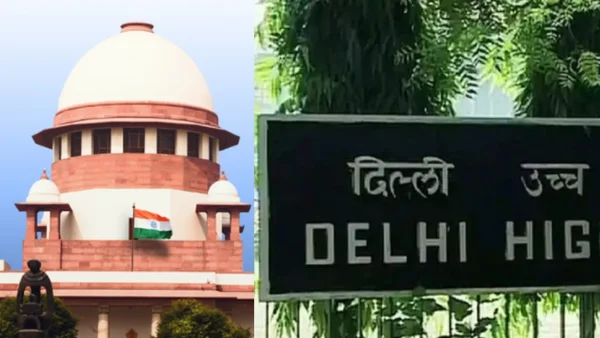
There is some new unease on India’s law campuses following the Supreme Court’s May 26, 2026 stay of the Delhi High Court’s protection for those same students. With many schools in the thick of final assessments, the deans, faculty and students have to do some rethinking on the spot.
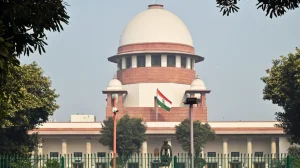
This comes as the court was fielding objections to the Delhi High Court’s November 2025 ruling, one of which came from the Bar Council of India. The stay is aimed at paragraph 249 of the judgment, the part that had put a new spin on how colleges can handle an attendance shortfall when it comes to sitting for an exam.
What the order changes now
Justices Vikram Nath and Sandeep Mehta made it plain: “In the meantime, effect and operation of paragraph 249 of the impugned judgement shall remain stayed. However, the same shall be effective prospectively.” You can expect a full hearing on the matter on July 21, 2026.
But the court also made it clear that the High Courts are at liberty to rule on any like-minded cases they have on their docket. So you may see different results in different states while the apex court makes up its mind on the law.
Not long ago, the Supreme Court had put down a request to stay the verdict and asked the BCI to put in a word on a plea from NMIMS College. “We are not suspending that order. We will hear the matter, decide and lay down the correct position of law,” it said at the time.
Immediate campus implications
You could say there is a divided path for administrators and students to follow. Unless a High Court has come to the rescue in a particular case or area, some institutions are likely to go back to the way things were before the verdict.
– See what your university has put out in its latest circulars
– Be sure to follow any High Court orders that apply where you are
Why the court intervened
The Bench was having none of the laxity, pointing out that National Law Universities have been ‘suffering’ since the Delhi High Court's decision. “All the NLUs are suffering. No student wants mandatory attendance. Even those who have passed out are supporting the students,” the court put it.
It also had a few questions for the regulator about the time it has taken to make a move. The judges wanted to know why the BCI let nearly six months go by before contesting the High Court. Manan Kumar Mishra, the BCI Chairman and a senior advocate, was in the room for it.
Mukul Rohatgi, another senior advocate, made the case for a stay. The Bench wondered if the High Court had overreached: “Does the judgment give a right to the students not to go to the classes.” After all, teachers at the NLUs and elsewhere need their pupils in the room to do their job.
What the Delhi HC had ruled and why it mattered
Back in November 2025, the court had laid down: “No student enrolled in any recognised law college, university, or institution in India shall be detained from taking examination or be prevented from further academic pursuits or career progression on the ground of lack of minimum attendance.”
It was more than just a pass to the exam hall. The High Court told the BCI to have another look at the rules for three-year and five-year LLB programmes and even put forward the idea of giving credit for things like moot courts, seminars, model parliament and the like.
The whole thing was born out of a suo motu case after the 2016 passing of Sushant Rohilla. The High Court was of the view that being too hardline can be a source of mental trauma and ordered the setting up of grievance committees as per the UGC Regulations of 2023.
What comes next for students and colleges
For the time being, the Supreme Court's stay is only on paragraph 249 and is prospective; state High Courts can still offer some leeway if a petition is in front of them. Campus rules might get a bit stiffer, but it will depend on the local court action.
Then there is the matter of how you track attendance. The apex court is also looking at a petition against biometrics in law colleges, with the petitioner raising an eyebrow at the data being handed off to private parties. The court has called for answers and will be on it on July 21.
The Bench has been blunt about it: if you let this kind of leniency become the standard, hostels will be little more than “boarding and lodging facilities.” That is the crux of the issue for the July 21, 2026 session, where the court has promised to “lay down the correct position of law.”
If you are a student, the wise thing to do is to count on a firmer hand unless a High Court says otherwise. As for the institutions, they would do well to be open and have a good system for handling complaints until the Supreme Court puts a fine point on it.