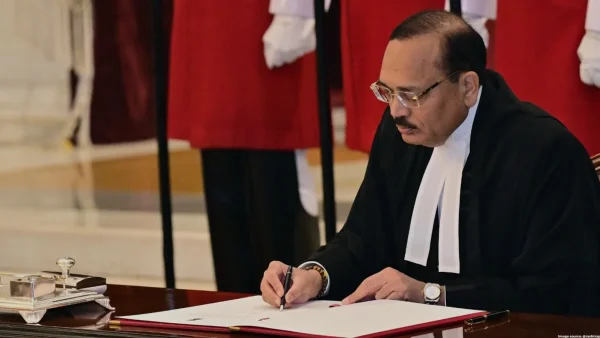
The Chief Justice gave a very firm warning in the courtroom after finding out the petitioner’s family member had allegedly phoned his brother to dispute the court’s order. He suggested this could be criminal contempt, and told the court to check this out. He also said the petitioner’s lawyer should pull out of the case if the story is true.
CJI Surya Kant’s stern rebuke and warning
Chief Justice Surya Kant was very annoyed by what he called completely unacceptable meddling with the court’s work. He said to the lawyers, “This person actually called my brother and asked him about how I made the decision? Is he going to tell me what to do?”
He then warned that even if the person who did this left the country, the court has ways to continue with the case. He said he’s dealt with things like this for 23 years, and this sort of thing must absolutely not happen again.
Details of the Meerut medical admission dispute
This whole problem started because two people applying for a place on a postgraduate medical course at a school in Meerut (for a Buddhist minority quota) asked for places. They said they deserved them because they’d changed to Buddhism, and the school is a minority institution.
The court had previously questioned when and how genuinely these people became Buddhist, and ordered an investigation into their minority certificates. After the state government made an announcement, admissions were stopped. The judges also pointed to the wider effect this could have on minority rights and making sure admissions are fair.
Allegation that a family member contacted the CJI’s brother
During the hearing, the judges heard that someone had phoned the Chief Justice’s brother to complain about the decision. The Chief Justice said this person might be held in contempt of court, and urged the petitioner’s lawyer to find out about it, and to leave the case if necessary.
The lawyer for the person bringing the case said he didn’t know about the phone call and apologized to the court. However, the court was still worried, and kept asking for a full explanation of when the certificates were given out and when the people changed their religion.
Legal grounds and consequences for criminal contempt
Criminal contempt laws are there to protect the court system by punishing people who deliberately block justice or cause an issue with the court. If someone contacts a judge’s family to try and change or affect a decision, it can be contempt of court if it’s done to force or frighten the judge.
If the court finds the accusation is valid, it can start contempt of court proceedings against the person, which could involve a fine or a jail sentence. The judges were clear that lawyers have a duty to make sure their clients don’t do anything that weakens the court system.
Court directives and administrative follow-up
Separate from the contempt issue, the court asked how minority certificates were given to people from groups that are normally considered as ‘general category’. The judges asked the Haryana Chief Secretary to give official rules for issuing these certificates.
The court also said that a “new kind of scam” is developing when people seem to change their religion at the same time as applying for university places. It has asked for investigations into what local officials did and has ordered measures to stop people abusing the minority quota system.
Broader implications for judicial independence and public trust
What happened shows how important it is to protect the court’s independence and to shield judges and their families from pressure from outside the court. Courts need people to have faith in them and for the process to be fair; trying to change the result damages that faith and will get a strong reaction from the court system.
For those applying and the universities, this decision means that how real the certificates are and how open the application process is will be examined very carefully. And for lawyers and those involved in the case, the warning is straightforward: a lawyer’s professional behaviour includes ensuring clients show respect for the court’s decisions and the law.