You can expect some big shifts in how West Bengal does its science and innovation from here on out. After a high-level sit-down on Tuesday, both sides have put their stamp on a plan to bring central schemes to the ground, start an arsenic study on the double, and fast-track some joint work on cancer and antimicrobial treatments.
What was decided
As per officials, the state and the Centre are set to put in motion a host of central programmes for science, research and startups with no delay. It is a way of linking up what happens in the schoolroom with university labs and clinical settings to form one continuous line from theory to the market.
The PIB has it down in writing: heads and directors from the Ministry of Science and Technology’s institutions in the state were at the table. A follow-up with the state’s Science and Technology Department and the Central ministries is in the offing to put together a proper plan of action.
Immediate roll-out and who is involved
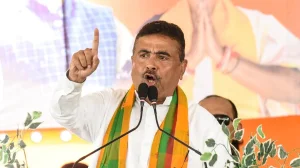
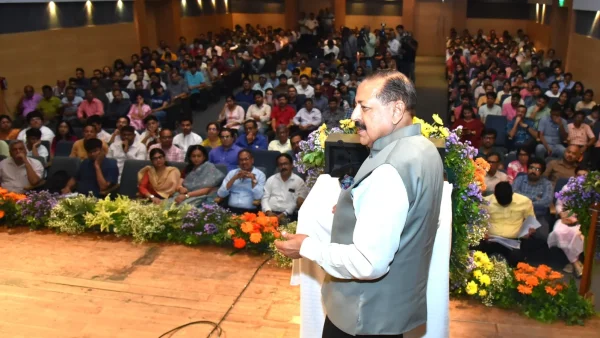
Union Minister Jitendra Singh and West Bengal CM Suvendu Adhikari made it official in Kolkata, we’re told. “West Bengal has a robust scientific and academic setup,” Singh put it in a statement. “There are institutions under our ministry all over the state that are already making headway in some of the more advanced fields of research.”
A senior in the state government said the talk was about better coordination when it comes to biotech, clinical work, and nurturing new ventures.
Why it matters now
This is not just another file to be signed. We are talking about CSIR moving in on the problem of arsenic in the districts right away. And there will be some co-operation between the Centre and the state on the drug front, with networks of scientists and medical folks working on cancer and antimicrobials.
The end game, an official put it, is to foster a better environment for young talent to learn and innovate, while making sure women in STEM are not left behind.
Key moves confirmed
Here is what is on the docket first, according to those in the know:
– Putting the major central science schemes to work
– Letting the CSIR get to work on arsenic in the field
– Some joint efforts on cancer and antimicrobial issues
– More room for students and women in these programmes
– A meeting to map out the rest of the rollout
Programmes coming to campuses
The Department of Science and Technology is going to see its student and women-focused work make its way to more schools and colleges in the state. You will see KIRAN, WISE, Vigyan Jyoti, INSPIRE and INSPIRE MANAK being put into practice, among others.
It is about building a certain kind of mindset and opening doors for participation in the tech and science world. With the right kind of early exposure and some good mentorship, you can turn a bit of inquisitiveness in the classroom into actual research or a business.
From labs to hospitals
The Council of Scientific and Industrial Research will be at the helm of the arsenic project, with an approach that fits the local conditions. They will be doing the legwork-sampling, scoping, and crunching the numbers-to inform what needs to be done.
Then there is the medical side. Officials say they will be moving forward with some collaborative work on cancer drugs and trials. You will have the government’s medical and cancer facilities in step with the scientific bodies to get results.
A coordinated push for innovation and startups
The whole point of this arrangement is to have research, the making of new things and startups under one roof. By bringing biotech and incubation in line, they want to cut through the red tape and get from concept to something of use in less time.
The PIB release makes it clear that the institutions in the state were part of the conversation, so this is meant to be a connected effort, not a series of isolated projects.
What comes next
Expect a formal get-together in the near future to iron out the details, we are told. They will be laying out the timeline, putting names to tasks and setting some hard targets for the various tie-ups and studies.
Do it by the book and you will see the state get a lot more out of its central science programmes, with a firmer handle on the arsenic issue and more give-and-take between the lab, the clinic and the school. Both sides are sending the same message: let’s get to it.