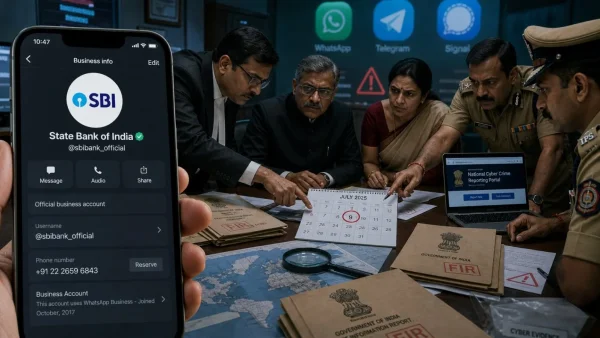
The July 9th date for WhatsApp to account for its upcoming usernames is a case in point. There is a sense that the government is not only watching how this might impact safety, but is also inquiring with Telegram and Signal about their own tools. With fraud and impersonation on everyone’s mind, any move to protect privacy is now under a microscope.
Deadline extended amid username safety concerns
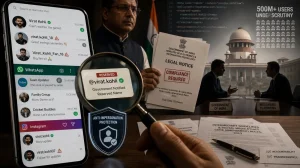
After an initial July 6th mark, the Ministry of Electronics and Information Technology has given Meta another three days to put in a response. They have made it clear they do not want to see the username feature in India until some talks are over, pointing to the potential for misuse when a phone number is out of sight.
It comes down to a very real worry: you cannot trace a crime if there is no number to be seen. One official put it plainly – without a number, law enforcement may be left guessing if a wrongdoer is in the country or abroad, and that makes for a complicated situation.
Why usernames change the way scams are investigated
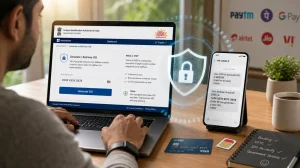
According to Shweta Bansal, a lawyer in the tech space, this is more than just a question of someone pretending to be you. In India, the process for dealing with fraud is number-driven. A victim puts in a report, the police find the subscriber, and the KYC ties it to an actual person. Usernames put a stop to that first step.
Bansal notes that the system, from the FIR to the complaint portals, is set up for numbers. If all a user has is a handle like ‘@sbibank_official’, there is nothing concrete to file a report on. An investigation can be derailed before it even gets off the ground.
Then there is the issue of jurisdiction. You can have a case where a +1 number is used to open an account, a photo of a high-ranking official is put in place, and a username is chosen to make a fraudulent call. Without a number to go on, the early part of the triage is much less clear for the authorities.
From feature tease to government pushback: the key moments
WhatsApp made a point of it last month when it introduced the idea of a username as a means to get in touch without giving out a personal number. The plan was for users to put one aside for when the feature goes live later in the year.
Not everyone was on board. Jasveer Singh said he was thinking of scams, not privacy, and what has happened with Telegram where you don’t need a number to be contacted. Vijay Shekhar Sharma saw the danger in look-alikes, while Ankur Warikoo was wary of a name with a slight twist being used to pull in money.
MeitY made its move on June 3rd, telling WhatsApp to hold off and tell them why the change was happening. Three days to make a case for it, or face some regulatory action. The deadline has since been pushed to July 9th.
Telegram and Signal drawn in; Indian app reacts
It was not just WhatsApp on the receiving end of the government’s line of questioning. Telegram and Signal were made to explain how they keep up with cybercrime and impersonation when a phone number is not on the table.
Some in India have made their position known. Sridhar Vembu of Zoho has said Arattai will be turning off its username option to be in line with the rules, which is a sign of how policy can have an effect on home-grown apps.
What WhatsApp says about usernames
For WhatsApp, a username is a way to keep some privacy, and it is not the same as a display name. Many can have the same display, but a username is unique. It is meant to let people message one another without the exchange of a phone number.
That does not answer the ministry’s side of the argument. S. Krishnan, MeitY’s Secretary, sees a real risk of someone being put in the middle of a cybercrime through impersonation, hence the need for an explanation from several of the platforms.
What to watch next
In the short term, we will see if WhatsApp can put to rest some of the concerns in India and what kind of guardrails it is willing to put in place. A workable solution will depend on how a platform can aid an inquiry without making a phone number public.
There are a few things to keep an eye on:
– If the rollout in India stays on hold
– What Meta has to say come the 9th
– How MeitY views the position of Telegram and Signal
– Any stop-gap measures for verifying handles
– How the process for complaints and FIRs is altered
It is a direct concern for those using the app. A username might spare you from having to share your number, but it also blurs the line when it comes to identifying a fake or filing a grievance. Until there are better ways to check for abuse in a handle-based chat, one should be careful with unknowns and any request for funds.
This is not simply a matter of pitting privacy against safety. The question is whether the machinery in India for responding to fraud, which has always revolved around a phone number, can make the shift to unique handles. The fact the government has moved the date to July 9th is a sign it wants to have its answers, lest a minor change in the interface open up a major hole in enforcement.