Even as rockets come down in Lebanon, President Donald Trump made it clear: Iran was the one to make overtures to Washington, and they aren’t getting a dime from us. He’s also been blunt about how the war has left Iran’s armed forces for the better part of nothing, a hardline view that comes as regional frays put some of the more delicate diplomacy at risk.
Talks stall amid Lebanon escalation
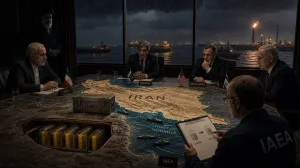
You won’t find any US or Iranian officials in a room this week. What was supposed to happen on Friday was scuttled after Israel made its move in southern and eastern Lebanon, so much so that the Iranians didn’t even bother to make the trip to Switzerland. They say the violence has to be put on hold first. Vice President JD Vance has put off his own plans as well.
Hezbollah is in the thick of it. The numbers are grim: 21 dead in Lebanon, four Israeli soldiers, by the count of the respective health and defense ministries. It makes you wonder if an initial understanding, one that was to put an end to the hostilities and open the door to a wider accord, is still viable.
Here is a rundown of what we have from the ground:
– The meeting is off in the wake of the strikes in Lebanon
– Iran’s side did not head to Switzerland with the fighting on
– A visit from VP JD Vance has been put on the back burner
– 21 in Lebanon and 4 from the IDF have been lost
Trump hardens stance on money and leverage
According to Trump, it was Iran that made the call. He has no intention of letting up on the finances. ‘We did not meet out of desperation, Iran did,’ he put it on Truth Social. ‘They are FINISHED! We will play out the 60 days. They get no money, not ten cents!’
To those who might have a different take, he offered this: ‘The War has diminished Iran! It does not, any longer, have an Air Force, a Navy, Antiaircraft Equipment, Radar, or practically anything else.’ There’s no proof to back it up, but it fits with the kind of pressure the US has been applying all along.
The interim deal’s promise and its limits
So far, the deal has done its job in the Gulf and in Iran, opening up the Strait of Hormuz where, not long ago, threats and attacks were on the verge of choking off the oil and gas and causing a world-wide energy problem. But with the fire in Lebanon, that lull may not last.
What we’re looking for down the line is a way to put a period to this. That means coming to terms on the nuclear program, the sort of thing that has been at the heart of the stand-off for as long as anyone can remember.
Lebanon front complicates the calculus
Then there is the matter of Israel and the proxy in Lebanon. They didn’t put pen to paper, but the deal is supposed to quiet them down. Officials say Iran is prepared to put up a fight for its ally and for what it has in the region if it has to.
That is where the reality of the field can run ahead of the talk. You have one side strike and the other has to answer. And for every day that goes by without progress, you lose a little of the trust you need to make something of this truce.
What to watch next
The word from the White House is they are going to stand firm for the 60 days and let Tehran have it. Will that give us the upper hand or just make them dig in? We’ll see, once we can get back to the table in Switzerland.
Some things to keep an eye on in the near term:
– A lull in the fighting in Lebanon that would make for a safe trip
– Some sign from the other side that they want to re-engage
– How the US dials in its sanctions and the like
In the end, it is Trump's word that Iran came to him, and his take on their military, that is setting the stage. Until then, the chasm between what is happening on the ground and in the conference room is what stands in the way of making this stick.