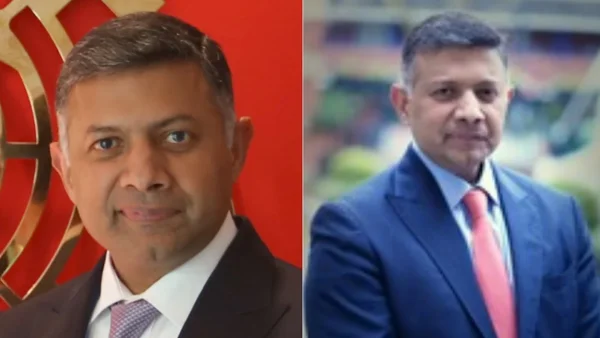
India has chosen Vikram K Doraiswami, a seasoned officer from the Indian Foreign Service, to be the next ambassador to China; it’s a diplomatic job with a lot at stake. The Ministry of External Affairs has confirmed he will be starting his role in Beijing soon at a time when India and China are both communicating and being very careful of each other.
Career Overview and Diplomatic Style
People within the foreign service think of Doraiswami as a careful diplomat who pays attention to details and likes things to continue as they are, rather than making big, showy changes. Throughout his career he’s worked in Asia, Africa and in many international contexts, and he’s become known for successfully managing difficult relationships with other countries and within regions, and for being low-key and focused on achieving results.
Since September 2022 he’s been India’s High Commissioner to the United Kingdom, and before that he was an envoy (ambassador) to Bangladesh, South Korea and Uzbekistan. These jobs gave him experience with many different and challenging situations concerning connections, security, trade and diplomacy in the area.
Early Life, Language Skills, and Entry into Diplomacy
Doraiswami was born into a Tamil military family and moved around a lot as a child, which helped him to be flexible. His father was in the Indian Air Force and fought in the Bangladesh Liberation War, and this affected the diplomat’s understanding of the region.
He studied history at the University of Delhi and worked for a short time as a journalist before becoming a civil servant. Early in his career he was in Hong Kong in may 1994, where he learned Mandarin at the Chinese University of Hong Kong, then he worked for almost four years at the Indian embassy in Beijing starting in 1996.
Key Roles and Institutional Experience
When working at the main office, Doraiswami had a number of important jobs including being in charge of sections dealing with SAARC, the Americas, Bangladesh and the Maldives; he also helped create the Indo-Pacific division. He was also an additional secretary in charge of international organizations and meetings, which gave him experience coordinating at a high level and with many countries at once.
His work with many countries and at meetings, along with his time at the Indian mission to the UN and as a consul general in Johannesburg, has given him a lot of options for dealing with policy. People he works with say he can combine following procedures exactly with making contact with people in a practical way when a lot is on the line.
London, Dhaka and Practical Achievements
In Dhaka, he worked with people across the political spectrum and focused on connections and security at a difficult time in the relationship between the two countries. In London he oversaw a politically sensitive area that included trade talks and planning strategy, and he dealt with issues relating to Indians living in Britain and security.
He was also involved in tackling India’s worries about extremist groups operating in other countries and helped improve the relationship between India and the UK as they moved towards a free trade agreement which was signed in July 2025. During his time in London he showed he could deal with sensitive political matters without making things worse.
Beijing Posting: Timing and Expectations
Doraiswami is going to Beijing without a lot of publicity, but the timing is very important. India and China are continuing to have military and diplomatic talks to control tensions along the Line of Actual Control, even though they don’t really trust each other. Trade between the two countries has started again, but they are still very suspicious of each other.
In this situation, the ambassador’s main job will be to manage risk: keeping communication going, stopping problems from getting out of control and making sure diplomatic channels work when they are most needed. He’s expected to be firm about important issues, like the border dispute, but still continue to communicate with China to keep necessary talks happening.
This appointment is part of a wider change where the ministry has put experienced people in difficult capitals. Beijing is one of the most demanding positions in the Indian Foreign Service and needs someone who understands both the history and the current situation.
Institutional Implications and Succession in London
At the same time, officials are deciding who will replace Doraiswami in London and a senior diplomat is the main candidate. This shows the ministry wants experienced people to continue to manage important relationships with other countries.
In conclusion, appointing Vikram K Doraiswami as India’s ambassador to China shows a careful and measured approach to one of India’s most delicate diplomatic relationships. His history shows he will focus on carefully managing things rather than making headlines, and that’s a style that will help keep communication open and protect India’s interests.