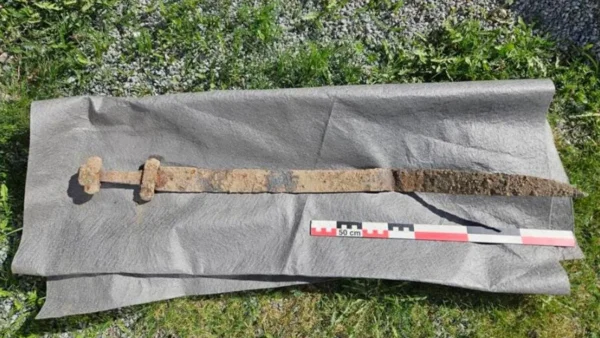
It all happened in the Hadeland area of Innlandet county, close to Gran and Brandbu, where the land has a way of holding onto its warrior past. The boy, Henrik, was out in a ploughed field when he came across something that at first glance was just a bit of rusted metal. He picked up the corroded hunk and brought it to his teachers. They didn’t make him put it back or start a hole in the ground; they called in the professionals right away. Heritage officials have been quick to commend them for it.
That kind of restraint is what makes the difference. Local experts have been lauding both the kids for their eyes and the staff for not overstepping. It’s the only way to keep the context of a find like this from being lost.
A weapon from the late Merovingian world
Turns out, it’s no piece of scrap. The blade is from the late Merovingian period, some time between 550 and 800 AD, right before the Vikings made their mark. It’s a single-edged type you don’t see much of now, but one that was common in Scandinavia then. Even with the rust, you can tell it’s in the same family as the “Type F” swords we’ve been cataloguing in Norway for years.
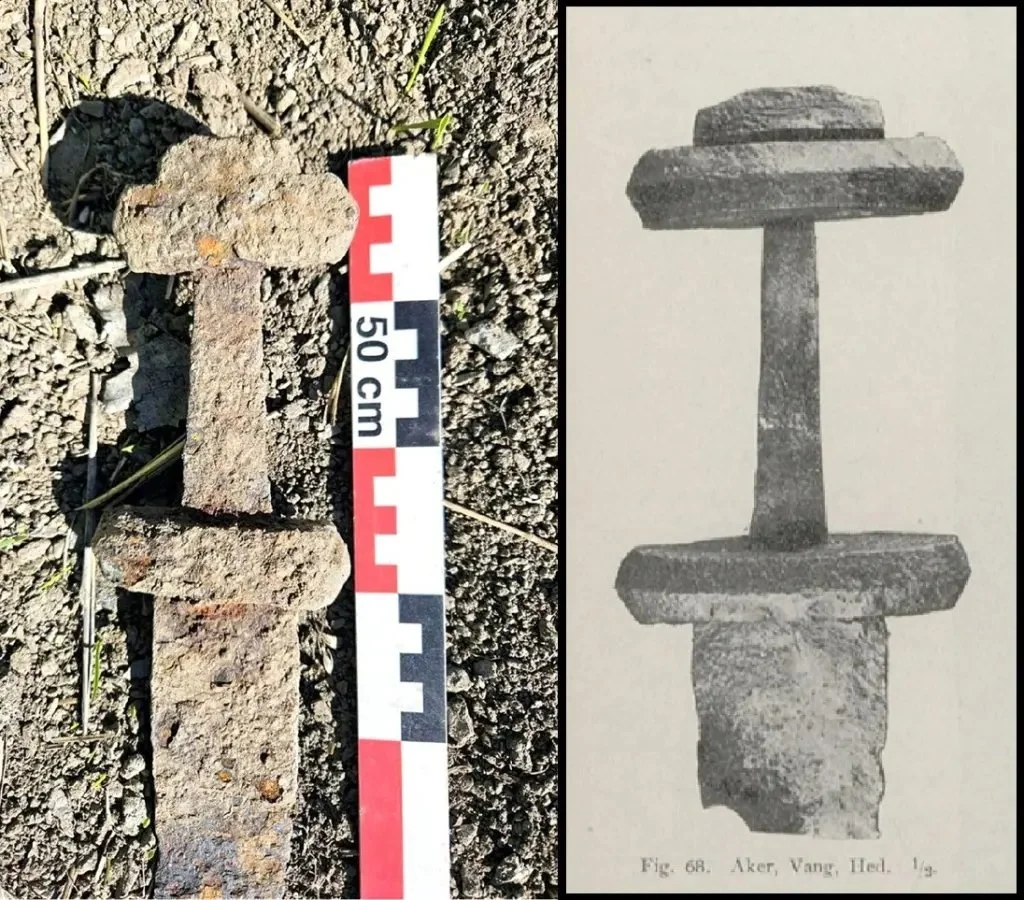
Here are the essential takeaways from the discovery:
– The sword is approximately 1,300 years old
– It dates to 550-800 AD, pre-Viking Age
– It is a rare single-edged type
– Found in a ploughed field in Hadeland
– Now conserved in Oslo for scientific study
Why Hadeland is the right place to look
Hadeland has always been a place of Iron Age mounds and martial history, so unearthing a weapon here is hardly a shock, but it does put a face on the people who were there. You can bet the sword was the property of someone with a little power in a rough time.
What researchers will do next
The piece has been moved to the Museum of Cultural History in Oslo to be put under a microscope. It’s going to be some fine work to stabilise it, but once they do, they’ll be able to ask the hard questions. X-rays and a bit of metallurgy will tell us how it was put together and even where the ore came from. A few tool marks or impurities can point you to a workshop or a trade route.
Part of a wider pattern of chance finds
We’re seeing more of these serendipitous finds in Norway and around the region. A change in the weather or a dry spell and suddenly you have hikers, hunters, or in 2018, a Swedish girl by a lake, running into history. Or a young lad with a new metal detector for his birthday. Henrik is in good company.
Why this matters beyond the headline
It’s changing the game for archaeology. You don’t always need a big, planned dig to make a breakthrough; sometimes it’s about a sharp eye and a phone call.
What to watch for next
For the moment, the conservators in Oslo are getting to work. When they’re done with the cleaning and the X-rays have shown us what’s left of the hilt, we’ll have a better idea of where this fits in. If we can pin the manufacturing to a certain style, we might be able to draw a line from Hadeland to the rest of the continent in the 6th or 7th century.
In the end, it was a kid's inquisitiveness that opened the door. The field in Hadeland has let one of its secrets go, and it’s up to the lab to tell us the rest of the story.