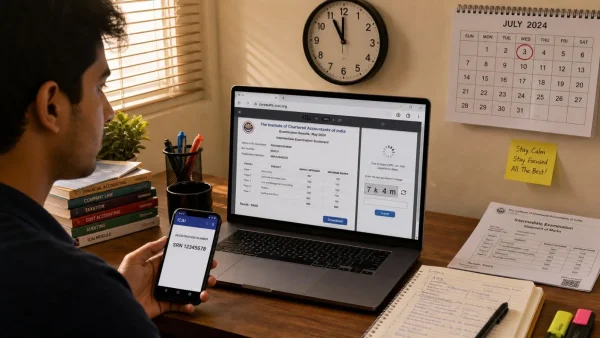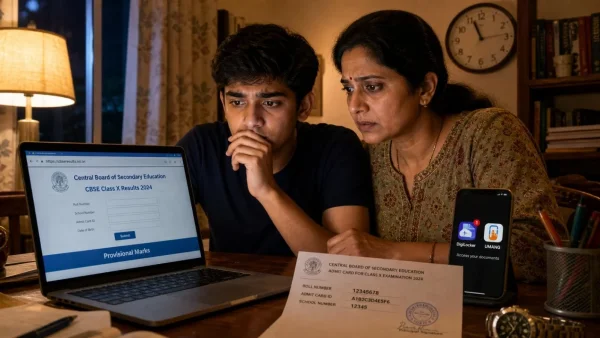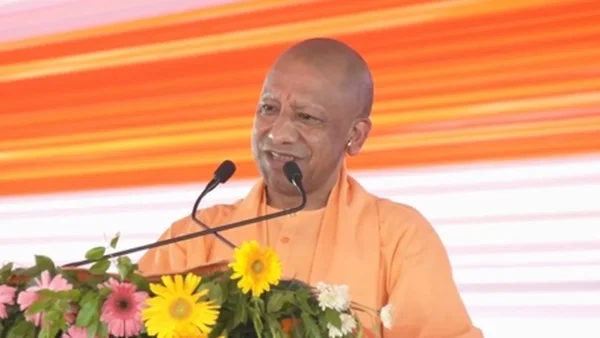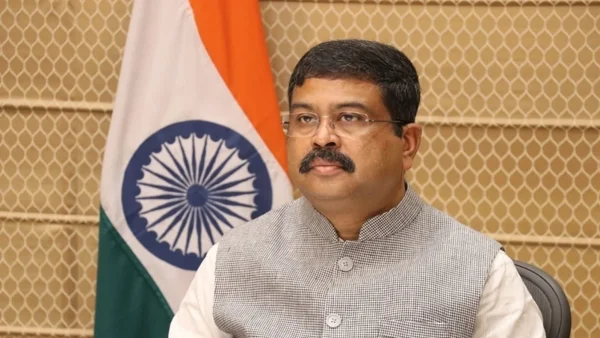
You can’t have server errors calling the shots on college admissions; you need to be quick about it. After word came in of a portal that was prone to crashing, with fuzzy scans and payments not going through, Pradhan has brought in the IITs to put things right for the CBSE. It’s all about looking after the student in what is a very tight and trying time for them.
What changed for students this week
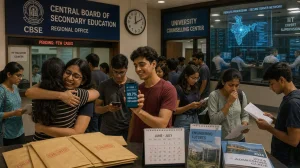
The Class 12 results that came out on May 13 left a lot of questions in the air, particularly around how marks were being done under the new On-Screen Marking. So on the 15th, the CBSE made a change: if you want to verify or re-evaluate, you have to get your hands on a scanned copy of the answer book first.
Then on May 19 they let you in to apply for those scripts. But with the kind of traffic and hiccups the board was up against, they had to give the deadline a couple of extensions, finally making it the 26th so everyone has a chance to see their work before they make a formal case.
IIT-led technical audit: what will be fixed
Pradhan has told the CBSE to get to work with IIT professors and tech staff on an urgent basis to do a bit of housekeeping and make sure the re-evaluation runs without a hitch. The ministry is clear: the student’s interest comes first and we have to act on it now.
IIT Madras will be on the job with the system side of things – looking at the servers, the portal and the IT set-up to make sure it’s solid. They’ll also be in on the ground floor for any issues with logging in or the payment gateway to make sure the books are in order.
The ministry has put forward these as the main things to be done:
– Make sure the servers hold up when there’s a rush
– Better error handling and more uptime for the portal
– Stricter checks on who gets in and how
– Get the payment and receipt side of the house in line
Why portal reliability now decides futures
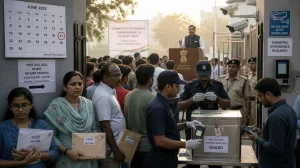
A scan that’s a day late can put an admission in jeopardy. One girl told us she put down the money for six scripts on May 21 but the site was no good for days after. She found herself up late trying to get in while also prepping for CUET-UG, and said it was hard to concentrate with all the unknowns.
Then there’s Sarthak Sidhant. He was just under the 75% mark for JoSAA and thought he was on for 87-88%, so he put in for copies in every subject. Instead, he was met with one maintenance window after another and a 12-hour wait for a payment to show up. You can’t have it both ways: any hold-up puts at risk the very application deadlines that are contingent on a re-evaluation being done in time.
Inside the new way of doing things
This was the year CBSE made a complete move to on-screen evaluation (OSM). The process is straightforward: scripts are put through a scanner and put up on a walled-off digital portal. From there, teachers do their work on a screen-marking, making notes, and so on-with the system running the numbers for them so there’s no room for a slip-up.
Scores, scrutiny and the trust gap
The numbers tell the story. Some 98.66 lakh answer books were handled this way. A small number, 13,583, had to be done by hand because the scanner just wouldn’t make out the writing. “We don’t use AI for this; it’s only the teacher who has the final say,” says Rahul Singh, the CBSE chairperson. He puts the figure at 77,000 teachers in on the evaluation, after some 3 lakh of them went through OSM training on the portal.
Re-evaluation: the price of access
Then on May 17, the board made a point of cutting down what it costs to have your results looked at again, with a guarantee you’ll get your money back if your marks go up. Want a scanned version of your paper? That’s Rs 100 now, not the Rs 700 per subject it was before. To have your marks verified is also down to Rs 100 from Rs 500. And if you want to recheck a few questions, it will set you back Rs 25 a pop instead of Rs 100.
Applications to get those answer sheets opened up on the 19th and the response has been strong. We’ve seen 2.94 lakh applications for 8.56 lakh books already. Compare that to last year’s 1.31 lakh for 2.82 lakh.
It’s a more sensitive time for it. The Class 12 pass rate has taken a 3.19-point hit to 85.20%, the first time we’ve seen it this low since 2019. The board put out the results on May 13, after the exams ran from mid-February to April 10.
Some are not happy. One Delhi school principal is putting the onus on OSM for the poor scores and the run on the system, pointing to a hasty implementation and teachers who weren’t ready for it. Sanjay Kumar, with the Department of School Education and Literacy, would have it another way. “It’s nothing new or untried,” he says. They in fact gave it a test run in 2014, covering most of the country for Class 10 and a couple of subjects for Class 12 in Delhi. They had to pull back then on account of the kind of infrastructure and connectivity you need. But with better software and a lot of training under their belts, they brought it back this year.
What to watch for
All eyes are on the ministry to see if they can keep the post-result portal from buckling when the traffic is heaviest. If the IITs put in their fixes as planned, schools are counting on less of a headache with logins and payments, and an easier time getting the scanned copies.
For the student, a good review period is about getting back a mark or two before the cutoffs are in. For the school, it means not having to deal with appeals well into the admission season. The window to get your answer script is open until May 26, so the tech side of things will have to show its stuff.