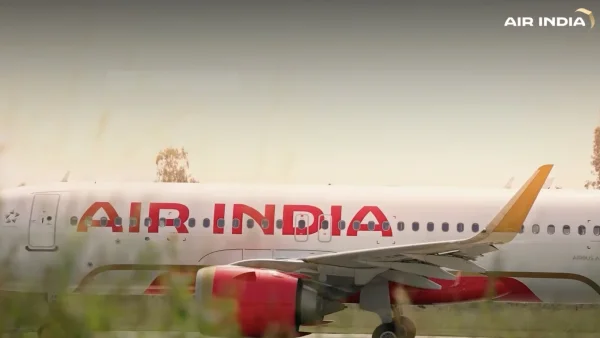
You could say Air India is weighing up a ban after a passenger put a hole in a window pane right before they were set to land on a Chandigarh-Delhi run. It’s one of those moments where you see how an airline will put its zero-tolerance for safety to the test under India’s unruly flyer regulations. The case is in the hands of the airline’s committee for now.
What triggered the review
It all came to a head on June 7 on AI1879, en route to Delhi, says those in the know. Even after the cabin staff made it clear, both in person and in writing, that he should stop, the passenger went ahead and broke the inner pane of the window as they were coming in for a landing.
That’s the so-called scratch pane – a flimsy piece of plastic that’s there to protect the more important, load-bearing glass behind it. Once they were on the ground in Delhi, security and ground staff made sure the passenger was in their custody.
Air India’s actions and official position
A spokesperson for the airline has put it on the record: the pilots did what they were supposed to do. After the warnings, the people in the cockpit let the security team at Delhi know about it.
There was no point where the safety of the plane or anyone on it was in question, the airline maintains. The passenger was turned over to the authorities and the whole thing was put in front of the regulator. As for any behaviour that might be a risk, Air India doesn’t have much patience for it.
What the rules require
If you’re an airline in India, the 2017 civil aviation rules are clear: you put any unruly cases in front of an internal panel. They have a month to figure out if and for how long to ban someone. In the meantime, a 30-day hold is on the table.
That’s where this is at. The committee is to decide if the traveller is to be put in the unruly category and if anything else needs to be done by the book.
Here is the way it usually goes down:
– A 30-day window for the committee to make a call
– You can put a temporary ban in place for up to 30 days
– The regulator has to be made aware
Security chase at Delhi airport the next morning
He was in the box for the night, but come 9:30 on June 8, the passenger made a break for it from his police detail at Terminal 3 and was off running for the forecourt. A CISF unit was on him in no time and put him back in the hands of the police.
His parents put in a word with the cops during the questioning, saying he has some mental health problems and wanted to get him on a plane to Patna. Air India wouldn’t have it while the matter was still open. Once the red tape was sorted, he was released to them.
Why this case matters for flyers
This is a good example of how the 2017 framework is put into practice when things happen at a sensitive time like landing. All eyes will be on Air India to see if they are being consistent in how they enforce these rules.
The passenger was having none of the warnings in the air, but once he was in custody at the airport, the apologies started flowing. It’s a reminder of the kind of pressure the crew is under to move fast and keep everyone safe.
The strategic takeaway for aviation safety
The whole system for dealing with unruly types in India is built on a quick response from the crew and a proper follow-up. The airline is making a point that they stuck to their guns and the procedure, even as the committee does its work.
Travellers can take it as a sign that if you put the cabin at risk, there will be consequences. For the airlines, it may well be a way to show that the 2017 rules are not to be trifled with, and that a ban is a real possibility when you don’t listen.