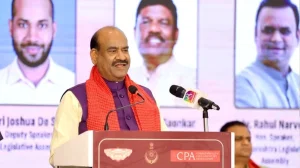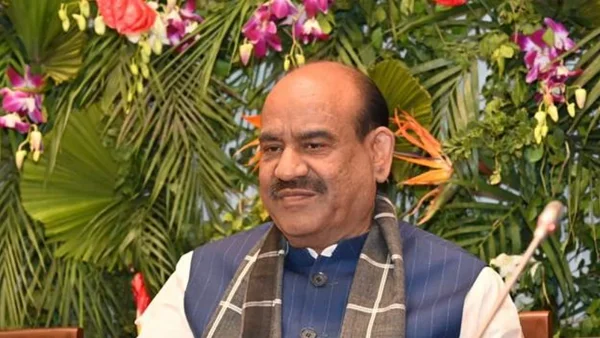
It’s not a matter of procedure, it’s a matter of principle. That was the line from Om Birla over the course of a two-day CPA conference in Chandigarh. He told the room that if you want to put faith back in governance, you have to be disciplined and have some real debate.
The Speaker was unambiguous in his view that these disruptions are a thorn in the side of our democratic institutions. He put it in social terms: the way we carry ourselves in the House has a ripple effect. It sets a tone for what happens outside and, in the end, for the well-being of the common man.
Why the Speaker’s warning matters
According to Birla, the answer is in the legislature’s own hands. A little more order, a culture of actually listening to one another, and you can put a dent in the chaos. He tied the health of our institutions to the kind of democracy we have, and said India’s progress is inextricably linked to how well its assemblies connect with the people they represent.
He made a point of the states’ role in all this. You can’t have a federal system where the Centre and the states don’t put their heads together on policy and law. ‘Society is shaped by the conduct and behavior of its leadership,’ he was at pains to tell the delegates.
What the conference decided
When the dust settled, the delegates had four new resolutions to make for a more open and effective legislature. Birla called them the bedrock for what comes next, and for the Viksit Bharat 2047 vision we are all working towards.
There was a consensus on going digital. If you use technology in the right way, you see better service and more transparency. AI and the like can be of use in bridging the gap between the legislature and the public, as long as we don’t lose sight of our constitutional values.
In short, the delegates were on the same page about a few things:
– Letting the public have a say in the laws and policies that affect them
– Opening up the legislative process to a wider audience
– Using AI and data for a more responsible form of governance
– Making sure our electeds are up to speed with capacity building
– Instilling a sense of the constitution in public life
Who was at the table
You had presiding officers from 12 states in the room – from Delhi and Rajasthan to Jammu and Kashmir and Sikkim. Harivansh Narayan Singh, the Deputy Chairman of the Rajya Sabha, was there as well to weigh in.
Then you had leaders like Narendra Singh Tomar, Vasudev Devnani and others talking up the merits of research and accountability. All in all, close to 40 of them put forward their ideas, and you could see the kind of work being done at the state level.
The road to stronger legislatures
Everyone here will tell you that our diversity is what makes us strong, but you need to be in step with one another. Better oversight and a bit of training in the state assemblies is the way to a government that is more in tune with the times.
Birla sees capacity building as the linchpin. Arm your members with the right skills and you’ll have less of a ruckus and better quality in the chamber. That is how you win back the authority of the institution and the confidence of the voter.
Youth, women, and the next steps
For the future, Birla has his eyes on the younger generation and on women. Getting them involved, and making sure they understand the constitution from when they are in school, is key to where India is headed in this century.
He is of the mind that if we move quickly on what was discussed here, we can put some new life into the system. The four resolutions we have, and a willingness to talk, can be the impetus for a Developed India.