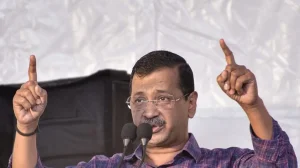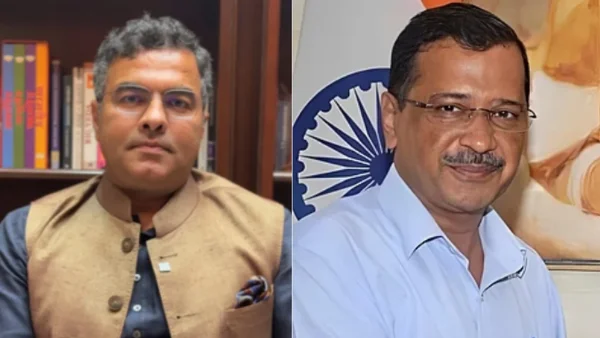
Verma started a new argument by labeling Kejriwal the head of the Aam Aadmi Party as ‘Rehman Dakait’ and praising the people of Delhi for voting him out of office. He said this as Kejriwal, while speaking in Amreli, Gujarat, was criticizing the BJP for being in power for a long time, and focusing his arguments on corruption, the situation of farmers, and how the government is run.
Speaking in the Delhi Assembly, Verma connected his criticism to the popularity of the new Bollywood movie ‘Dhurandhar’ and a character in it called ‘Rehman Dakait’. He claimed Kejriwal is ‘Delhi’s Dakait’ who has ‘stolen from the public’ and the voters were the true ‘Dhurandhars’ by voting ‘these thieves’ out of office.
Verma’s statements have made the bad relationship between the BJP and AAP even worse and have brought many strong reactions from people in all political parties. He said the voters have made their decision and Delhi has ‘shown what they are really like’. What he said is in line with the BJP’s general criticism of the AAP’s time in office and their accusations about how AAP spends public money.
These statements from the BJP leader show how much tougher things are getting between the two parties as they both try to control what people are thinking. Verma is trying to make the AAP defend itself and to strengthen the BJP’s image as being against corruption by framing the argument around being responsible and honest.
Allegations over ‘Sheesh Mahal’ renovation and approvals
Verma also went after the situation he calls the ‘Sheesh Mahal’ issue, saying there were big problems with how Arvind Kejriwal’s official house was built and decorated. He showed a list of ‘expensive and fancy things’ that he says were bought for the house, including furniture, tables, sofas, and reclining chairs that cost a lot.
Verma presented pictures that he says show a wooded area before and after the house was built, and said that trees were cut down to make room for the house. He described the entire project as a string of problems, from how the work was advertised and the contracts were given out, to getting the expensive fixtures.
Verma says that all the important permissions were given on the same day during the Covid-19 pandemic, covering the estimated costs, official approval, and the engineers’ sign-offs. He said this was ‘amazing’ and said it showed that AAP doesn’t care about the rules and the public’s money. He made these claims in the Assembly, and they have added to the demands for the work on the house to be looked into.
Kejriwal counters in Gujarat with governance pitch
At the same time as the BJP was being firmer in Delhi, Arvind Kejriwal was speaking at the Vijay Vishwas Sabha in Amreli, Gujarat, with Bhagwant Singh Mann, the Chief Minister of Punjab. Kejriwal described the election as being between a long-established power structure and a 'government of the people‘, and said that the BJP has been in power for thirty years and he is challenging them by mentioning how important the Saurashtra region is politically.
He pointed out that in and 48 seats in Saurashtra, the BJP won 40, and asked voters what they got for it. He said that there is a lot of corruption, roads and public services are falling apart, and people are being harassed when they try to get basic things like food rations and paperwork.
Kejriwal asked voters to think about the bigger picture and not just the political party or the leaders, and asked for a ‘people’s government’ that is responsible and provides services. He said the way the AAP is governing in Punjab shows what a government run by regular people can do, in areas from farming to health care.
Focus on farmers and service delivery in Punjab model
Kejriwal said Punjab is being used as an example. Now, farms in Punjab have a steady supply of electricity during the day and getting electricity for farming is free. He said that in four years, irrigation (watering of crops) has gone from covering around 20% of land to 70% in Punjab, and they aim to have 90% covered next year. He pointed out how things are done with buying crops: in Punjab, the markets (mandis) buy all of a farmer’s harvest, and pay them on the very same day. But in some areas of Gujarat, farmers have to wait for months to get paid, and a promised 10,000 crore rupees to help groundnut farmers who had losses never got to those farmers.
Kejriwal also talked about health care. He says now, every family in Punjab has health insurance up to 10 lakh rupees, which means they can get treated at good hospitals. He promised that if people vote for a Gujarat government run by regular people like themselves, they’ll do the same thing in Gujarat, and good quality health care will be free when you actually get it.
He mentioned the 1,000 rupees a month given directly to women in Punjab, saying that helping people specifically like this makes families and the local economy stronger. He doesn’t see these programs as just giving things away, but as smart ways for the government to spend money, and they’re able to do this because they’ve stopped corruption.
Anti-corruption assertions and internal action
Regarding corruption itself, Kejriwal says Punjab’s government doesn’t allow any of it. He said they even arrested a member of their own party in the government for suspected corruption, to show how seriously they are about being honest – something you don’t often see in Indian politics.
He says this honest approach has led to improvements in everything from getting electricity to health care and insists that every single public rupee should go to the people. His main point is that changing the political party isn’t enough, you need a change in how things are done; things have to work quickly and bribes should be less common.
Kejriwal presented AAP not as a standard political party, but as a movement, with leaders from normal backgrounds and many politicians being first-time lawmakers. He believes this kind of group is more aware of the problems people face every day and more willing to deal with wrongdoing even within their own party.
Political stakes in Gujarat and Delhi
The arguments between Verma and Kejriwal show how much is at stake in both Delhi and Gujarat. In Delhi, the BJP is saying that AAP leaders were wasteful and didn’t follow the rules with the “Sheesh Mahal” issue, and are accusing them of being hypocritical about corruption.
In Gujarat, AAP is offering the way Punjab is run as an alternative to what they say have been thirty years of being ignored and having politics dominated by families. Kejriwal told people to think of the upcoming Zila Parishad (local government) elections as a practice run for the main Assembly elections, and said they will put up candidates from ordinary families and provide more opportunities.
Both sides are really talking about whether people can trust them. The BJP says they are against misusing public funds and are for proper administrative processes. AAP says their record in Punjab shows they govern in a way that actually helps people, and can do the same for Gujarat, especially for farmers and those with low incomes.
As the campaign gets more intense, we can expect stronger statements, more accusations backed by documents, and people getting involved in the areas of buying crops, getting electricity, and receiving welfare. Voters will hear different ideas of what it means to be responsible, and those ideas will be tied to memorable phrases like ‘Rehman Dakait’ and ‘the government of the people‘.
Whether the accusations about the house renovations and how crops are purchased become official investigations will likely determine the discussion in Delhi. In Gujarat, the important question will be whether AAP’s promises about how they’ll govern are heard by more than just those at rallies and actually turn into votes, across the Saurashtra region and further afield.
Right now, the political spectacle is happening in two places at once: a lot of arguing in the Delhi Assembly and focusing on how to run things in Amreli. We’ll find out how successful both of these strategies are when people vote, and as both Verma and Kejriwal suggest, it will be the public who ultimately decides.