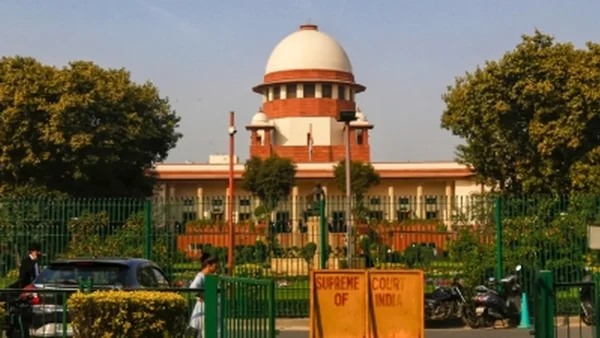
On Wednesday, the Supreme Court refused to deal with a challenge to the Ministry of Home Affairs’s circular about singing the national song Vande Mataram at government events. They said the circular is not something you must do. The Justices said the complaint was too early, based on a fuzzy worry about unfair treatment, and said the person complaining should come back to court if they are in fact punished.
Bench Ruling and Immediate Outcome
A panel of three judges, led by the Chief Justice, looked at whether the circular actually legally forces anyone to do anything. The court noticed that the directive uses “may,” which shows it is a suggestion, not a strict order. Without any specific warning or punishment for not following the suggestion, the judges would not make a ruling.
Muhammed Sayeed Noori, the person who complained, said that even though it isn’t a law, the pressure from others could make it feel like you have to participate. The judges understood that worries about being forced are important, but said you can’t go to court based on something that might happen.
Arguments Presented by the Petitioner
The lawyer for the person complaining said they respect all religions, but that being required to take part in a public song could go against what someone believes. He pointed out that people might be made to publicly show their loyalty, even if the law doesn’t punish them for refusing to do so.
The person complaining also mentioned a section of the rule about causing disruption which could lead to punishment, and said the worry of consequences puts a lot of stress on anyone who doesn’t want to sing or stand. The court asked if anyone had actually been removed from a job or been disciplined for not participating.
Court’s Legal Reasoning
The judges paid close attention to the exact wording of the Home Ministry’s circular. Because it uses the word “may,” the judges concluded that the circular allows people to participate or not participate as they wish, and doesn’t automatically violate their rights as in the Constitution. They said the complaint didn’t show any real, current legal problem.
The judges were very clear about what to do. If someone gets a warning, is disciplined, or is punished for refusing, then they can go to court. But until something like that happens, the court will not turn a general fear into a court case.
Implications for Public Institutions and Individuals
This ruling makes it clear that directions from the government that are presented as optional aren’t likely to get an immediate hearing in court. Organizations can still use the circular as a good way to do things, but they should not use force to turn the suggestion into a requirement. Those in charge of organizations and employers must think about constitutional rights when using symbols or ceremonies.
For individuals, the ruling emphasizes how important it is to keep records of any actual forcing or punishment. Pressure from other people can be strong, but to get help from the courts, you generally need to prove that your rights have been broken, for example with a written order, being suspended from work, or some other official punishment for not complying.
Next Steps and When to Seek Courts
The judges told the person complaining to come back if he or others get official warnings or are punished. Anyone who thinks the suggestion is being used to force them to do something should keep proof of it and first try to solve the problem with the organization before going to court. Specific examples of unfair treatment or punishment will change how the law would be applied.
The Supreme Court’s approach is balancing respect for things that represent the nation with protecting the rights of individuals. By assuming the circular is a suggestion until it is proven otherwise, the court has left the door open for complaints in the future, but also said that just being afraid of something won’t be enough to get a ruling.