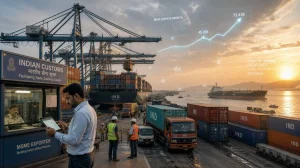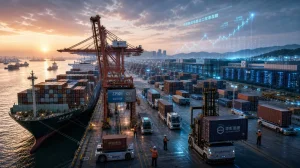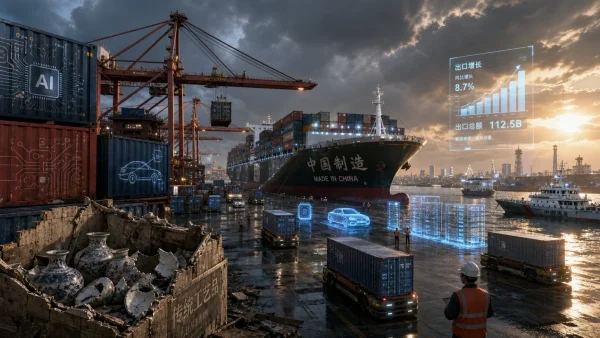
In what has been another outsized month for the export machine, shipments were up 23.9% in July on the back of the AI boom reshaping demand. That kind of performance is enough to put the monthly surplus at $112.5 billion and invite a backlash from rivals who are not fond of China’s encroachment on high-tech supply chains, typhoon or no.
There is a stark two-speed quality to the numbers. While imports were up 27.5%, domestic appetite is soft so one must look to external markets for growth. The export tally of 23.9% was better than the 22.2% economists had in mind and cleared the 23% median, all while Typhoon Bavi and other storms put a temporary halt to some of the bigger ports.
The weight of an AI supercycle
Electronics tied to AI, semiconductors and electric vehicles are acting as shock absorbers for China, making up for a lacklustre home market and weather issues. According to customs, the value of such high-tech wares was up 40.7%, with semiconductor exports almost doubling on the year.
It is not just a matter of volume; the worldwide hunt for computing power is affecting price. A dearth of chips and the like has seen some semiconductor prices run up as much as 700% in the last 12 months. In June, export prices put in a third straight month of gains at 8%, whereas import prices jumped 25%, the most since 2006.
Uneven gains in the factories
AI hardware may be thriving but traditional makers are ceding territory. You see it in the 28.3% drop in ceramic exports in July. It is a case of advanced manufacturing carrying the day while legacy industries are left to deal with overcapacity and thin order books.
The divide is widening and creates its own tension: when exports are this strong, officials feel less compelled to prop up the consumer side of the economy. For a lot of factories, moving up the value chain into tech is no longer optional, it is an economic imperative.
A policy dilemma behind the surplus
The pace has slowed somewhat from June, when exports were up 27% and imports 36%, yet the surplus held firm at $112.5 billion. One can put that down to resilience in the face of the heavy rains and port suspensions on the eastern coast brought on by Typhoon Bavi.
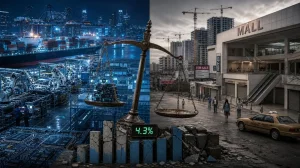
The growth numbers complicate matters for policymakers. The economy put in 4.7% in the first half of 2026, in line with the 4.5-5% target, if a bit slower at 4.3% in Q2. Trade is robust enough to cushion that deceleration and perhaps take the edge off any call for more household stimulus.
For a quick read on July:
– 23.9% rise in exports
– Imports up 27.5% on the year
– A $112.5 billion trade surplus
– 27% growth in June
Backlash and the currency question
The size of the surplus is becoming a political issue. The US and Europe are looking harder at Chinese firms in carmaking and data centre hardware as they consolidate their position in value chains. With the surplus set to top $1 trillion for a second year running, demands for countermeasures will grow.
Economists are at odds over how the domestic currency should be used to protect the manufacturing base. Geopolitics are running hot and policy cycles are diverging, so trading partners may be quicker to act defensively before the leaders’ summit in September, putting China’s export model to the test.
Softness at home shows in energy use
Commodity flows tell the story of the domestic lull. Natural gas imports were down 3% in the opening seven months of 2026 and crude oil fell 13.2%, a reflection of the property sector’s woes and muted activity in construction and industry.
Then there is the distortion of nominal values. Headline figures are being propped up by the cost of commodities and chips, meaning volumes have not risen as much as the price tags suggest. Should prices come back to earth faster than orders do, that will be apparent.
What comes next
Markets are fixated on two things. Whether AI demand can stand in for the weakness in the traditional sector and at home. And if the outside world keeps pulling, will policy remain hands-off or turn to social safety nets and household income?
This is not just a domestic concern. A swelling surplus from high-tech could prompt more partners to reach for protectionism. The gain from AI hardware is obvious for now, but the strategic challenge for China is to make of it a more balanced form of growth without ruffling feathers abroad.