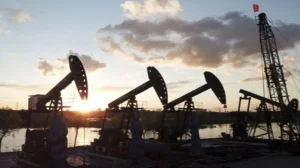
In fact, the oil has vaulted past the $80 mark as various flashpoints in the region have come to a head. An Iranian bill aimed at US and Israeli shipping in the Strait of Hormuz, along with some fragile diplomacy with Oman and new claims of tanker attacks, have been enough to rekindle a risk premium that was starting to wane and force a repricing of supply security.
Risk premium returns as Hormuz diplomacy stalls
It is a matter of control versus diplomacy for the markets now. Esmaeil Baghaei of the Iranian Foreign Ministry says Iran and Oman have settled on the coordinates for a route through the strait and are in the process of finalising a joint statement, so long as no third parties see fit to interfere.
There is also a separate proposal on the table to help bring an end to the US-Iran stand-off which would give Tehran jurisdiction over vessels making their way into the Gulf. According to a senior source in Iran and two officials in the region, it would be one of the more sizeable concessions put forward to date.
“You have understandable anxiety that a new arrangement might be just as tenuous given what happened with the Memorandum of Understanding in June,” said Tim Waterer, KCM Trade’s chief market analyst. “The market will keep putting a price on supply risk until we can verify that volumes are up and staying there.”
Prices surged through the session
Crude made its way higher in two stages on Thursday. At 11:58 GMT, Brent futures were at $80.28 a barrel, an 83 cent or 1.04% rise; West Texas Intermediate in the US was up 61 cents, or 0.81%, to $75.83.
Then came word out of Tehran and the momentum picked up. Brent crude futures were up $3.09, a 3.89% increase to $82.54 a barrel, by 12:37 p.m. EDT, while US West Texas Intermediate was also in the green, rising $2.49 or 3.31% to $77.71.
“Crude traders are fixated on the US/Iran agreements; the more protracted the delays, the more you will see prices fade back to the upside,” said Dennis Kissler, senior vice president of trading at BOK Financial.
Iran’s bill and the battle for shipping access
A lawmaker in Iran put it on record that a parliamentary committee is looking over a preliminary bill to put an end to US, Israeli and other hostile vessels in the Strait of Hormuz, with violators facing fines as high as 20% of their cargo’s value. It is a move aimed squarely at one of the key chokepoints in energy trade. Prior to the hostilities of late February, the strait saw some 20% of the world’s daily oil and liquefied natural gas. Any action to stifle traffic or create legal trouble for certain flags has the effect of altering route planning and insurance costs, not to mention prompt pricing.
Then there is the matter of security. Five sources say Iran has let Gulf states know that a fresh American attack on its soil would be met with retaliation against vital energy infrastructure in the region, a way of upping the ante for Washington’s allies should things escalate.
Security incidents widen the supply threat
The Houthis in Yemen, aligned with Iran, reported missile and drone strikes on Saudi positions in Marib and Hadramout on Thursday. They put forth claims of having hit Saudi oil tankers near Yanbu and in the Gulf of Aden as well, if only to put them on notice, though Riyadh has not confirmed the episodes.
“These are significant because they represent activity in another theatre, away from the Persian Gulf, and serve as a reminder that the Red Sea passageway is no less at risk,” John Kilduff of Again Capital observed. “You have the market moving up and down with the tensions.”
In Russia, a large Ukrainian drone assault left a major refinery in the Yaroslavl area in flames, per authorities. And in a sign of what is being paid attention to in terms of regional demand, Saudi Arabia has made a slight reduction to the September official selling price of Arab Light for Asia.
Flows still lag pre-war levels
Shipping figures indicate that while exports of condensate and crude from the Gulf held steady in July, they are some 40% off where they were before the war. That leaves refiners and inventories open to any further disruption.
“Houthi attacks have not done much to disrupt supply thus far but that could be a different story if they ratchet up,” said Roberto Cominotto, an equity research analyst with Julius Baer.
What to watch from here
Volatility has returned and traders have their eyes on a few catalysts:
– The Iran-Oman shipping corridor and any verification of progress
– How the Strait of Hormuz bill in Iran plays out
– Confirmed damage to tankers or infrastructure
– Pricing from the Saudis into Asia
– Outages resulting from strikes
Whether crude makes its next move depends on de-escalation that can be seen in the flows. Absent that, with the legal overhang in Hormuz and contested waters in the Red Sea, there is an argument for a risk premium that will persist even as it shifts.