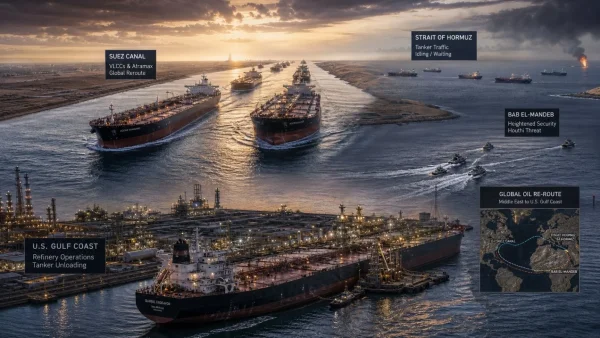
Imports are set to top out at some 600,000 barrels per day in August, the most we have seen since the start of the Iran war. US refiners are making ready for this time-sensitive jump in arrivals from West Asia, driven by an unusual confluence of fresh security concerns and bottlenecks giving way.
Why there is a surge in Middle East crude for the US right now
Some of the cargoes held up at the chokepoint of the Strait of Hormuz were let go with a brief lull in traffic over the summer. According to ship-tracking figures, close to a dozen tankers with West Asian crude are making their way to American refiners.
The strait was opened up after the US and Iran put pen to paper on a memorandum of understanding in June. US traders did not wait to lock in those barrels before the routes could constrict once more.
Then there is Saudi Arabia, which has been moving exports from its Yanbu terminal in the Red Sea through the Suez Canal rather than risk Iranian attacks near the Strait of Hormuz. By using its east-west pipeline to reroute, the kingdom has altered voyage economics to the benefit of US destinations.
Security threats are changing delivery times and the map
But the alternative route has its own dangers. Last month the Houthi militants of Yemen, backed by Iran, put in place a maritime blockade of Saudi Arabia, which has upped the threat level at Bab el-Mandeb on the southern end of the Red Sea.
In light of that, a good number of tankers have made for the north to get out through the Suez. When you factor in volatility, the shorter trip to US ports from there is an advantage over going to Asia.
One could still push on to Asia after heading north but it adds almost four weeks to the schedule and the cost. “Sending Saudi crude on tankers to the U.S. rather than to Asia may be a preferable option given fleet logistics and the shorter time on the water,” says Kpler’s Matt Smith.
Hard data, identifiable ships and fast deals
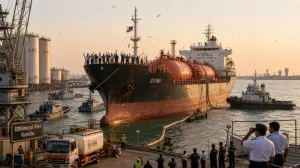
Take the case of the Aqualoyalty, a Liberia-flagged vessel under charter to PBF Energy. It is evidence of how quickly refiners are moving. On Thursday it put off with a load of crude from Egypt’s Sidi Kerir and was discharging at Paulsboro in New Jersey. At 750,000 barrels, the Aframax is well suited for a quick turnaround.
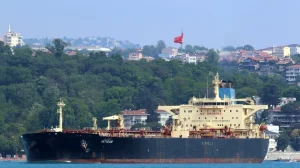
You will see the same with the Front Gaula of the Marshall Islands. After making its way through the Suez, the vessel is on course for the United States with a hold full of Saudi oil from Yanbu. A very large crude carrier can only make it through the canal in part, so some of the cargo was put through Egypt’s SUMED pipeline and taken back on board in the Mediterranean.
There is a distinct change of pace compared to July, when not a drop of Middle Eastern crude made it to US shores. These sailings are a far cry from then; official weekly figures have the region’s imports at a high of 708,000 bpd in February.
What the numbers say about supply tightness
The US has now seen an end to the drought that left it without Iraqi oil for six weeks and Saudi for five by the close of July. The sudden upturn is putting pressure on delivery windows and pricing. In the near term, the equation is straightforward: barrels that can get to the US in short order are the ones coming out ahead. With their own access to Saudi supplies constricting, refiners in Asia have turned to American oil for what they need right away.
Tanker traffic flips direction, and it matters
With West Asian supply to Asia running thin, ship signals and fixture data show at least two dozen empty VLCCs have set their sights on the United States for pickup. We saw something of the same in April during earlier disruptions.
Rohit Rathod of Vortexa puts it down to the fact that U.S. barrels are the marginal product rebalancing export markets, which in turn is drawing VLCCs to the Gulf Coast for loading in late August and September. He estimates the number of empty vessels bound for the US could top 40.
You could call the line of empty supertankers a feedback loop. More imports from West Asia mean shorter trips and ships are freed up all the quicker, while US exports on the rise let global buyers make do with less from the Middle East.
What this means and how to prepare
US refiners would be well advised to secure any Suez-linked cargoes with an advantage before the routing risk changes. Should security or queue times become an issue, the window will be short. For their part, Asian buyers are looking at longer hauls and a dearth of Saudi product, so they are being drawn to US benchmarks. Expect freight rates to be bid up as the Gulf Coast loadings get crowded.
A few things to keep an eye on as things develop:
– Ships making their way north out of the Suez
– VLCCs ballasting for the US Gulf Coast
– Any fresh slowdown at the Strait of Hormuz
– Incidents in the vicinity of Bab el-Mandeb
It is a matter of finding the fastest safe route to dictate trade. With some 600,000 bpd headed this way, the finish line is always moving and refiners, traders and shipowners are all running against the clock.