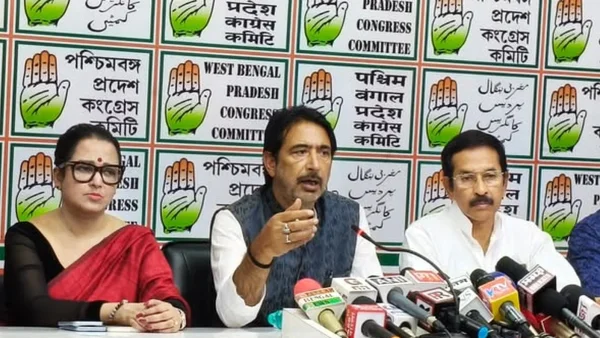
On Thursday, the West Bengal Pradesh Congress Committee released the “people’s chargesheet” which says both the TMC, which is currently in power in the state, and the BJP’ and central government have failed West Bengal in regards to corruption, unemployment, the state’s cultural identity, and how money is being given to the state. It describes West Bengal as suffering from bad government within the state and being ignored by the national government as the West Bengal Assembly Elections get closer.
Allegations against the TMC
The chargesheet says the state government has allowed a ‘syndicate raj’ to develop, and corruption is now part of the system. The Saradha and Rose Valley financial scandals, which were very public, are given as examples of much more significant issues with how the state is run.
The document also mentions the controversy over hiring for schools and an alleged scam involving the distribution of food rations as proof of ongoing issues with how things are done. Frequent violence against women, problems between religious groups, and issues with who is being hired are all given as further indications that people are losing faith in the government.
Fiscal stress, industry decline and social outflows
The Congress party believes that the increasing amount of money the state owes and the fact that industry in the state is getting smaller have led young people to leave to find work. They say unemployment and a lack of investment are the result of poor planning and mistakes in administration.
The chargesheet says these economic trends suggest the state will have financial difficulties for a long time, and that this could impact welfare programs and public services. It connects problems with the government to results you can measure, like lower industrial production and a loss of educated people.
Charges against the BJP-led Centre
A number of accusations are made against the central government, including that they are actively being against Bengal and holding back money that should be used for welfare programs. The party also claims that the central government is only using central agencies to go after their political opponents.
Furthermore, the central government is accused of trying to turn Bengali identity into a political issue and weaken the Bengali language and culture. The chargesheet describes these actions as a type of identity politics that could make social splits get worse and reduce people’s sense of community.
Impact on voters and public services
The chargesheet is intended to link the accusations to things people are dealing with in their everyday lives, showing how a lack of funds and the government not doing its job can have a direct effect on healthcare, schools, and getting food. It argues that failures in government mean families get fewer benefits.
The Congress is attempting to get support from a wide range of people, even those who don’t usually vote for them, by focusing on practical services. They are trying to make being held accountable the central theme of the election, and this is aimed at people in both cities and the countryside where how services are delivered has a real effect.
Political strategy and electoral implications
At the launch of the chargesheet, a leading figure in the Congress party in the state said that the people of Bengal deserve to have the government answer for its actions, and not just to have two parties blaming each other for the state’s problems. This statement presents the Congress as a different option that is pushing for openness and changes to how institutions work.
Political experts think the chargesheet will shape how the election campaigns are talked about, forcing the other parties to respond to questions about government and identity. How successful this plan is will depend on whether the Congress can continue to get attention from the media and turn the accusations into realistic policy suggestions.
Next steps and what to watch
Important things to watch will be the official responses from the TMC and the BJP led central government, any investigations by the authorities or the courts that might be started, and how voters behave during the campaign. Whether or not the chargesheet changes what the public thinks will depend on having solid proof and continued examination of the claims.
Groups in civil society, organizations that investigate things, and independent people who check figures could help to confirm the claims. The next few weeks will show if the idea of holding people accountable will become popular or just turn into each side blaming the other as the West Bengal Assembly Elections get closer.