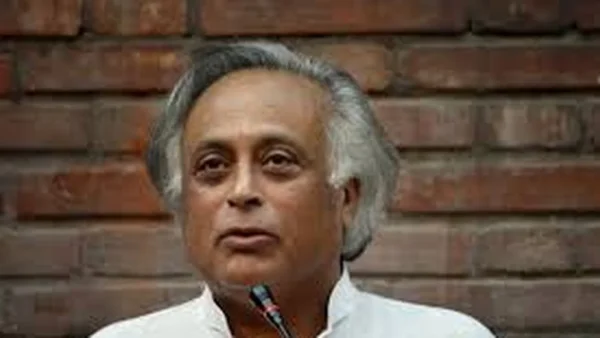
The party has put the issue of India’s electoral system front and centre, and is pressing for the right to vote to be formally recognised as a fundamental one. In their view, it would be a check on arbitrary deletions under SIR and make it all but impossible to erode democratic participation.
For Jairam Ramesh, the Congress leader, this is about countering a kind of institutional drift. He makes the point that if you make voting a fundamental right, you get the kind of top-tier judicial review and protection you need, especially when there are questions over disqualifications or the state of the rolls.
Why the call resonates now
Ramesh has been blunt about the Election Commission of India, saying its hand has been shown and that it is ‘blatantly partisan’ and acting on the say-so of the Prime Minister and the Home Minister. That, he says, is why you can’t have enough constitutional cover.
Then there is the matter of the Supreme Court. A bench of two judges last week made it clear a citizen has the right to use a marked-out footpath, a bit of an expansion in the law of fundamental rights. Congress is taking that as a sign to have another look at where voting stands.
It doesn’t make sense to Ramesh to have the trappings of an election be a fundamental right while the very act of casting a ballot is left as a matter of statute. Fixing that, he says, is the only way to plug the holes that allow for disenfranchisement.
The constitutional case being argued
You could call it a legal oddity. The courts have time and again come to the defence of the franchise, even though the 1951 Representation of People Act still defines the vote as something you are entitled to by law.
Ramesh points out the court has made sure voters can get at the facts on candidates and their money, and has stood up for secrecy and the NOTA option. To him, it is strange that the heart of the matter is not afforded the same protection.
Some of the rights the party is talking about:
– To be in the know on a candidate’s criminal record
– To see where a candidate’s financial interests lie
– To find out where political funds are coming from
– Ballot secrecy
– Having your choice of NOTA acknowledged
They have some judicial weight behind them, too. Back in March 2023, Justice Ajay Rastogi, in a dissent for Anoop Baranwal vs Union of India, was of the opinion that the right to vote is indeed fundamental. Ramesh notes that after 70 years we are still at odds on it.
His take is that you need to bring the core right in line with these other things the courts have put their stamp on. It’s a question of keeping democracy in good order when you run into procedural hurdles.
Roots in the founding debate
In a way, Congress is rehashing a matter that was on the table long before we were independent.
Back in 1947, the Advisory Committee on Fundamental Rights, Minorities and Tribal and Excluded Areas of the Constituent Assembly had a matter to put before it. At its April 21-22 session, with Sardar Patel in the chair, the question of voting’s standing was on the table.
Ramesh has it in his memory that Dr B R Ambedkar and Babu Jagjivan Ram made their case for enshrining the right to vote as a fundamental one. But they were met with a counter from Patel, C Rajagopalachari and some of the others: force the issue and you might find the princely states less amenable to coming into the Indian Union.
In Ramesh’s telling, Patel’s position was that universal adult franchise was already a fundamental right in all but name. “That is how Article 326 was written,” he would say, referring to the provision for elections by universal adult suffrage. These days, Congress is after something more on paper.
You could see in that old divide the roots of an ambiguity that has lasted to this day. As electoral law has been put in order, the underlying question of whether the right is statutory or fundamental has come up time and again.
What it means for the voter and the Commission
Congress is running on the premise that there have been mass deletions from the voter rolls. They point to what they call ‘astronomical’ numbers of disqualifications in various states through the Special Intensive Revision and say it is time for some sturdier guardrails.
Ramesh makes the point that if you put the right in the fundamental category, the courts can act with more alacrity when someone is being shut out of the process. It would also put the Election Commission under a finer constitutional eye.
The party puts it down to three things:
– A higher bar for judicial review and protection
– The Supreme Court keeping a closer watch on the ECI
– Some insurance against the kind of suppression and capricious disqualifications we are seeing
They are not trying to reinvent the wheel, but to put a fix in place. The idea is to put voters at ease and show them their vote won’t be chipped away by some backroom procedure.
A word from the top court
There is also the Supreme Court’s recent take on rights to work with. In a ruling on the so-called pedestrian right, Justices P S Narasimha and A S Chandurkar made clear that a citizen’s right to use a footpath trumps motorised traffic.
It is, the court said, part of the right to move under Article 19(1)(d) and even Article 21. For Congress, it is a ready-made example of how a simple civic activity can be given the weight of a fundamental right.
Ramesh will ask you: why should the act of voting be afforded any less cover than the right to walk on a path? If those everyday necessities get the status, then so should the one thing that is the lifeblood of our democracy. He has called it an absolute must for the health of the system.
It is about making remedies a matter of right, not just policy. And if the courts are brought in at the highest level, the power dynamic in a dispute may well tip in the voter’s favour.
Will there be a consensus on that? Hard to say. Ramesh will tell you there have been ‘different views’ on the subject for over 70 years.
But for the moment, Congress has put its cards on the table. Pointing to history, the courts and the way the law is being read now, they are for an elevation of the right to vote. Their line is simple: give it a firmer footing in the constitution and you protect the ballot, and with it, the country.