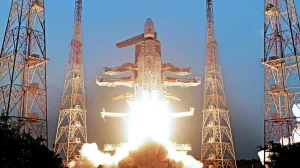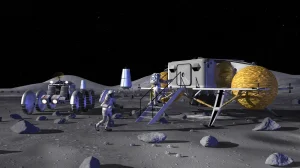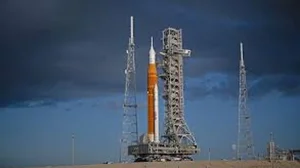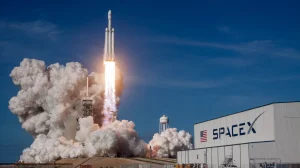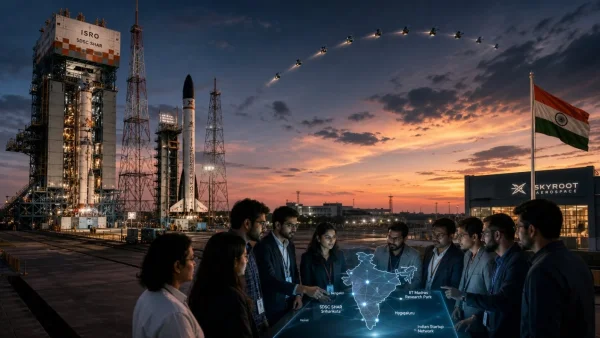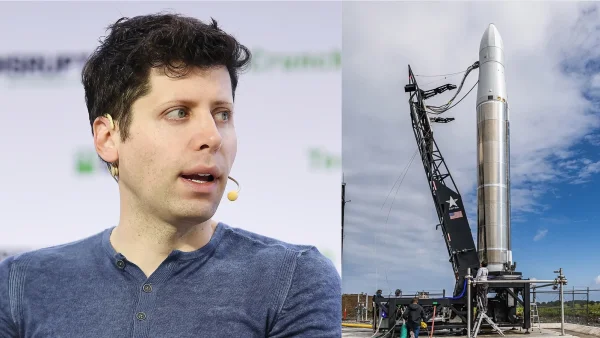
Sam Altman is interested in outer space, and the word is also that he might go beyond Earth. The head of OpenAI is pondering the idea of spending billions on its space projects. This can be with a partner or merging with a company that launches operations; the ideas are endless when you are loaded with that many funds, for sure. A very bold move from Sam, but because Elon Musk is in that sector with his space reconnaissance project, it would create a very tough competition.
People with direct knowledge of the situation said that Sam Altman had conversations with Stoke Space, which was founded by ex-Blue Origin engineers in 2020. Supposedly meaty talks with ideas of where OpenAI can also give money slowly in bits, which may eventually lead to the whole thing, of course with the ultimate position. The deal has not gone through yet, but they definitely want it.
The idea corresponds to a more general assumption: the energy and infrastructure will be key constraints for AI performance in the future. Data centers in space may benefit from abundant solar energy, avoid the cooling potential of the earth, and also decrease the environmental footprint that is usually associated with the use of energy-consuming AI models. However, off-world computing is not yet a practice , but it is becoming a topic of discussion with increasing prevalence within tech circles.
A contest that has a wider scope
Altman and Musk’s paths have been divergent to the point of being almost opposite since they established OpenAI in 2015. Musk departed from the organization in 2018 and set up his own AI company named xAI, besides his involvement in SpaceX and other business industries. Altman is gradually entering into fields that circle around Musk’s areas, creating a kind of competition on many fronts.
Brain-computer interfaces is a popular example. Word has it that Altman was the founder of Merge Labs, a company that aspires to rival Musk’s Neuralink. Merge’s investment is estimated to be $850 million with an option for a substantial investment from OpenAI’s venture fund. Altman will have a co-founder role but will not be responsible for the daily operations.
Outreach Insider the Stoke Space
The name Stoke Space is associated with the Nova project, a completely fashioned rocket platform that the company is working to bring to the market. They have designed the competition in reusability of SpaceX’s boosters and landings, which is one factor key to cheap launches. Had a deal been made, Altman might have had a faster path to orbital launching, where SpaceX is the contemporary leader.
Altman’s involvement with Stoke Space was started during his tenure at Y Combinator, a company that had received backing from the accelerator. He has even gone to publically talk in favor of building a rocket company. Though there was no agreement, the talks reflect an enduring interest in the aerospace saber-rattling because of the long-lasting AI future infrastructure.
Space is in line with Altman’s AI vision
The next generation needs massive energy, cooling, and space for training AI models. With the mushrooming of data centers, the need for a cleaner and more efficient solution is being felt more and more. Space-based solar energy, the cooling system based on a vacuum, and the uninterrupted sunlight. It all makes up a promising but distant possibility for off-world computing.
Altman has always been a supporter of unusual space technologies. Not only that, but he has given a hand to Longshot Space, which is building non-traditional launch systems designed to get to orbit without the use of traditional rocket combustion. The addition of a reusable rocket capacity was to have perfectly mirrored that portfolio and greatly related the absolute full manipulation of orbital logistics.
With whole industries at stake all the while, facing tangible limitations
It gives rise to many practical and technical issues, though considering the options of billions in the space sector is a must. OpenAI is booming, but the fundraising methods, the way of being a non-profit, and export control regulations like ITAR stand in the way of a rocket company’s being gained directly. For such a big step, a different source of funding and close observation of the regulations is aptly necessary, thou.
On a distinct note, OpenAI is putting its muscle very hard to be the number one in AI. The talk is that the staff is already facing this challenge. Not only the ChatGPT improvement but also the model development speed and quality factors are being worked on. OpenAI is moving ahead with its own large models with breakthrough reasoning and coding, possibly, but with no certain date yet.
Neural interfaces: a second showdown
Besides rockets, Merge Labs is also stepping into another direct showdown with Musk. Neural interfaces will enable faster human-computer interaction, new medical therapies, and eventually, stronger connections between humans and AI. Merge will become a second critical area where Altman and Musk may go head to head fighting for the best people, more funds, and a greater slice of the acceptance by the regulators.
The space economy implications
While the Stoke Space discussions ended without a pact, the very fact of an overture is a pledge. If Altman devotes large sums of money to satellites, space stations, and space-based data storage centers, it might intensify the rivalry with SpaceX and encourage the remaining of the propulsion, power, cooling, and in-space manufacturing segments to be taken up by new investors.
The conclusion is stark for the AI sector: the contesting and getting of the services that form the infrastructure are the genuine issues, not the construction of better models. If Altman buys a rocket company in the end or just gives one the fundings, he is one of the big spenders who will gamble to ensure that the future of AI has not only to be the world of the Earth.