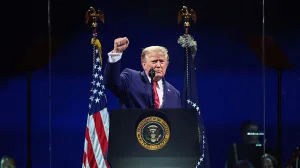
Donald Trump turned the Oval Office into Wall Street’s stage on Monday, ringing the opening bells for the New York Stock Exchange and the Nasdaq while unveiling ‘Trump Accounts’ for children. The push links his presidency to stock gains even as inflation rises and only 33% approve of his economic leadership, according to a June survey.
Why markets are now the message
Trump has urged Americans to focus on their 401(k)s and portfolios, arguing that market strength validates his policies as the November midterm elections approach. He framed the narrative bluntly last week: ‘It’s all going well – the stock market is setting records virtually every day,’ adding, ‘Thank you, President Trump.’
The prominent bell-ringing from the Oval Office underscored that strategy. It also highlighted a political challenge: market headlines do not reach everyone equally, and inflation remains top of mind for many households.
‘Trump Accounts’ aim to broaden ownership
At the centre of Monday’s event was the launch of Trump Accounts, pitched as long-term savings and investment vehicles for children and teenagers. Officials described them as pro-family, voluntary and market-driven, with proposals that may include tax benefits, government incentives or matching contributions.
Republicans have tied the accounts to their big 2025 tax and spending cuts bill. Treasury Secretary Scott Bessent, promoting the plan, said that ‘38% of American families do not have any exposure to our great equity markets.’ The administration argues early investing could narrow that gap.
Supporters say such accounts could build financial literacy and future wealth. But questions persist about who qualifies, how they would be funded and the overall cost to taxpayers. Critics also note that stock gains often accrue to wealthier households, or are locked in for retirements decades away.
How markets have actually performed
The S&P 500 rose 26.3% in 2023 and 25% in 2024 during Democrat Joe Biden’s presidency, followed by gains of 17.9% in 2025. The benchmark has risen roughly 10% so far this year. Following Monday’s White House broadcast, major Wall Street indexes opened higher.
Those figures explain the political calculus. Trump wants voters to associate cumulative gains with his leadership, even though a large share of the rally predated his second term.
Inflation is the spoiler for the sales pitch
Price pressures continue to undercut the market-first message. The consumer price index has climbed 4.2% over the past 12 months, up from 3% when Trump started his second term in January 2025. He won the 2024 election promising to lower costs, but tariffs and the start of the war in Iran created new inflationary pressures.
That backdrop helps explain why market records have not translated into broader approval. Only 33% of U.S. adults back his economic leadership, despite the administration’s emphasis on rising indices and wealth creation.
What comes next
‘Trump Accounts’ now serve as a test of whether policy can expand stock ownership beyond affluent families and make the market story resonate with non-investors. Further details are expected from the Treasury Department and financial regulators in the coming weeks.
Key questions for families and markets include:
– Who qualifies and how funding works
– Whether incentives include tax benefits or matching
– How quickly families can start investing
The political stakes are clear. Trump’s rare Oval Office bell-ringing signals a bet that investor optimism can outweigh inflation fatigue. Whether that bet reaches households without direct stock exposure may determine if the market story sways voters this fall.