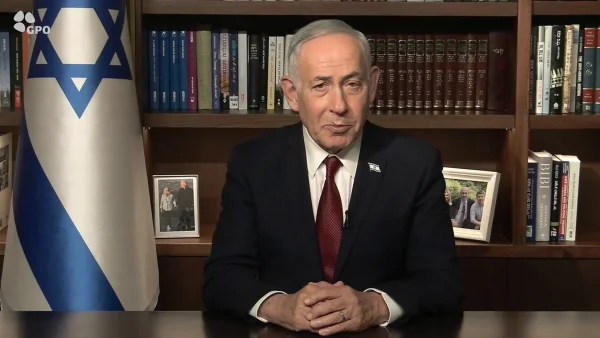
Benjamin Netanyahu has put some heat on the region with a new message: if we have to, we will hit Iran again. In a TV interview and while out with the troops, he made it plain that Tehran won’t be getting nukes on his watch, even as some new diplomatic overtures are made. It’s a sign of a long road ahead.
A red line, and a threat to back it up
On Channel 14, the prime minister said they’ve already been in Iran twice to put an end to what he sees as an existential risk. If the need arises, he says, they will do so once more. The line on Iran’s nuclear programme is a hard one.
‘We went in to save ourselves from being wiped out. There can be a third time. As long as I am in this office, you won’t see Iran with a bomb,’ he was quoted as saying.
Netanyahu doesn’t see this as something that comes and goes. When put on the spot about whether he is still after ‘total victory’ in Gaza, his answer was simple: ‘It never ends.’
Holding the line in the south
You won’t see a reduction in our presence in southern Lebanon any time soon, the PM made clear on a Tuesday visit to the front. The reason is the Iran-armed Hezbollah.
‘Make no mistake, we’re not leaving until the danger is gone. And while they are here with their weapons and making us a target, we are staying put,’ he told the men in uniform.
This was all in the days following a US-brokered deal between the two sides to make way for some peace and to see to the disarming of Hezbollah. But the ground reality often has a way of overtaking the talking points.
The framework vs. the facts on the ground
Sure, the American understanding is there to lower the temperature and get to a point where Hezbollah is disarmed. But from what Netanyahu is saying, you won’t be moving out on a schedule. You do it when the security picture changes. That’s how he keeps the squeeze on them while the talks go on.
Gaza, the settlements, and what he won’t say
When asked if he was going to put the settlements in Gaza back together, he left the door open but wouldn’t give you the details. ‘You act first and then you talk. Sometimes it is wiser to keep those apart. So I’ll leave it at that.’
There is a certain art to statecraft, he noted, that doesn’t always fit into domestic politics. ‘I don’t have to put every card on the table for the world to see right this second.’
Making a case for strength
Israel is in a good place, he says, but the job isn’t done. ‘We are as strong as we have ever been. We have more to do. What is left of the Iranian axis, we will handle.’
Over the last three years, he claims to have chipped away at the threats in the area and sees room for some future accords. Still, the campaign against Iran and its friends is not over.
What he had to say
In short, these are the points he made in the interview and on the ground:
– We have been in Iran twice to neutralise the problem
– A third time is on the table if we have to
– No nukes for Iran while I am PM
– We are in southern Lebanon for as long as Hezbollah is a threat
Where we go from here
Let the mediation happen, but don’t expect it to dictate things. For Netanyahu, it is about deterrence and having the upper hand. He is looking at whether the threat is down, not at the calendar.
It is a straightforward message to everyone in the region: you can have your negotiations, but de-escalation is up to the other side. 'We still have work to do,’ as he put it.