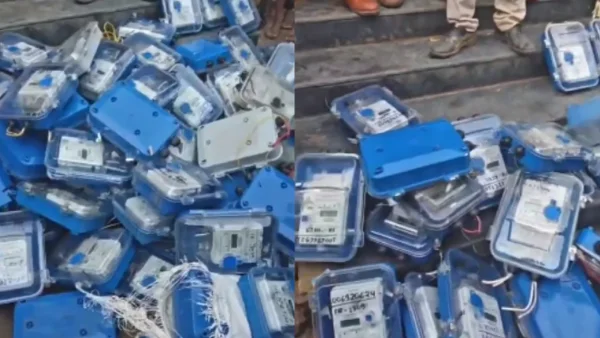
Recent protests against smart electricity meters, including reported demonstrations in Pandatarai of Kabirdham (Kawardha) district, Chhattisgarh, reflect growing concerns among some consumers over electricity billing, transparency, and trust. While governments and power utilities argue that smart meters are a step toward modernizing the power sector, critics question whether the rollout has adequately addressed consumer concerns.
The debate raises several important questions: Why were smart meters introduced? Are they failing? And why are they generating opposition in some places?
Why Were Smart Meters Introduced?
Smart meters were introduced to replace conventional electricity meters with digital devices capable of automatically transmitting electricity consumption data to power distribution companies.
The main objectives include:
Accurate billing: Eliminating manual meter reading and reducing human errors.
Real-time monitoring: Consumers can track electricity usage and adjust consumption.
Reducing electricity theft: Smart meters can detect tampering and unauthorized connections.
Lower operational costs: Utilities save money by reducing manual meter-reading expenses.
Faster fault detection: Distribution companies can identify outages and technical problems more quickly.
Support for a modern power grid: Smart meters enable time-based tariffs and better demand management.
In India, smart meters are a key component of the government’s power-sector modernization initiatives.
Why Are People Protesting?
The opposition is usually driven by practical concerns rather than resistance to technology itself.
Some common complaints include:
1. Higher Electricity Bills- Many consumers believe their bills increased after smart meters were installed.
Possible reasons include:
More precise measurement of electricity consumption.
Detection of usage that older mechanical meters may have under-recorded.
Tariff revisions occurring around the same time, creating the impression that the meter itself caused higher bills.
Whether the meter is solely responsible for increased bills varies from case to case.
2. Prepaid Recharge System– In many areas, smart meters operate on a prepaid model similar to mobile phone recharges.
Consumers worry that:
Electricity supply may stop if the balance runs out.
Frequent recharges can be inconvenient.
Low-income households may struggle to maintain continuous service.
3. Lack of Awareness- Many consumers say they were not adequately informed about:
How smart meters work.
How billing is calculated.
How to monitor electricity consumption.
This communication gap often leads to mistrust.
4. Technical Issues- Some users report:
Network connectivity problems.
Delays in updating recharge balances.
Billing disputes.
Mobile app glitches.
Not every installation experiences these issues, but isolated problems can undermine public confidence.
Are Smart Meters a Flop?
It depends on the perspective.
From the government’s viewpoint Smart meters can:
Improve billing efficiency.
Reduce electricity theft.
Increase revenue collection.
Enable digital management of electricity networks.
Utilities in several regions report operational benefits after deployment.
From the consumer’s viewpoint
The experience can be mixed.
If consumers face:
Higher bills,
Poor customer support,
Confusing billing,
Frequent recharge requirements,
they may perceive the system as a failure even if the technology functions correctly.
Therefore, the success of smart meters depends not only on the technology but also on implementation, transparency, and customer service.
Drawbacks of Smart Meters
Some commonly cited disadvantages include:
Initial installation costs.
Consumer concerns over higher bills.
Dependence on reliable communication networks.
Greater reliance on digital systems and mobile apps.
Privacy concerns about detailed electricity usage data.
Prepaid billing can be challenging for financially vulnerable households.
Customer confusion during the transition from conventional meters.
Potential Benefits
Despite criticism, smart meters also offer advantages:
No manual meter reading.
More accurate billing.
Faster identification of power outages.
Better energy management for consumers.
Reduced electricity theft.
Improved efficiency for electricity distribution companies.
Why Is Public Opposition Growing?
Public resistance often arises when:
Consumers experience unexpectedly high bills.
There is inadequate explanation of billing changes.
Customer grievance mechanisms are weak.
The transition to prepaid systems causes inconvenience.
Trust between consumers and utilities is low.
In many cases, the controversy is less about the technology itself and more about how it has been introduced and managed.
Conclusion
Smart electricity meters are not inherently a failed idea. They are widely used in many countries as part of modern electricity networks. However, their success depends on accurate billing, transparent communication, effective grievance redressal, and public trust.
Where consumers believe the new system has led to unexplained bill increases or reduced convenience, protests are likely to emerge. Addressing these concerns through clear communication, independent verification of billing disputes, and responsive customer support is essential if smart metering is to achieve its intended goals.