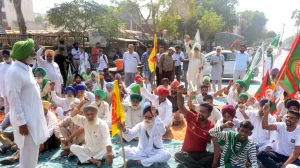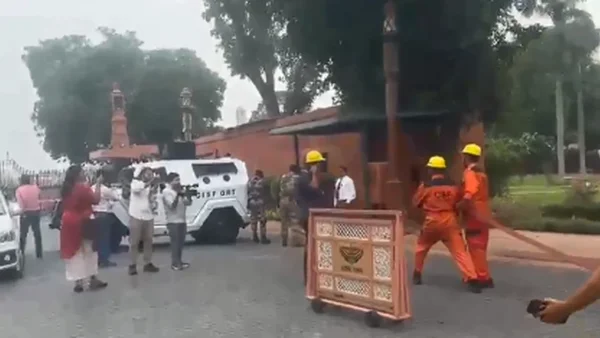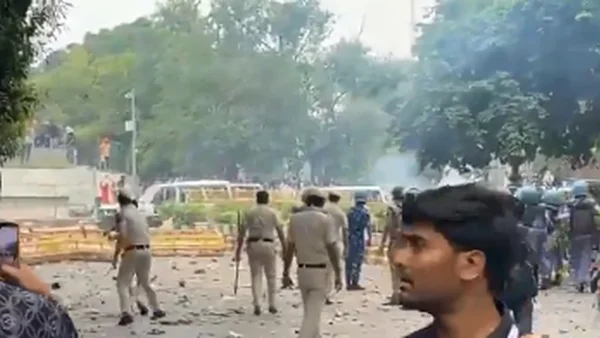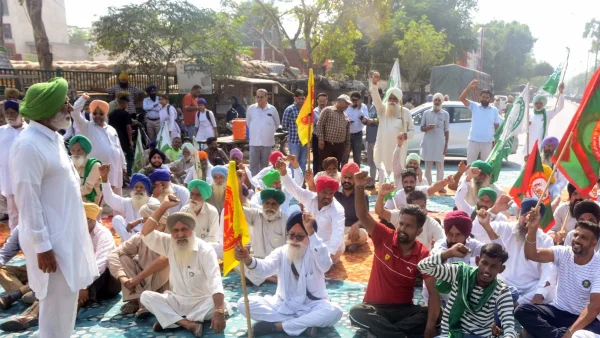
Concrete barricades, heavy police deployment, and intensified security arrangements have once again become the defining images at the Shambhu border, where Haryana Police are preparing for a proposed farmers’ march towards Delhi.
The scene has revived memories of previous protests, when highways were sealed with cement blocks, iron barricades, drones, tear gas, and extensive security measures to prevent demonstrators from entering the capital.
As farmers prepare for another round of protests, the key question is no longer whether they will march, but how authorities and protesters will respond this time.
Why Are Farmers Protesting?
Farmer organizations say several of their long-pending demands remain unresolved.
Among the issues frequently raised are:
Key Demands
Legal guarantee for Minimum Support Price (MSP).
Farm debt relief.
Better procurement mechanisms.
Pension and welfare measures for farmers.
Action on promises made during previous negotiations.
Farmer leaders argue that repeated assurances have not fully translated into policy implementation, prompting fresh demonstrations.
Why Is Haryana Police Building Concrete Barricades?
Authorities say the barricades are intended to maintain public order, manage traffic, and prevent unauthorized entry into Delhi if large crowds gather.
During previous protests, similar measures included:
Multi-layer concrete barricades.
Iron fencing.
Heavy deployment of police and paramilitary personnel.
Traffic diversions.
Drone surveillance.
Temporary suspension of movement on certain routes.
Officials maintain these measures are aimed at preventing clashes and ensuring safety.
Will There Be Another Standoff?
That remains uncertain.
Both protesters and authorities face a familiar challenge.
Farmers want to demonstrate and press their demands.
Police are responsible for maintaining public order and enforcing restrictions where they apply.
The outcome will likely depend on whether negotiations make progress before the march reaches critical points.
Possible Scenarios
Peaceful negotiations reduce tensions.
Authorities permit demonstrations under agreed conditions.
Additional security measures are introduced if large crowds gather.
Court directions or administrative decisions influence how the protest proceeds.
Can the Situation Be Resolved Without Another Confrontation?
Many observers believe the answer lies in dialogue rather than prolonged confrontation.
Agricultural experts and former officials have often argued that sustained negotiations between the government and farmer representatives are more likely to produce lasting solutions than repeated cycles of protest and barricades.
Key issues likely to feature in discussions include MSP, procurement reforms, and implementation of earlier commitments.
What Happens Next?
With security already tightened and farmers mobilizing, attention is now focused on whether talks can prevent another prolonged standoff.
For residents and commuters, the immediate concern is traffic disruption.
For farmers, the focus remains on ensuring their demands receive attention.
For the government and law enforcement agencies, the challenge will be balancing the right to peaceful protest with maintaining public order.
The Bigger Picture
The images of concrete barricades at Shambhu are more than a security arrangement—they symbolize an unresolved conversation between policymakers and sections of the farming community.
Whether the coming days bring negotiations or renewed confrontation will depend on decisions made by all sides.
For now, one thing is clear: the road to Delhi has once again become the centre of a national debate.