You could say India’s water future is up against a hard climate reality. With New Delhi having to deal with flooding, salinity and shortages all at once, there is a move afoot for some fast, tech-driven answers. And that is exactly what the Prime Minister’s time in the Netherlands was about.
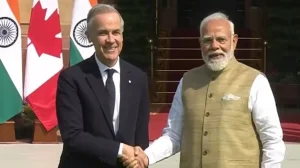
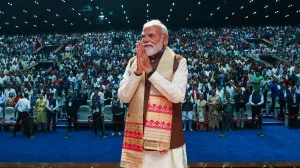
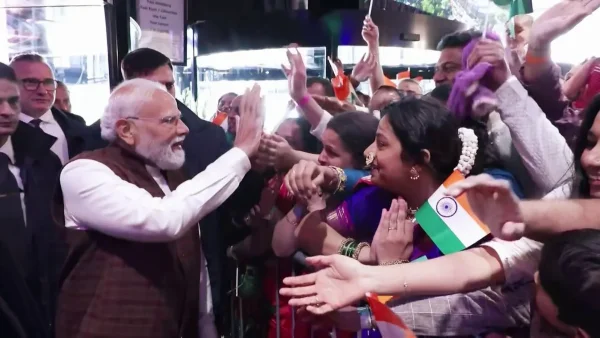
Modi and his Dutch counterpart, Rob Jetten, were at the Afsluitdijk on May 17, 2026. It was part of a two-day layover in The Hague as he made his way through a four-country European swing that also included Sweden, Norway and Italy. The whole trip is an effort to see where we can work together more closely.
What India wants from Dutch expertise
The Ministry of External Affairs has been unambiguous about it: this was no formality. They see a direct line from Dutch know-how to the Kalpasar Project in Gujarat, a would-be mega reservoir and dam in the Gulf of Khambhat. It’s a matter of making sure we have our water and our regional links in order for the long haul.
After the fact, Modi put it in a post, hailing the Dutch for their pioneering engineering and saying there are lessons to be had. He made sure to thank Jetten for the show around, and put out the word that India is after the kind of modern tools that will improve our irrigation, keep us safe from floods and open up our inland waterways.
New Delhi’s focus areas, as articulated by the Prime Minister and the MEA, centre on practical outcomes that can be deployed quickly and scaled nationally. The goals include:
– Stronger flood defence for vulnerable regions
– Modern irrigation technologies for dry zones
– Faster expansion of inland waterways
– Climate-resilient infrastructure design
– Advanced water technology partnerships
Inside the Afsluitdijk: lessons for India
To the MEA, the Afsluitdijk is something of a case study in how to do things right when it comes to water and flood control. You have a 32-kilometre wall holding back the North Sea, keeping the IJsselmeer on the other side and putting a lot of low-lying ground in a safe spot. But it’s not just a barrier; it’s a lifeline for navigation and transport, too.
Multi-use design and upgrades
They are in the middle of an “Afsluitdijk 2.0” to make sure it can stand up to a once-in-10,000-year storm. We’re talking about beefed-up locks, better ways to let water out, even some renewables off the tides and wind. The price tag for that is in the neighbourhood of 800 million, but it also makes for a nice corridor for cyclists and tourists. It’s a good model for how to be resilient and make some money at the same time.
Kalpasar Project: potential and hurdles
Then you have the Kalpasar. The idea is to put a 30-kilometre dam in the Gulf of Khambhat and create the biggest freshwater reservoir in a marine environment you’ll find anywhere. It’s an all-in-one fix.
From the Narmada, the Mahi, the Sabarmati and the Dhadar, they plan to pull in some 10 billion cubic metres of water and put it to use in Saurashtra and South Gujarat, where they need it most. There’s also a 10-lane road over the top of the dam to shave 200-plus kilometres off the drive between the two. We’re looking at a project in the Rs 85,000-90,000 crore range, and if it goes ahead, you can put 12 to 15 years on the clock for building it.
It’s an old concept, going back to the 70s, but it has changed shape. The tidal power is out; now it’s a main dam, a barrage on the Narmada and a system of canals.
Status and environmental checks
But you can’t get around the environment. By 2019, they had only 25 of 43 feasibility studies in the bag. There is still no final go-ahead for the dam, and some of the numbers are yet to be crunched. The experts are looking at everything from sedimentation to the fish and the bottom line. The MEA sees the Dutch way of marrying engineering with safeguards as a good reference point for us.
India’s problem is a bit of a whiplash: you have places with too much rain and then you have the ones with drought and salt. That is why the thinking is shifting to storage and defences that do double or triple duty.
Why this partnership could reshape planning
The Dutch have a way of making defence, fresh water, transport and energy work in concert. That is the systems approach we are here to learn from, as the readouts from the Afsluitdijk visit make plain.
What comes next
In short, the MEA says the visit opens the door to more of the same with the Dutch on the technology and sustainability front. For us, that means we might see some pilots and design help as we get to the next stage of these studies.
Modi’s time in Europe is about building on those partnerships, and water is a big part of the equation. We want to bring in the tech for our waterways and our fields without any shortcuts on the environment.
Now it comes down to how well we can put it into practice. As we figure out if Kalpasar and the like are worth the while, some outside expertise can be useful in stress-testing the plans and de-risking them. The visit has set the stage; what we do with it will tell you how far we can get.